Resin Driveway Pros and Cons: How Long Does It Last?
Resin-bound driveways have become a favourite for homes across the North East. They look clean and modern and need very little upkeep, but they are not the right choice for every drive. Here are the honest pros and cons.
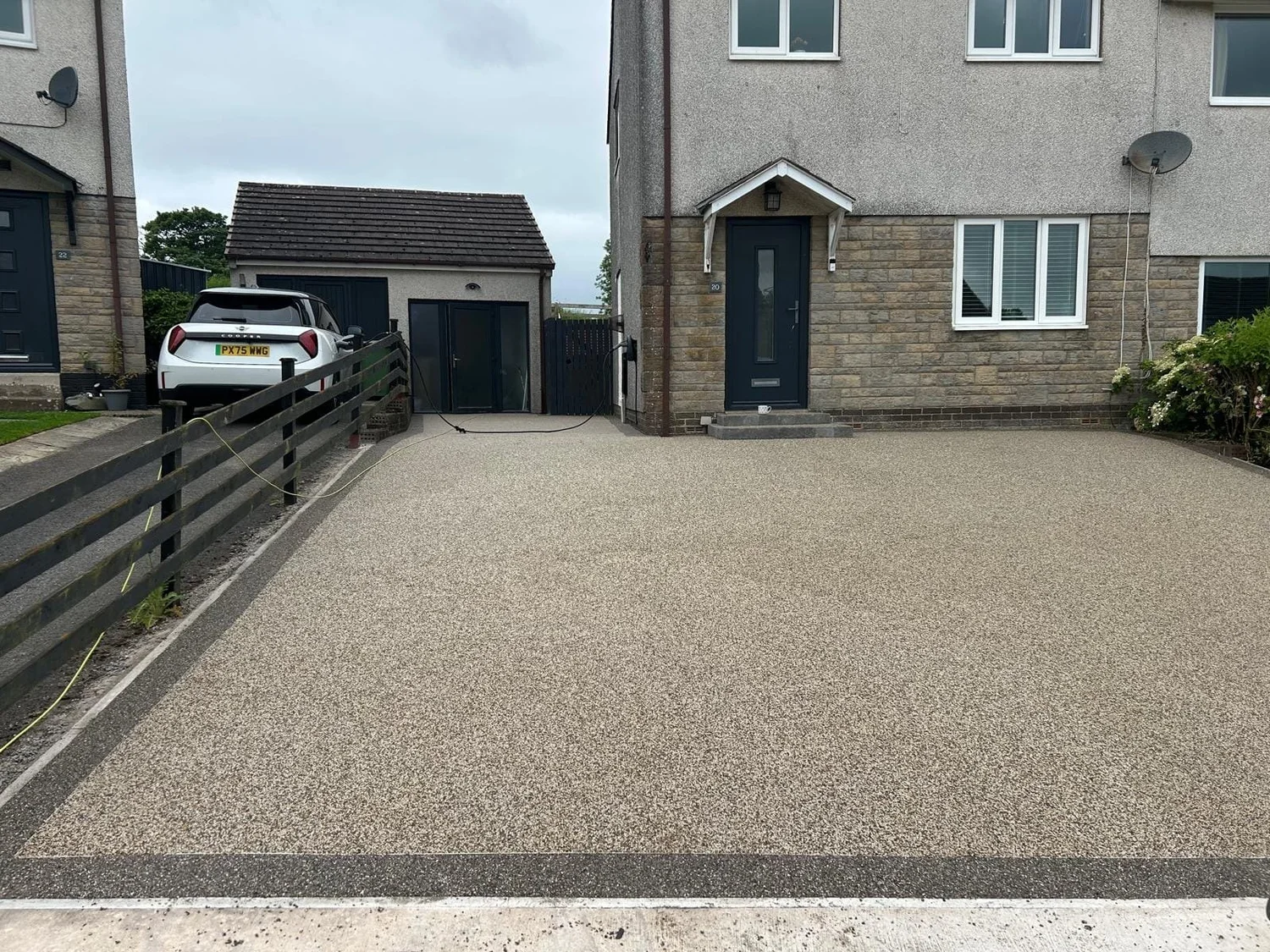
The pros
- Permeable: resin-bound surfaces let rainwater drain through, which usually means no planning permission is needed for a front drive.
- Low maintenance: no loose stones, no joints for weeds when laid properly, and an occasional sweep and rinse keeps it looking fresh.
- Smooth and seamless: great for buggies, wheelchairs and bikes, and it looks sharp against brick and stone.
- Lots of colours: from golden and buff blends to silver and grey, often finished with a contrasting border.
The cons
- It depends on the base: resin over a poor or cracked surface will crack too.
- Weather-sensitive to install: it cannot be laid in rain or very cold conditions, so timings can move.
- Repairs can show: patching a damaged area to match an older, weathered surface can be tricky.
- Needs the right resin: non UV-stable resins can discolour in sunlight.
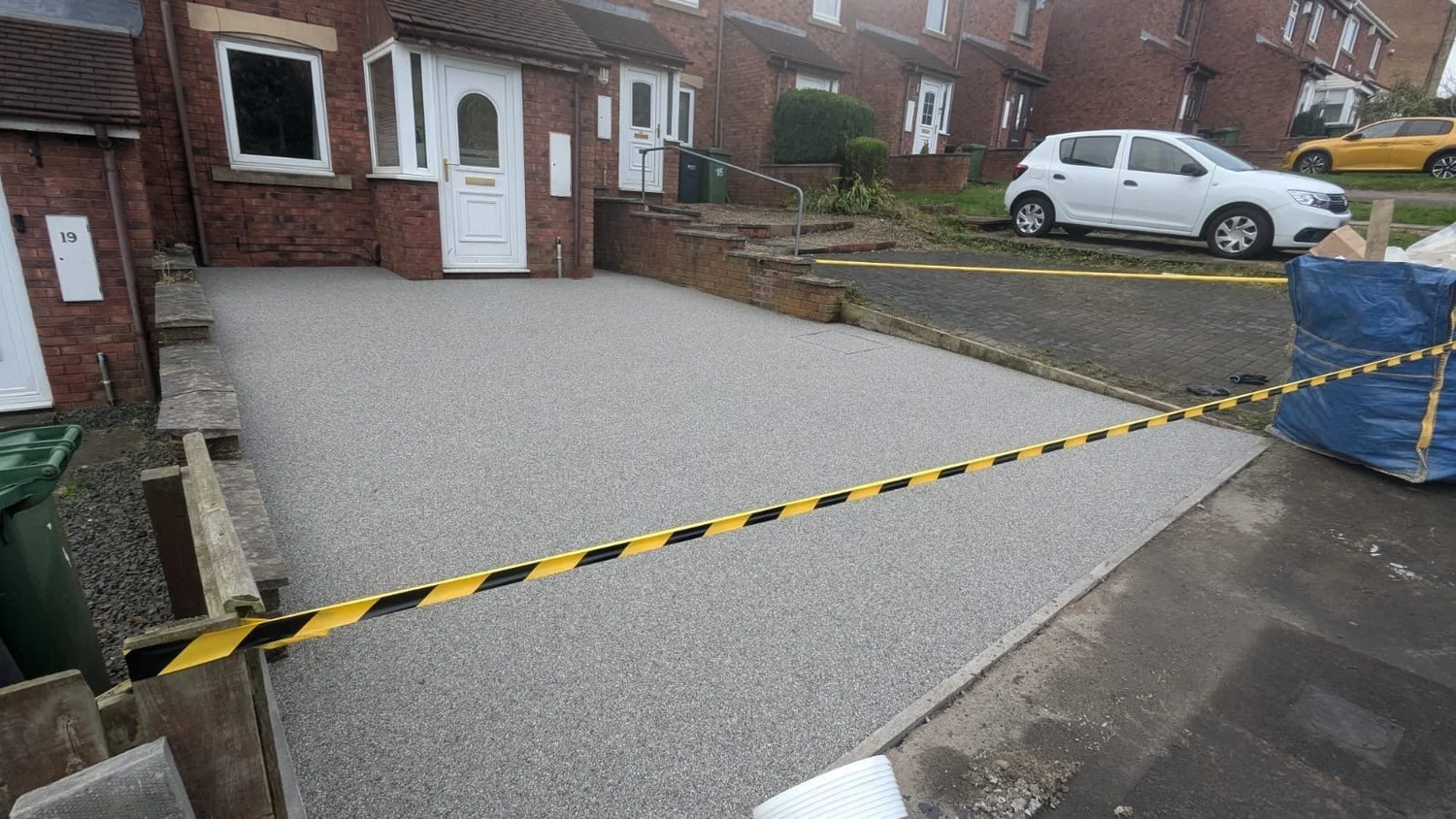
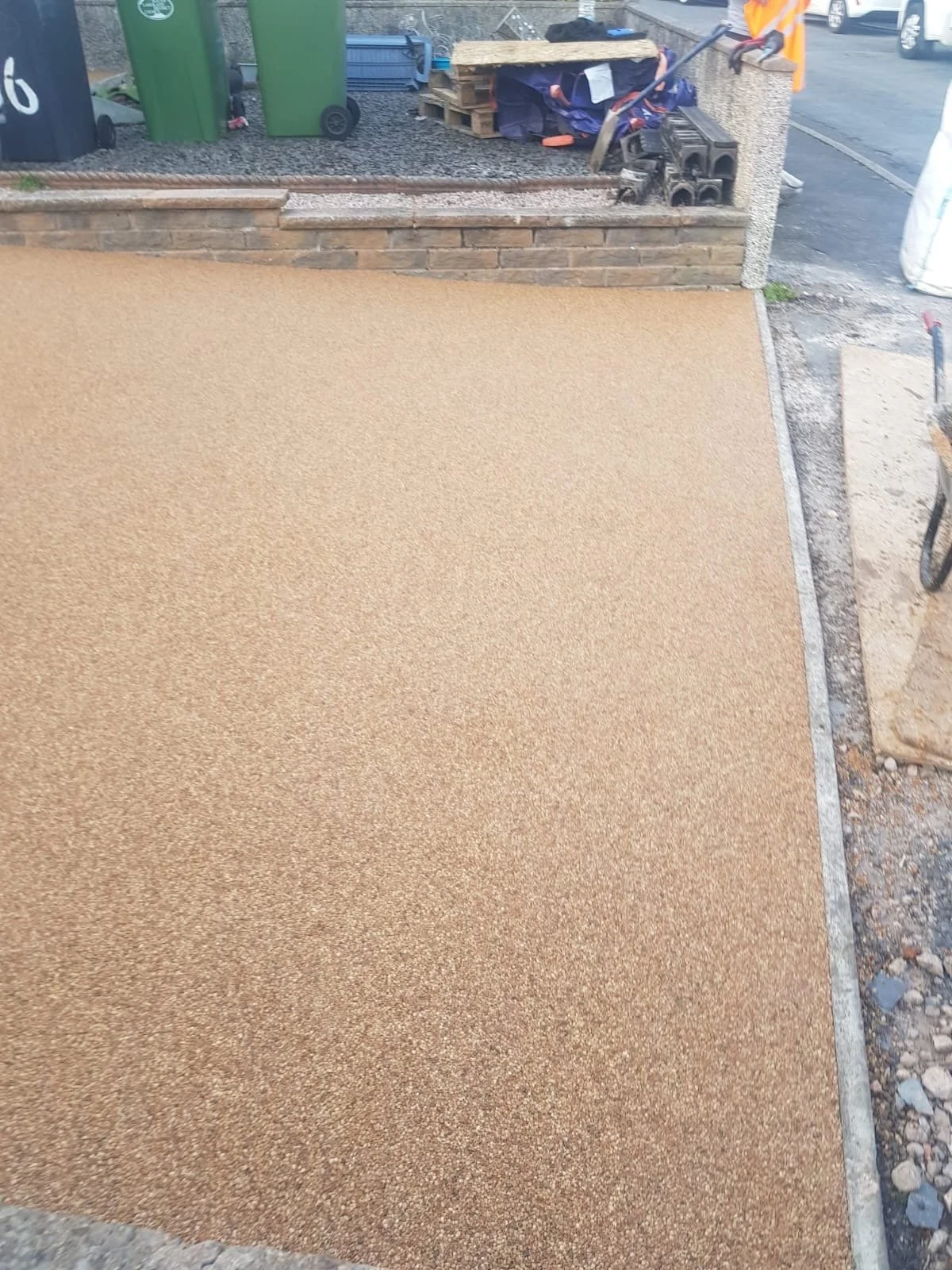
How long does a resin driveway last?
A resin-bound driveway laid on a proper base, with a UV-stable resin and the right aggregate depth for cars, is commonly expected to last well over a decade, and many last considerably longer with basic care. The installation quality matters far more than the product name.
What makes resin driveways fail
Most problems we are asked to fix come from the same few causes:
- Laying over an unsound or badly drained surface
- Resin layer too thin for vehicles
- Poor mixing or laying in the wrong weather
- No proper edging to hold the edges
- Using a non UV-stable resin
Resin-bound is mixed and trowelled smooth, and it is permeable. Resin-bonded is stone scattered onto a resin coat, which is not permeable and can shed loose stones. For driveways we recommend resin-bound.
Common questions
Do weeds grow through resin driveways?
Not when laid on a proper base with a sound binder course underneath. Weeds are usually a sign the base was skipped or the surface was laid too thin.
Is resin slippery in winter?
Resin-bound has a textured, stone finish that offers good grip. As with any surface, ice can form, so gritting in freezing weather is still sensible.
Resin or block paving: which is better?
Both are excellent when laid properly. Resin is smoother and lower maintenance, while block paving is easy to repair and very hard-wearing.
Thinking about resin?
We will visit, check your existing surface and tell you honestly whether resin is right for your drive.
Get a free quoteSee our driveways