How to Stop Weeds Growing in Block Paving and Patio Joints
Block paving looks great when it’s first laid, but after a few years many driveways and patios start sprouting weeds and moss between the blocks. The good news is that it’s almost always a joint problem, not a paving problem, and it can be fixed. Here’s why it happens and how to stop it.
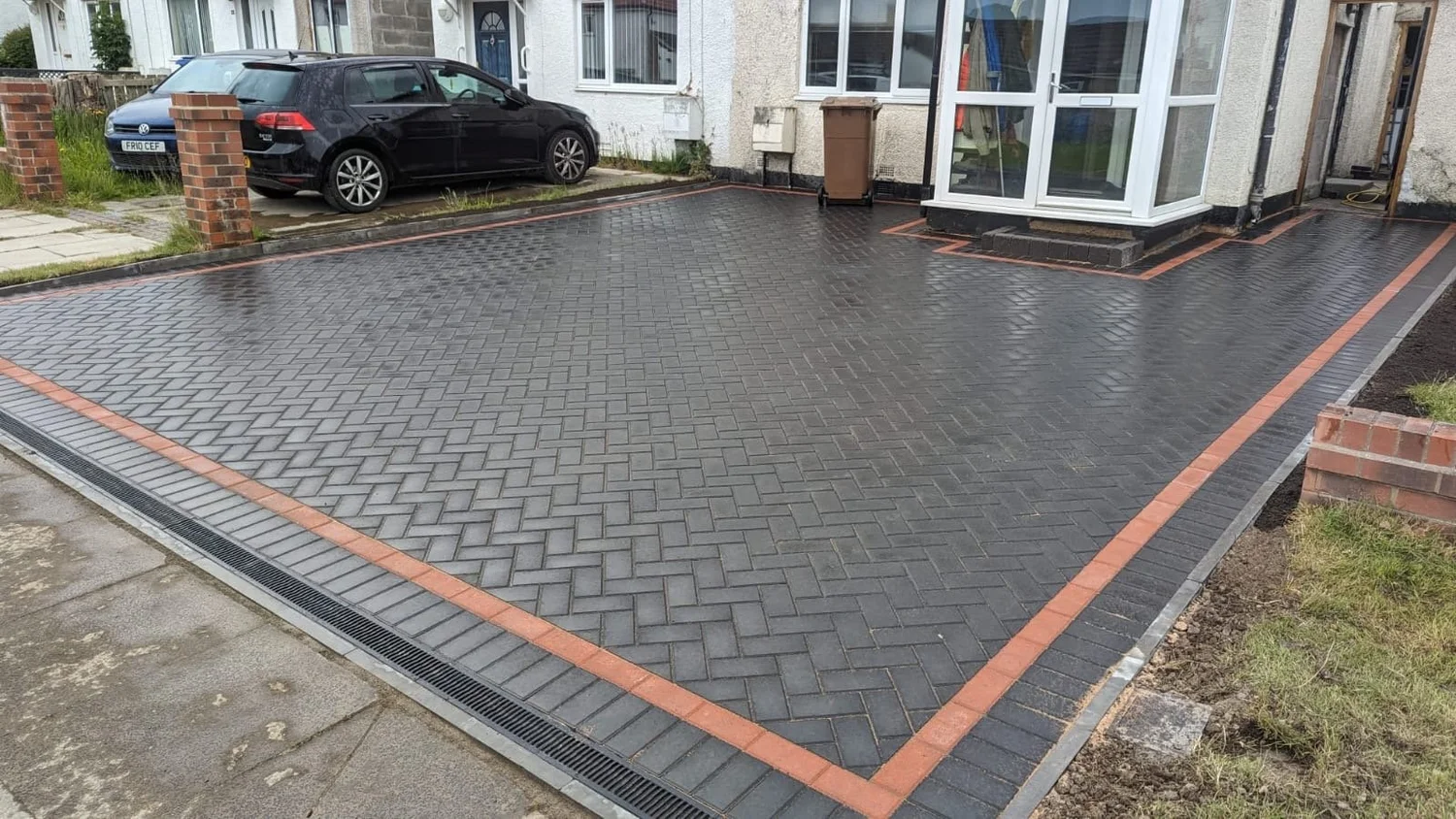
Why weeds grow in block paving
In most cases the weeds aren’t growing up from underneath. Block paving is laid on a compacted base with a weed-resistant sub-base, so very little can push through. Instead, seeds blow in and land in the sand joints between the blocks, along with dust, soil and rotting leaves. Over time that turns into a thin layer of soil, and weeds and moss take root.
It gets worse when the jointing sand has washed out or been blasted away by a pressure washer. Gaps that are only partly filled collect debris faster, and shady, damp areas, which are common in North East gardens, are where moss settles first.
Removing the weeds you have now
- Pull and scrape: a block paving knife or weeding tool gets the roots out of the joints. Doing this after rain makes it easier.
- Treat the roots: a weedkiller labelled for paths and hard surfaces will kill the roots. Always follow the instructions on the label and keep pets and children off until it’s dry.
- Boiling water works on small patches of young weeds and needs no chemicals.
- Avoid salt and bleach. They can stain the blocks, damage nearby plants and lawns and wash into drains.
A pressure washer is very effective for moss and grime, but it also blows the sand out of the joints. If you use one, use a patio cleaner attachment, keep the lance at an angle and plan to re-sand straight afterwards.
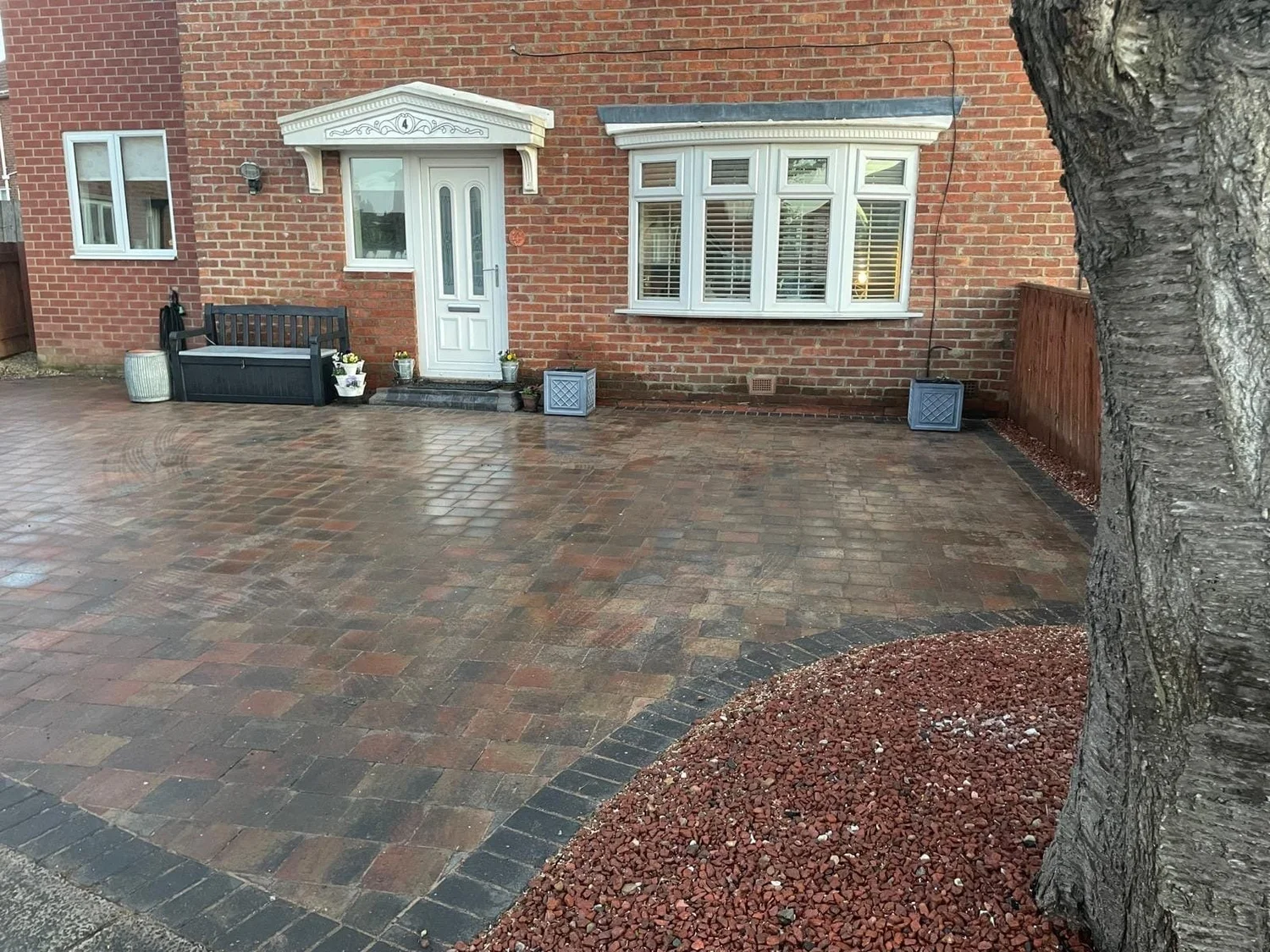
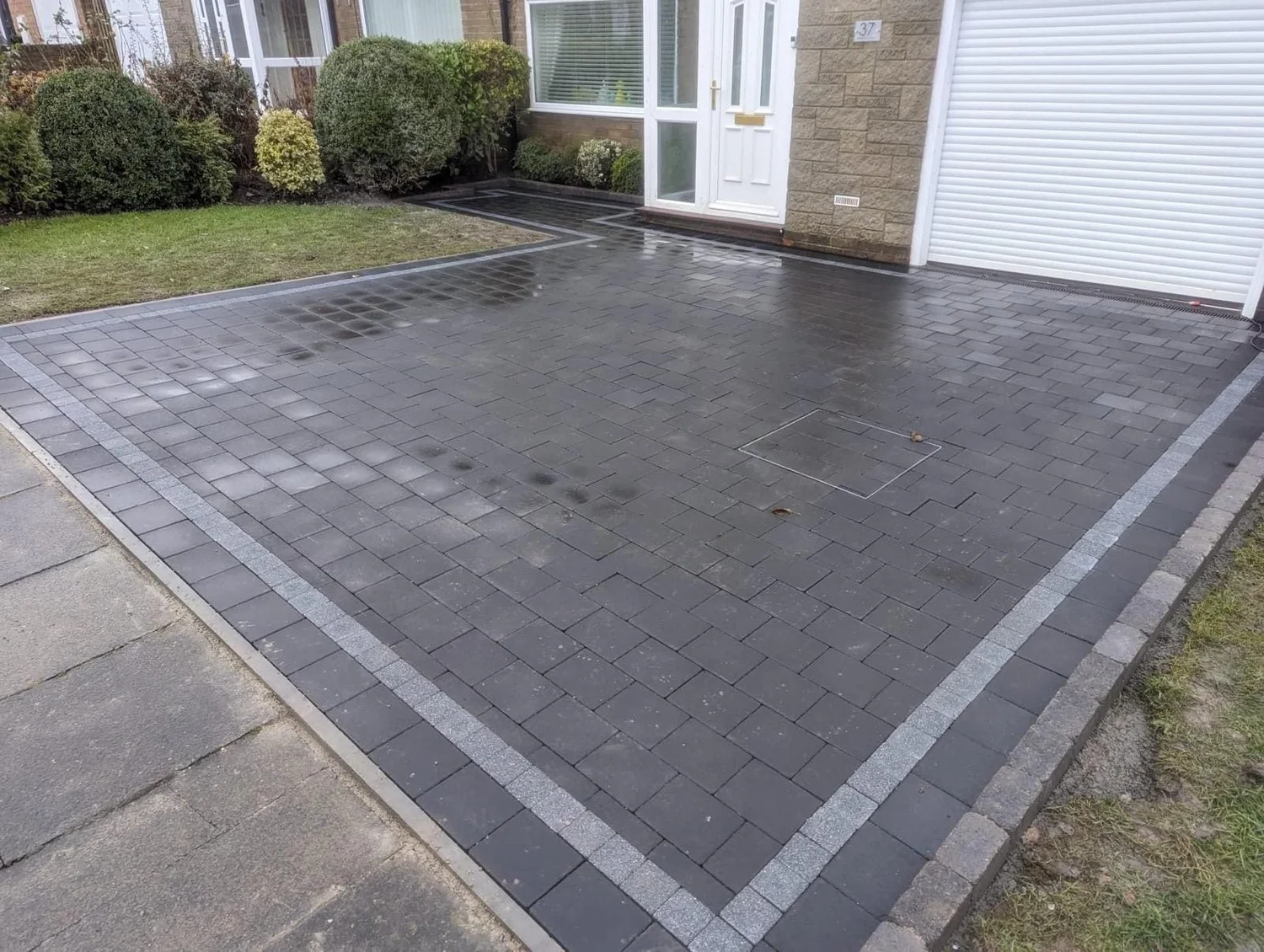
Re-sand the joints
This is the single most important step. Full, tight joints leave nowhere for seeds to settle and they also lock the blocks together so they don’t move or rock.
- Let the paving dry completely after cleaning.
- Brush kiln-dried sand into the joints, working it in from different directions.
- Run a plate compactor with a rubber mat over the blocks, or brush again after a day or two, to settle the sand, then top up until the joints are full.
- Sweep off the excess so the surface is clean.
For extra protection you can use a stabilised or polymeric jointing sand, which hardens once it’s wet and is much harder for weeds to root into. It needs careful application, so follow the product instructions closely.
Seal the paving
A good block paving sealer binds the top of the jointing sand, so it isn’t washed out by rain or swept away, and makes the surface easier to keep clean. Many sealers also help with oil stains and can bring back the colour of faded blocks. Sealing is usually done after a deep clean and re-sanding, and typically needs redoing every few years.
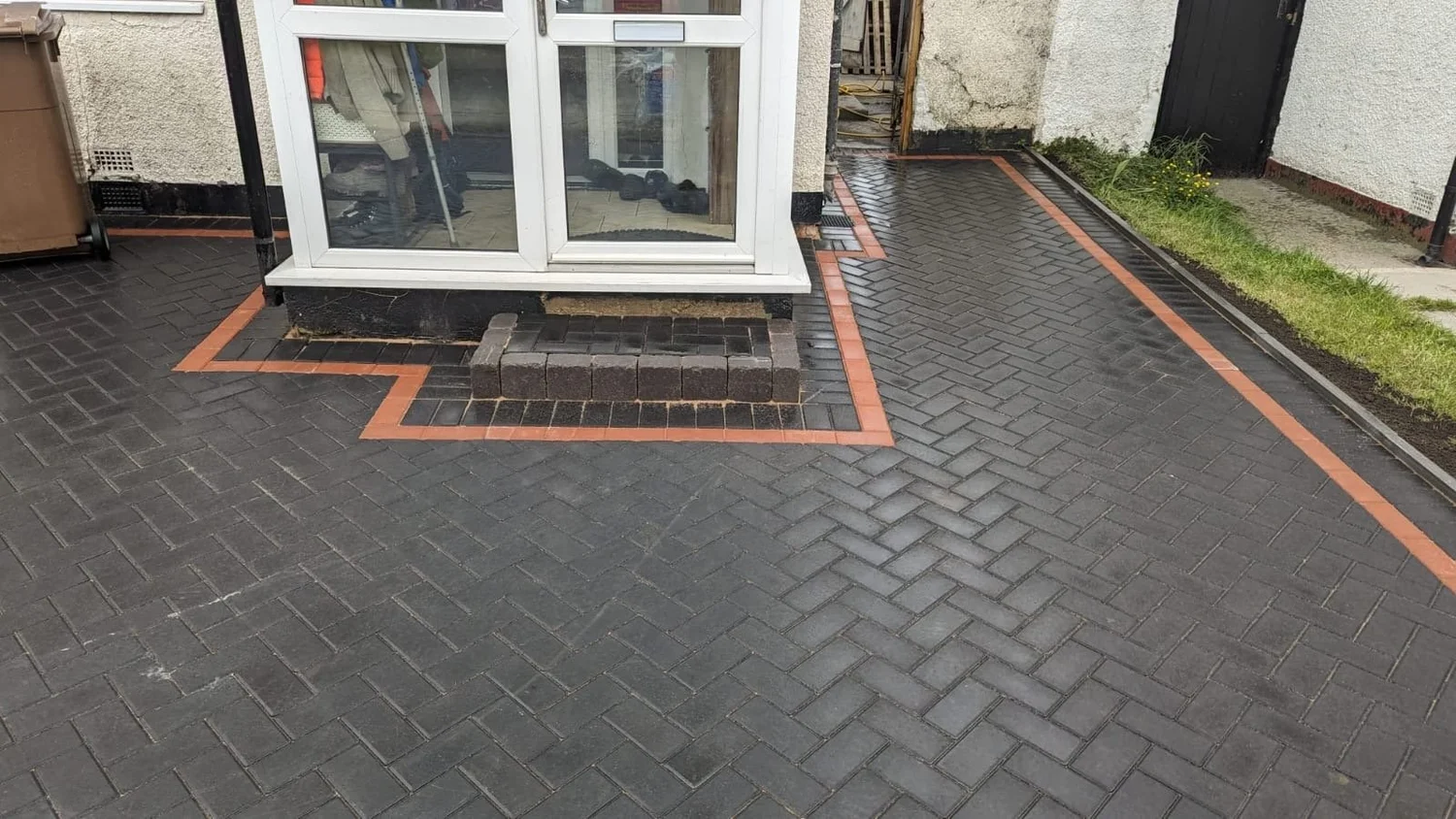
Weeds between patio slabs
Patios suffer from the same problem, especially where slabs were laid with sand-filled or loose joints. Clean the joints out, then repoint with a brush-in jointing compound or a proper sand and cement mortar. Well-pointed porcelain and sandstone patios, laid on a full mortar bed, give weeds very few places to grow. If your patio is uneven or rocking as well as weedy, it may be time to look at relaying or replacing it.
Simple habits that help
- Sweep the driveway or patio every couple of weeks, especially in autumn when leaves build up.
- Clear gutters and fix anything that keeps one area constantly wet.
- Cut back overhanging plants and trees to let in more light and air.
- Deal with small weeds early, before roots get established.
If your paving is past saving, or you want a surface with no joints at all, a resin-bound driveway is worth considering. We compare the two in our guide to resin vs block paving.
Common questions
Why do weeds keep coming back in my block paving?
Usually because the joints are only partly filled or full of soil and debris. Clear the joints, re-sand them with kiln-dried sand and seal the paving to stop seeds taking hold.
What is the best sand for block paving joints?
Kiln-dried sand is the standard choice because it is dry and fine enough to flow right down into the joints. Stabilised or polymeric jointing sands give extra resistance to weeds and washout.
Will sealing my block paving stop weeds?
Sealing helps a lot because it locks the jointing sand in place, but it works best after the paving has been deep cleaned and re-sanded.
Can you clean and re-sand my driveway?
We focus on building new driveways, patios and gardens. If your paving is sinking, cracked or beyond cleaning, we can quote for a replacement.
Time for a new driveway?
If your block paving is sinking or tired, we will visit, measure up and give you a clear written price for a new driveway.
Get a free quoteSee our driveways