A full garden makeover is one of the biggest outdoor projects most homeowners take on, so it’s no surprise the first question is usually about cost. Two gardens the same size on the same street can come in at very different prices, because so much of the cost sits in the parts you never see. This guide explains what affects the cost of landscaping a garden in Newcastle and across the North East, so you can plan a realistic budget and compare quotes with confidence.
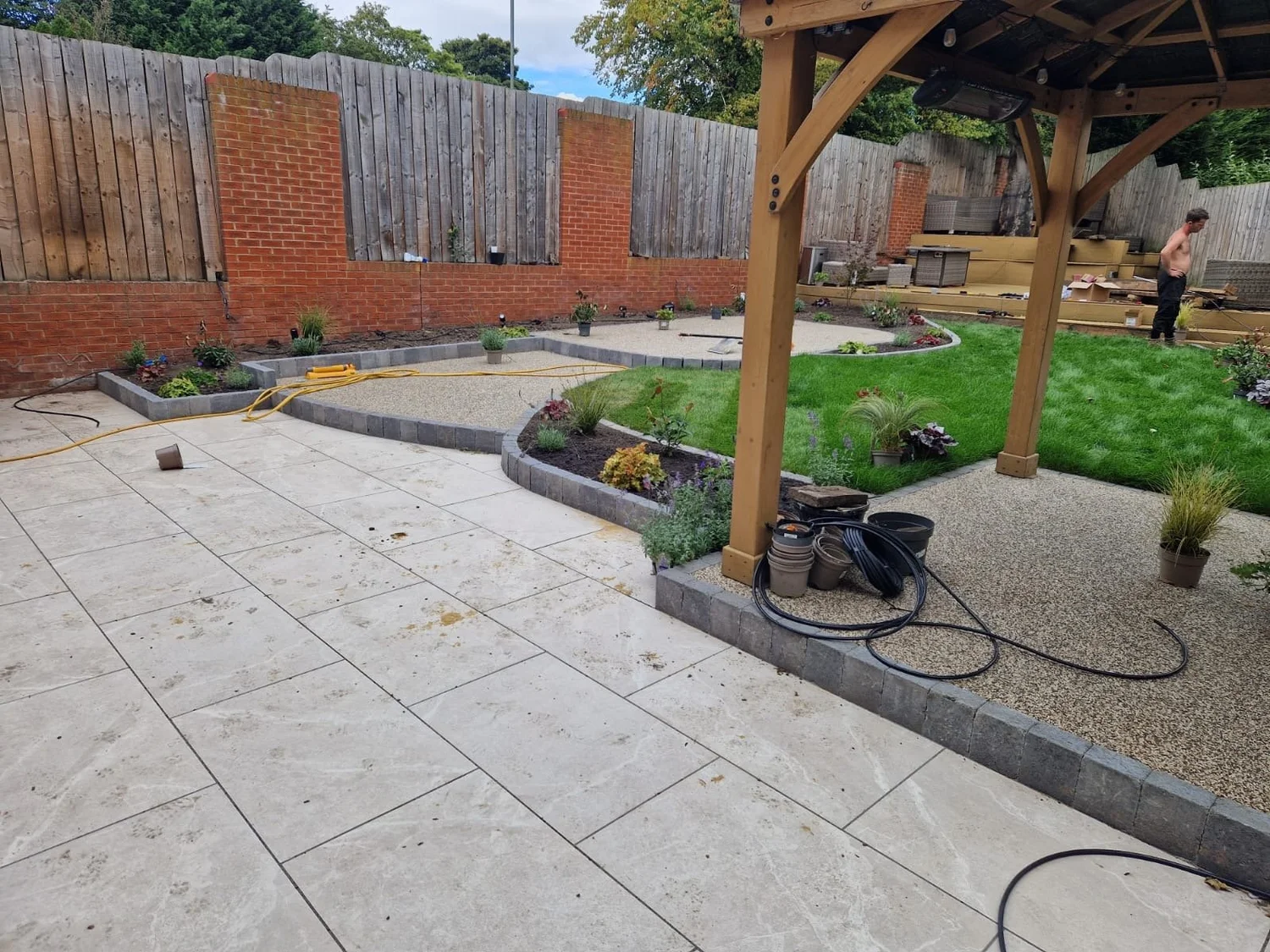
Size and layout of the garden
Most landscaping is priced by the square metre for each element, so a bigger patio or lawn costs more in materials and labour. What catches people out is that a small garden doesn’t always mean a small bill. Set-up time, deliveries, skip hire and the time spent on fiddly details stay roughly the same whatever the size, so smaller gardens often cost more per square metre.
Layout plays a big part too. Straight lines and simple rectangles are quicker to build than curved lawns, sweeping paths and multiple levels. Every curve means more cutting, more edging and more time on the tools.
Access to the garden
This is one of the biggest hidden cost drivers in the North East. Plenty of homes in Newcastle, Gateshead and the surrounding towns are terraced or semi-detached, with no rear lane or side gate wide enough for machinery.
- Good access: a wide side gate or back lane means a mini digger can get in, materials can be dropped close by and waste goes straight into a skip.
- Restricted access: narrow gates and steps mean smaller machines, or none at all, and more of the work done by hand.
- No rear access: every bag of sub-base, every slab and every barrow of soil has to come through the house. That means protecting floors, extra labour and slower progress.
If materials have to be wheelbarrowed through a hallway, the labour side of the job can rise considerably. A good landscaper will look at access on the survey and price it in, rather than adding it on later.
Groundwork, levels and waste
The groundwork is where a lot of the budget goes, and it’s the part that decides how long your new garden lasts. Patios, paths and artificial lawns all need digging out to the right depth and a properly compacted sub-base underneath.
- Dig-out: the deeper and wider the excavation, the more labour and waste there is.
- Levels: sloping gardens may need retaining walls, steps or terracing, which add a lot of work compared with a flat plot.
- Clearance: removing old sheds, concrete bases, overgrown shrubs or tree stumps all takes time before the new build even starts.
- Waste: soil, rubble and green waste have to go somewhere. Skips, grab wagons and tipping fees can be a noticeable part of the price, especially when access is tight.
If one quote is much lower than the rest, check how deep they plan to dig and what is going underneath. Skimping on the sub-base saves money on day one but leads to sinking slabs, wobbly paths and lumpy lawns later.
Drainage on North East clay
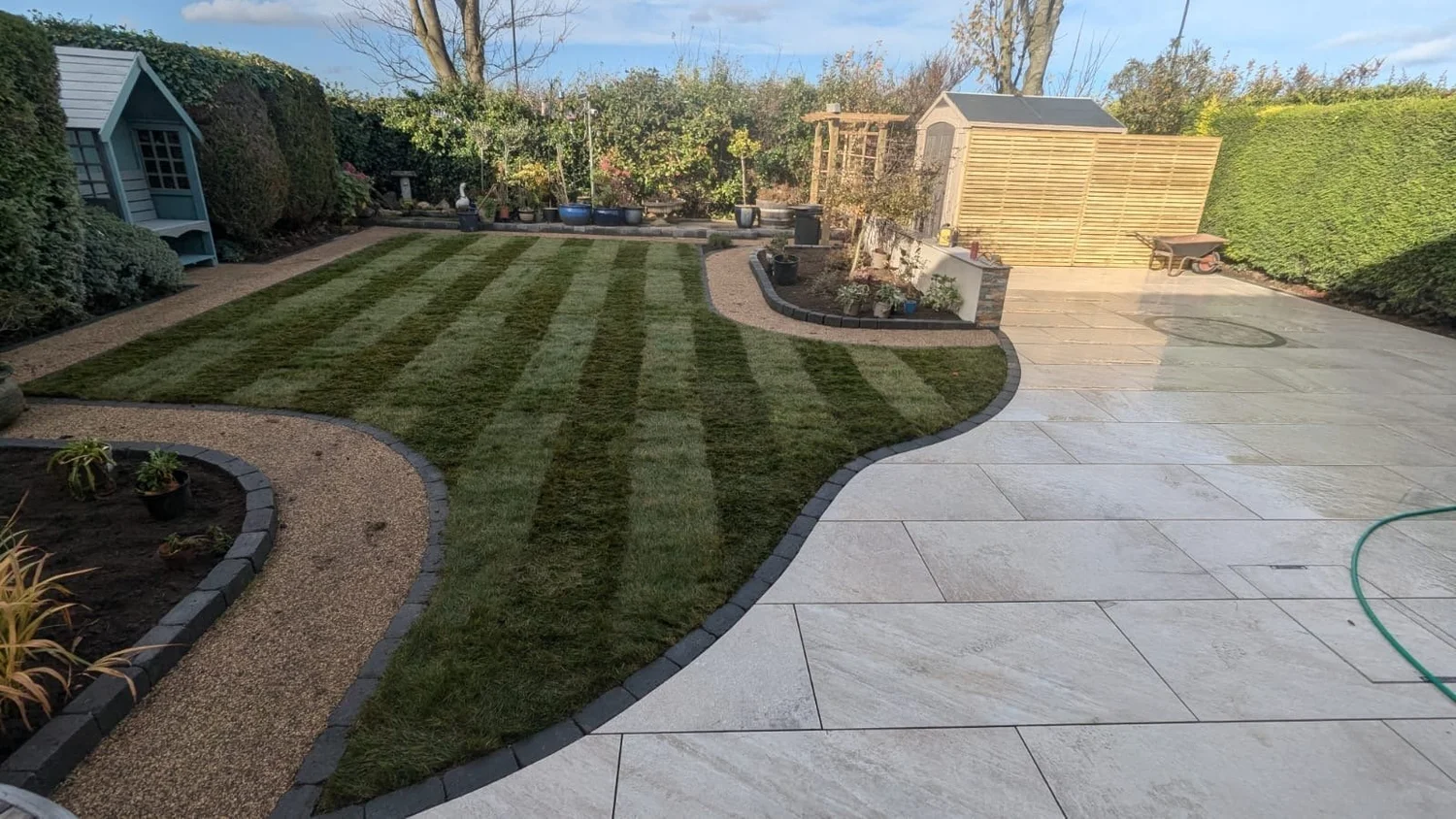
Much of the North East sits on heavy clay soil that holds water. If a garden already puddles after rain, laying a new patio or lawn on top won’t fix it, and can make it worse. Drainage needs planning in from the start.
That might mean falls built into the patio, channel drains along the paving, land drains under a lawn or a soakaway. Each adds cost, but sorting it properly is far cheaper than lifting and relaying a patio that floods every winter.
Hard landscaping: patios, paths and paving
Your choice of materials has a big effect on the overall price. As a rough guide to how the common options compare:
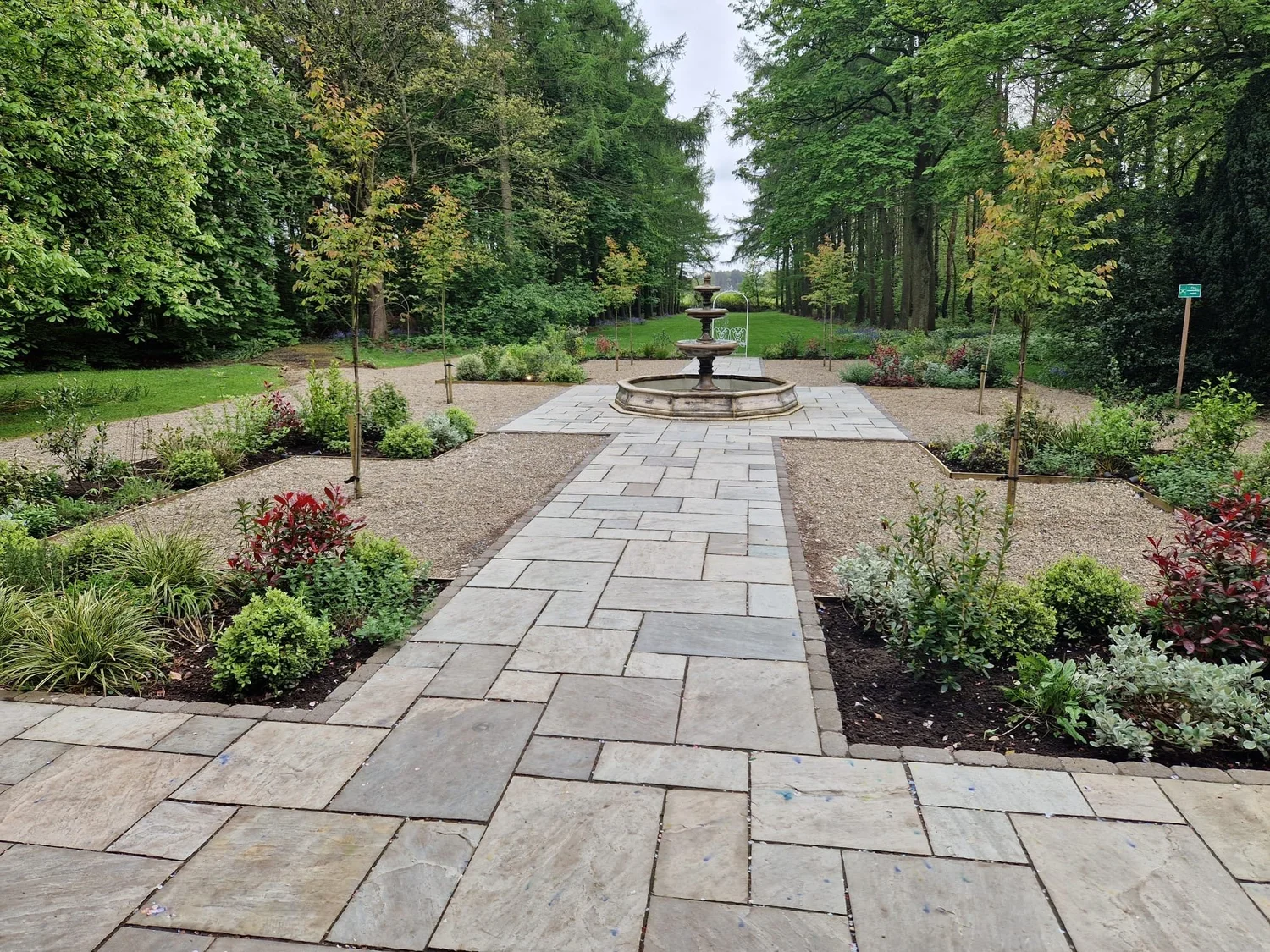
- Indian sandstone: a popular, natural-looking choice that usually sits in the middle of the range. Riven slabs are forgiving to lay and suit traditional homes.
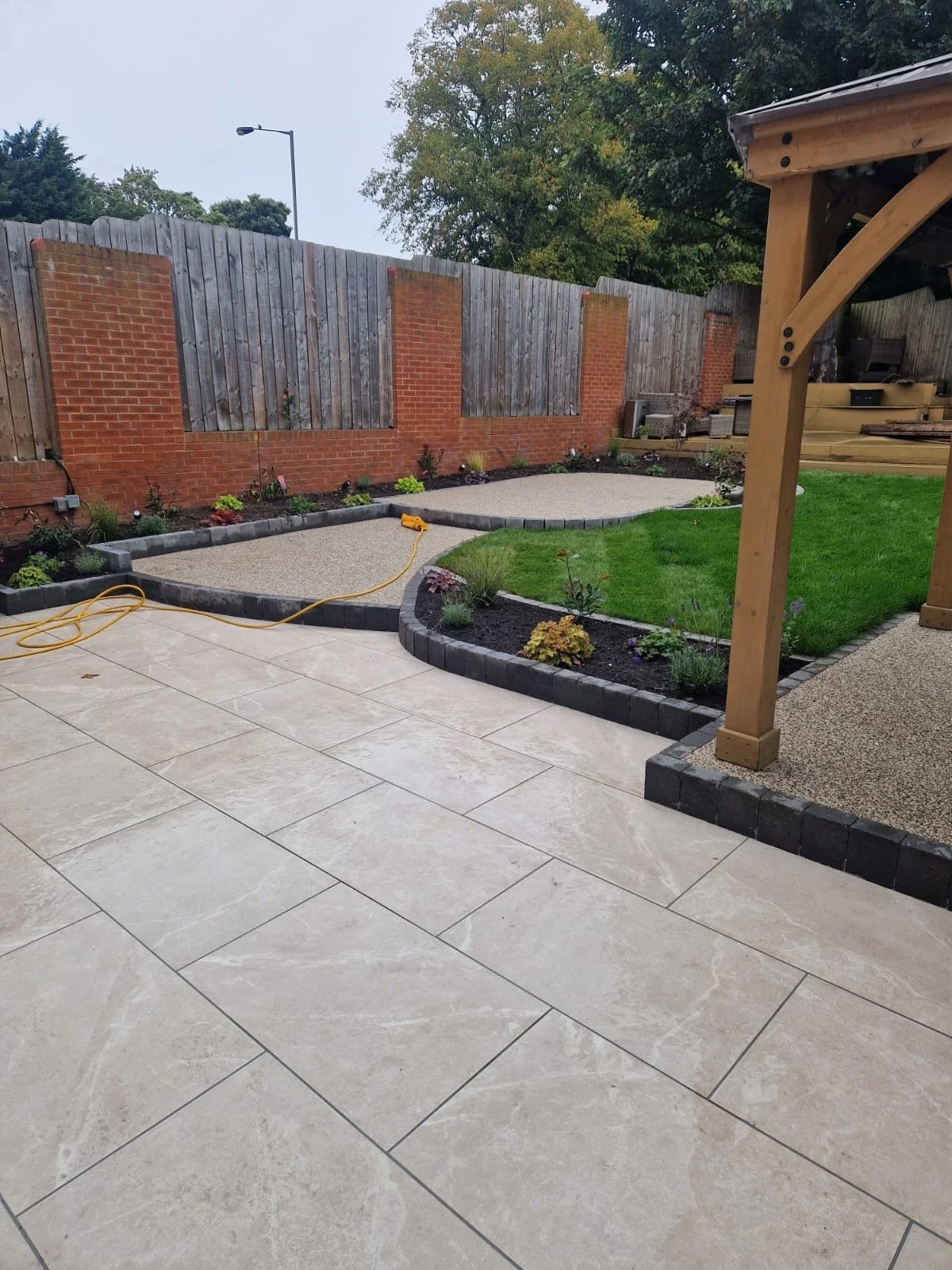
- Porcelain: the material itself usually costs more, and it needs careful cutting, a full mortar bed and a slurry primer. In return you get a sleek finish that resists stains and moss.
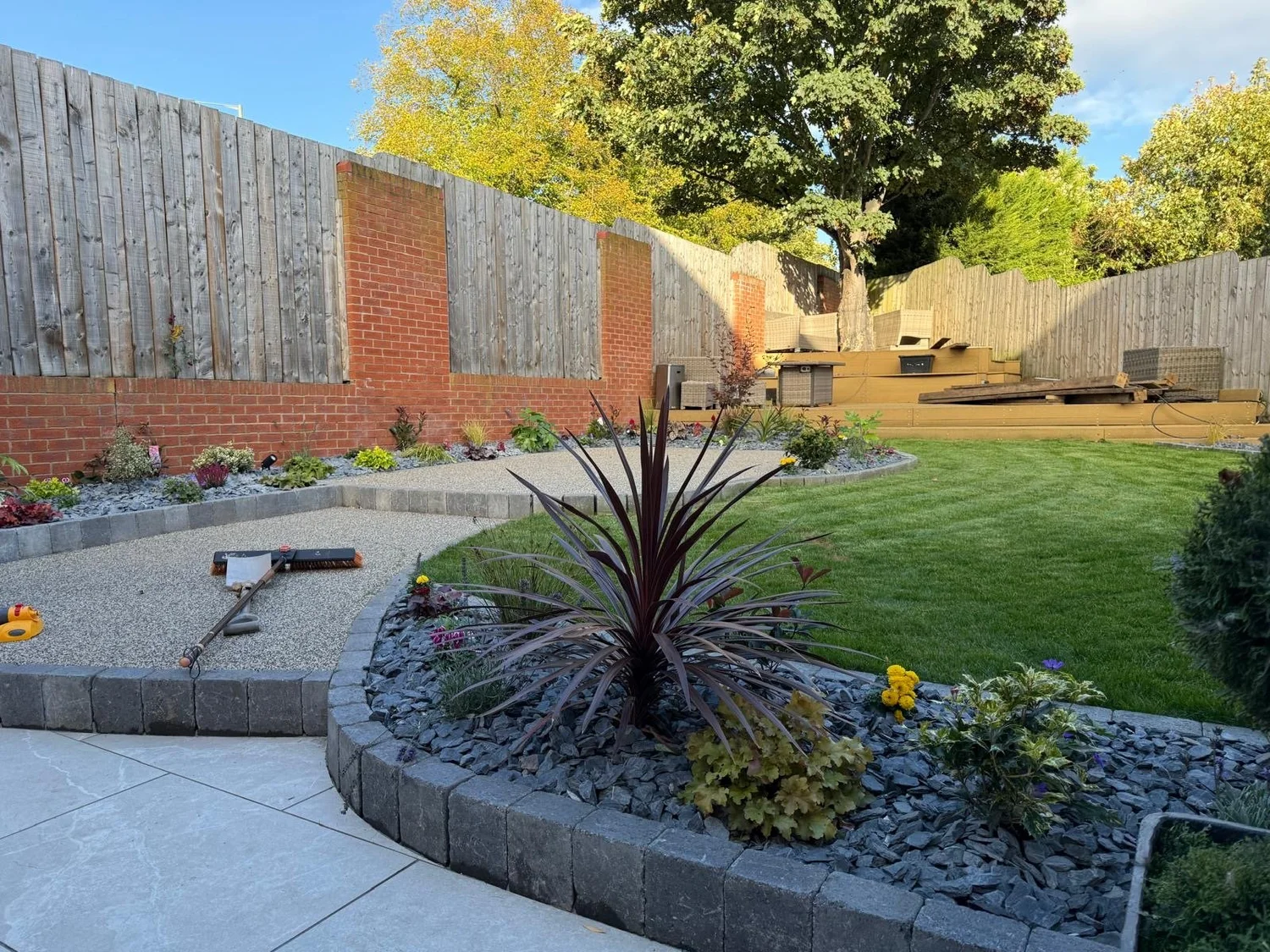
- Resin-bound paths: priced in a similar way to resin driveways, with the base and edging making a big difference. Our guide to what affects the price of a resin driveway explains the same factors in more detail.
- Block paving: hard-wearing and easy to repair, but labour-heavy to lay, especially in patterns such as herringbone.
Thickness, slab size and the amount of cutting all matter. You can see the finishes we lay on our patios page.
Soft landscaping: lawns and planting
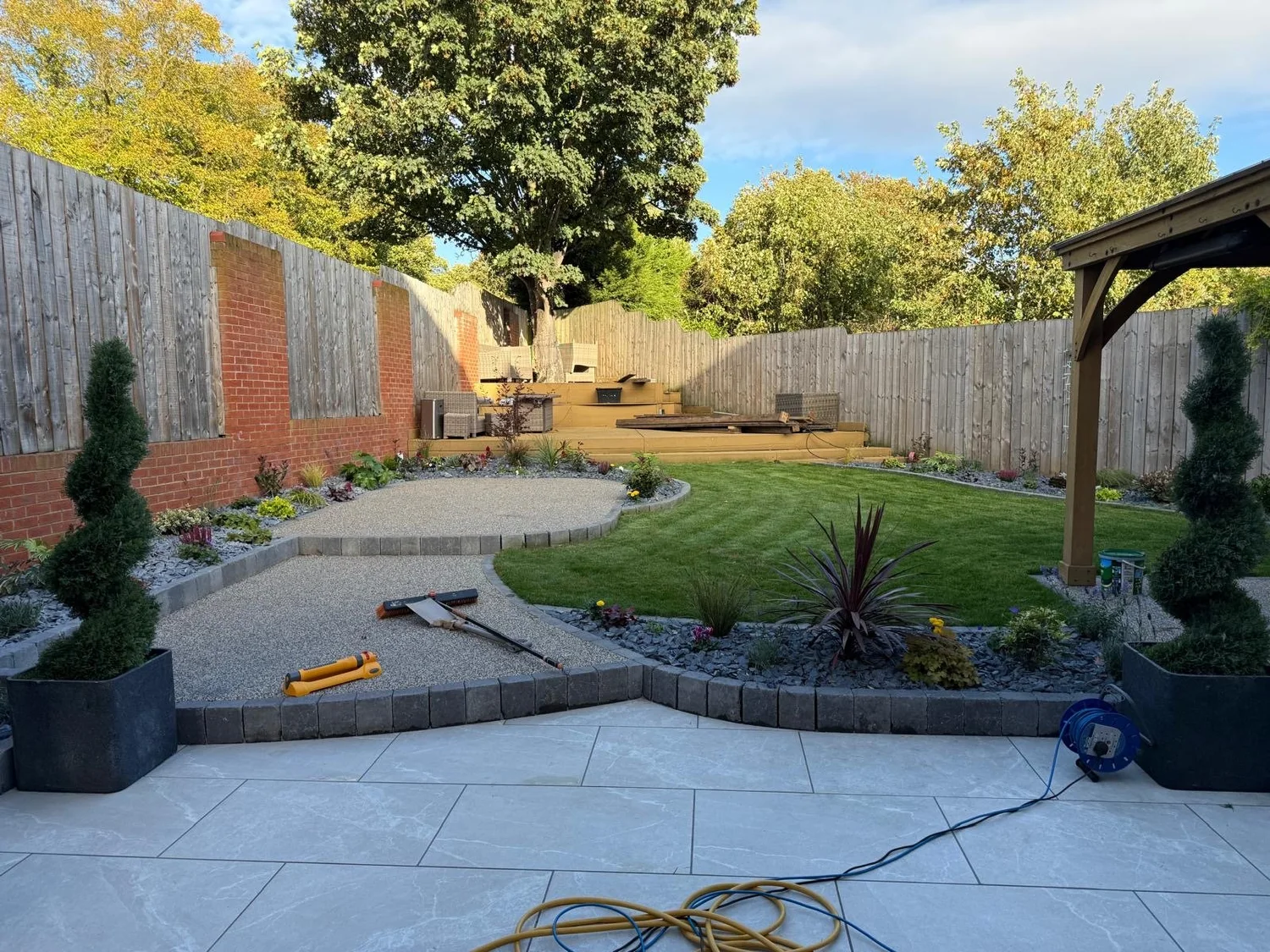
Soft landscaping is often the cheaper part of a garden, but the choices still add up.
- Turf: usually the lowest upfront cost for a lawn, but the ground still needs preparing, levelling and topsoil adding where needed. It also needs mowing, feeding and watering for years to come.
- Artificial grass: costs more to install than turf because it needs a dig-out, a compacted base, a weed membrane and careful joining. It removes the mowing and the muddy patches, which is why many families see it as an investment. Have a look at our artificial grass installations.
- Planting: mature shrubs and specimen trees cost far more than young plants. Planting smaller and letting borders fill in over a couple of seasons is an easy way to save.
Decking, fencing, walls and gazebos
Structures can make a garden, and they can also make up a large share of the budget.
- Decking: softwood is the most affordable, while composite boards cost more upfront but need very little looking after. Raised decks on a slope need more framing and may need balustrades. See our decking work for examples.
- Fencing: priced by the run, with the style making a big difference. Standard panels are the most affordable, while close-board and slatted horizontal screens cost more. Replacing concrete posts, or getting posts into tricky ground, adds time. Our fencing page shows the main styles.
- Walls and raised beds: brick, rendered block and stone walls need proper footings, so they are often more expensive than people expect. Sleeper beds are a lower-cost alternative.
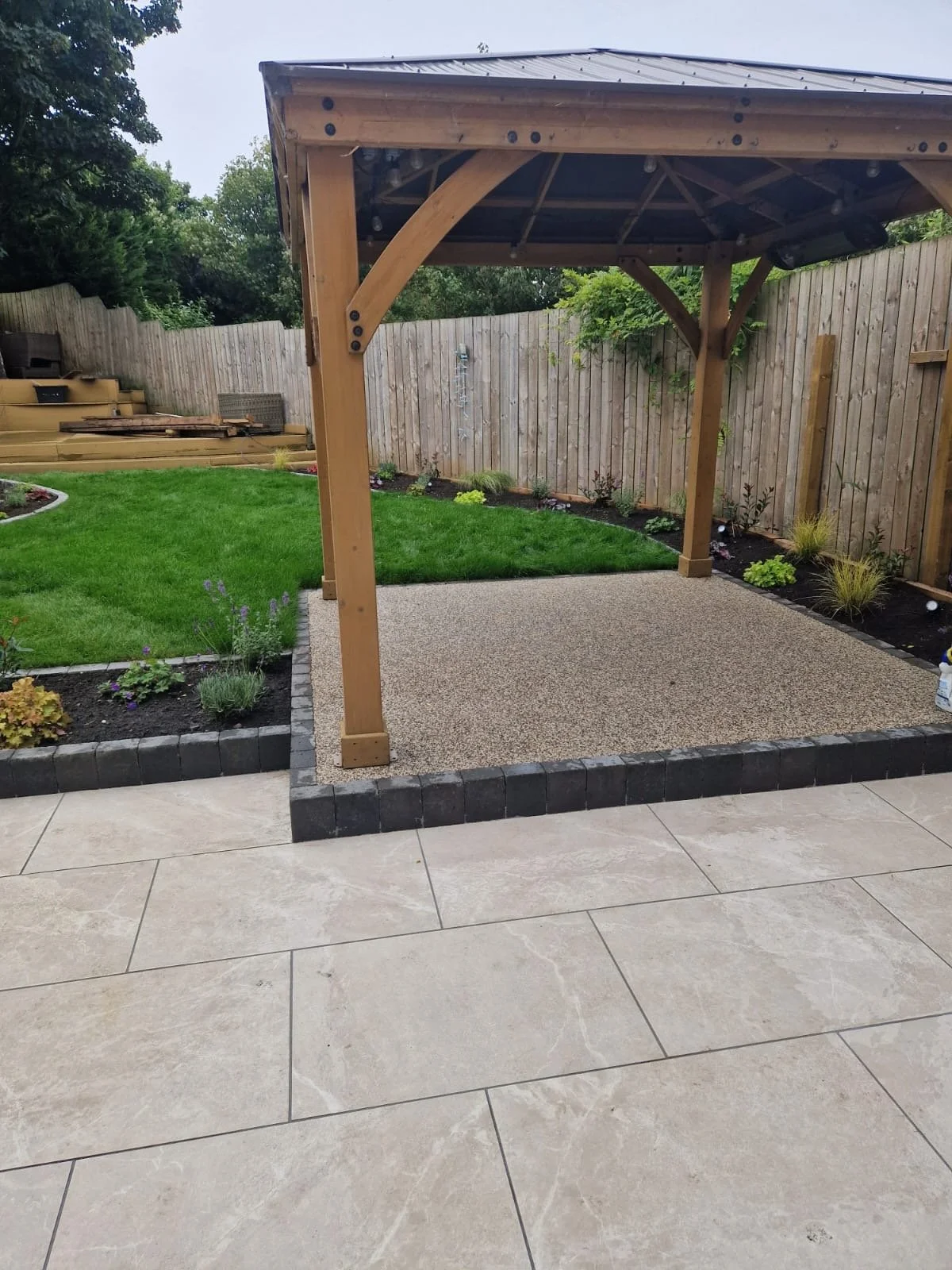
- Gazebos and pergolas: a timber gazebo turns a patio into an outdoor room, but it needs a solid, level base and secure fixings to cope with North East wind.
Lighting and electrics
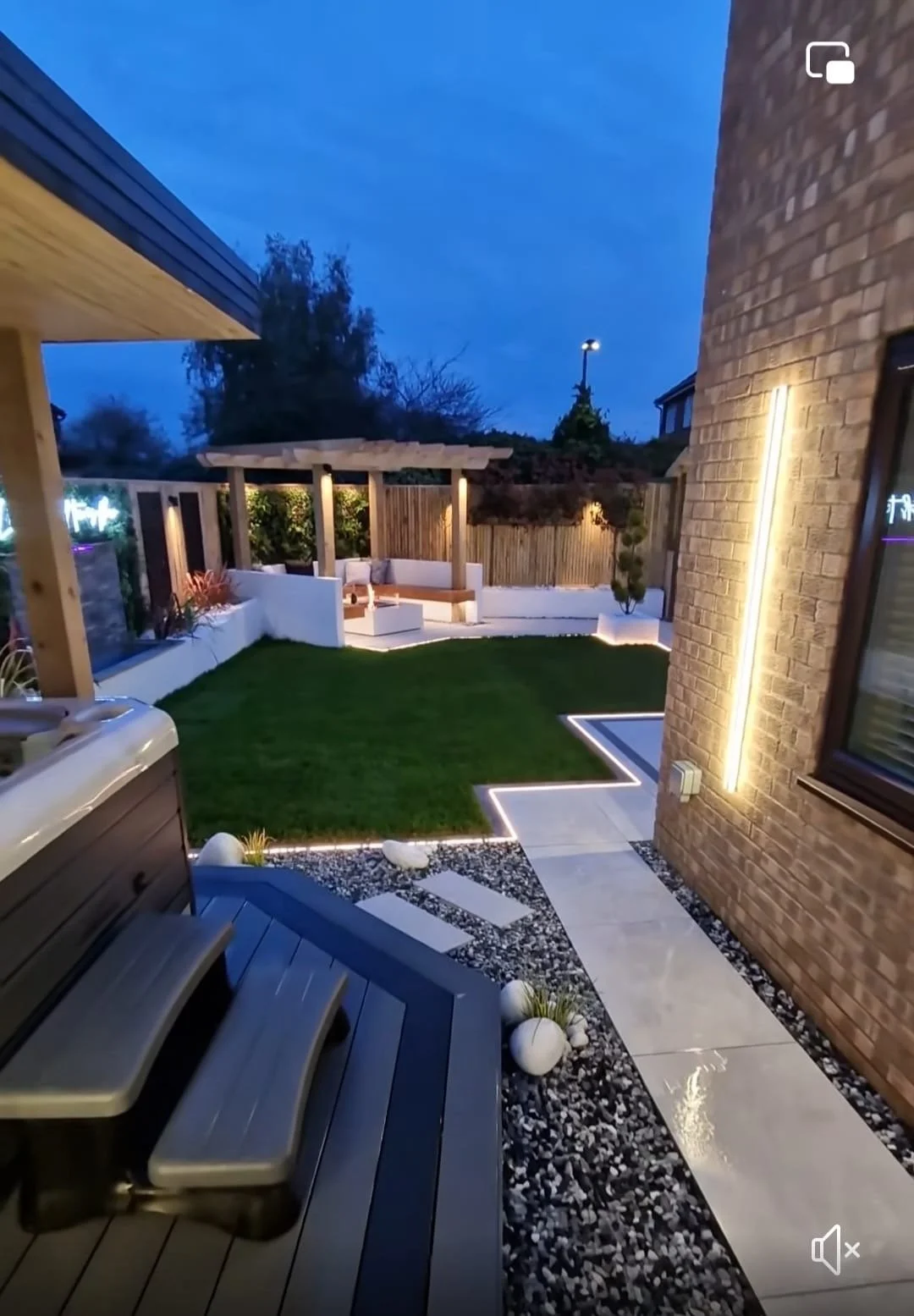
Garden lighting, outdoor sockets and power for hot tubs or water features are far cheaper to fit while the garden is being built. Cables can run in ducting under the patio and beds before anything is laid. Adding them afterwards often means lifting paving or chasing through finished walls.
Outdoor electrical work must be carried out by a qualified electrician, so expect it as its own line on a quote. The number of lights, the fittings and the length of cable run all affect the price.
Design fees and planning
Some landscapers charge separately for a design, while others include a layout drawing as part of the quote. A detailed plan costs a little more upfront but helps everyone price the same thing and avoids expensive changes mid-build. If you’re still working out what you want, our garden design service is a good place to start.
Most garden landscaping doesn’t need planning permission, but larger raised decks, tall walls, fences over the normal height limits and work at listed buildings may. It’s worth checking early so there are no surprises.
Phasing a project
If the full design is more than you want to spend in one go, you don’t have to build it all at once. Many of our customers split a garden into stages:
- Phase one: groundwork, drainage, ducting for future lighting and the main patio. This is the messy part and is best done in one go.
- Phase two: the lawn, paths and fencing.
- Phase three: decking, gazebos, planting and finishing touches.
The key is to plan the whole garden first, so each stage fits the next and nothing has to be dug up later. Skip hire and machinery are repeated for each phase, so phasing can cost slightly more overall.
Comparing quotes and red flags
Landscaping quotes can vary a lot, so make sure you’re comparing like for like. A good quote should be written and itemised, and should tell you:
- How deep the dig-out is and what the sub-base is made of
- Which materials are being used, including the exact slab, board or grass
- How drainage will be handled
- Whether waste removal and skips are included
- What edging, pointing and finishing work is included
- How long the job will take and what guarantee comes with it
Be wary of any of these red flags:
- A price given on the doorstep without measuring up
- A large cash deposit asked for before any work is booked
- No written quote, or a single figure with no breakdown
- Pressure to decide on the day, or a “today only” discount
- No address, reviews or examples of recent work
VAT and what is included
Always check whether a quote includes VAT. VAT-registered businesses have to charge it on top of their price, so a quote that looks cheaper may simply be shown before VAT. Ask for every quote on the same basis so you’re comparing the true cost.
If you’re trying to keep both the build cost and the upkeep down, our guide to low maintenance garden ideas for North East homes has plenty of practical ideas.
Common questions
How much does it cost to landscape a garden?
It depends on the size of the garden, the access, the amount of groundwork and the materials you choose. A simple turf-and-patio refresh costs far less than a full redesign with porcelain, decking, lighting and a gazebo. The best way to get a reliable figure is a site visit and a written, itemised quote.
What is the most expensive part of landscaping a garden?
Groundwork and hard landscaping usually take the biggest share. Digging out, removing waste, laying a proper sub-base and building patios, walls and steps all involve a lot of labour and materials.
Is artificial grass more expensive than turf?
Yes, artificial grass costs more to install than turf because it needs a full dig-out, base and membrane. Turf needs ongoing mowing, feeding and repairs, so the gap narrows over the years.
Does no rear access make landscaping more expensive?
Usually, yes. If materials and waste have to be carried through the house, the job takes longer and needs more labour and floor protection. We always assess access on our survey and include it in the price.
Can I landscape my garden in stages?
Yes. Plan the whole design first, then build it in phases, starting with groundwork, drainage and the main patio. This spreads the cost while making sure each stage fits together.
Do your quotes include VAT and waste removal?
Our written quotes set out exactly what is and isn’t included, from waste removal to VAT, so you know the full cost before any work starts.
Planning a garden makeover?
We will visit, talk through your ideas and give you a clear, itemised quote for your new garden, with no obligation.
Get a free quoteSee garden makeovers