- Home
- Decking
Decking in Newcastle & the North East.
Timber and composite decking, raised decks, steps and balustrades, built on a solid frame for gardens in Newcastle, Durham, Sunderland and Teesside.
Free site visits and written quotes · Timber and composite
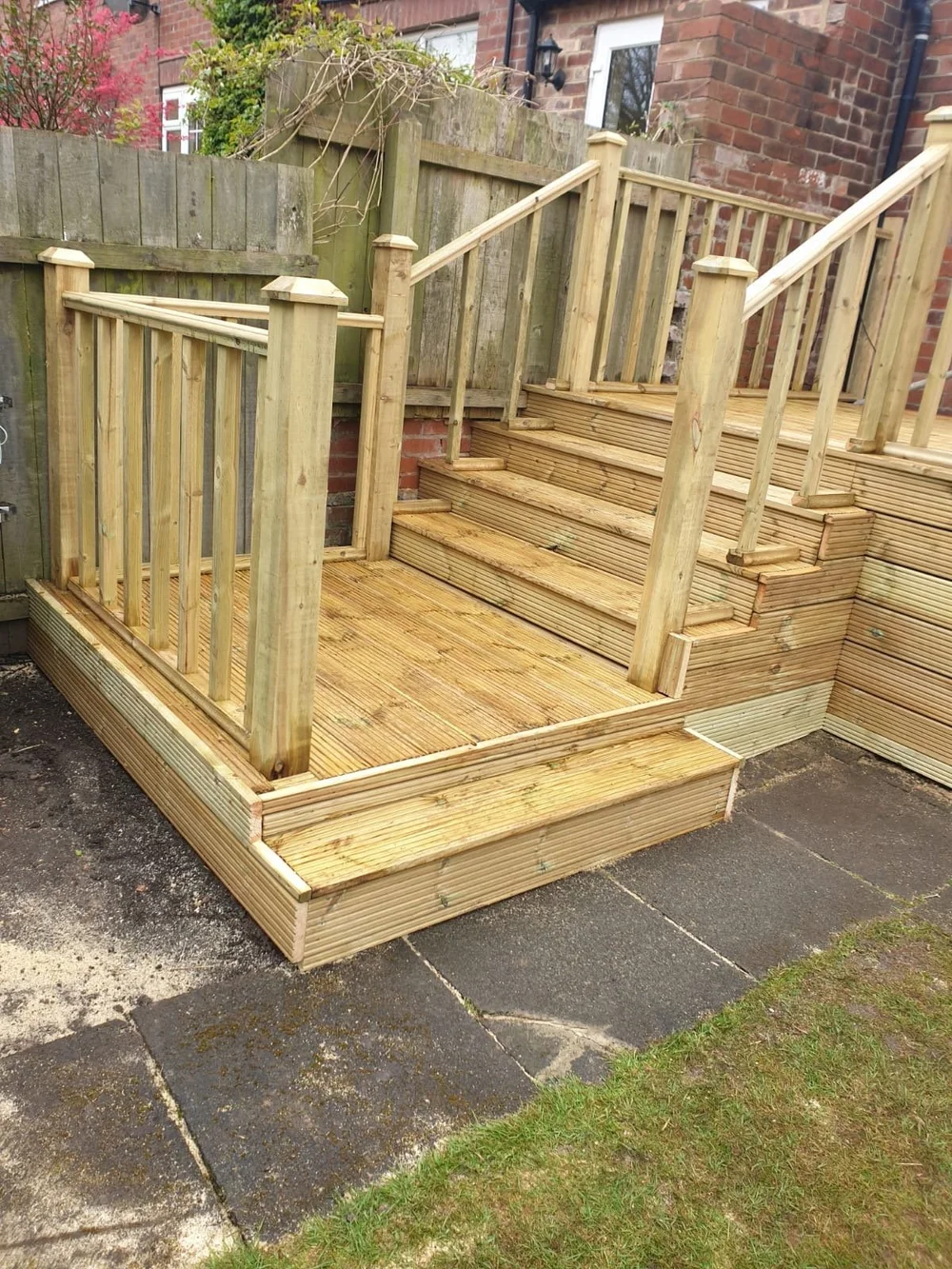
Pictured: timber deck with steps and balustrades
Garden decking built properly, from the frame up
We design and build decking for homes in Newcastle, Gosforth, Whitley Bay, Durham, Sunderland, Washington, Middlesbrough and across the North East, from small ground-level decks to raised platforms on sloping gardens.
The boards are what you see, but the frame is what decides how long a deck lasts. We set footings properly, use pressure-treated joists at the right spacing and leave room for air to move underneath, so the deck stays solid, level and dry in our damp climate. Then we finish it with steps, balustrades and lighting that suit the way you use your garden.
- Timber or composite
- Samples on your visit so you can compare.
- Raised and sloping sites
- Level outdoor space without big earthworks.
- Built to last
- Treated frames, solid footings and quality fixings.
- Planning checked
- We tell you if your deck needs permission.
Types of decking we build
Every garden is different. These are the decks we’re asked for most.
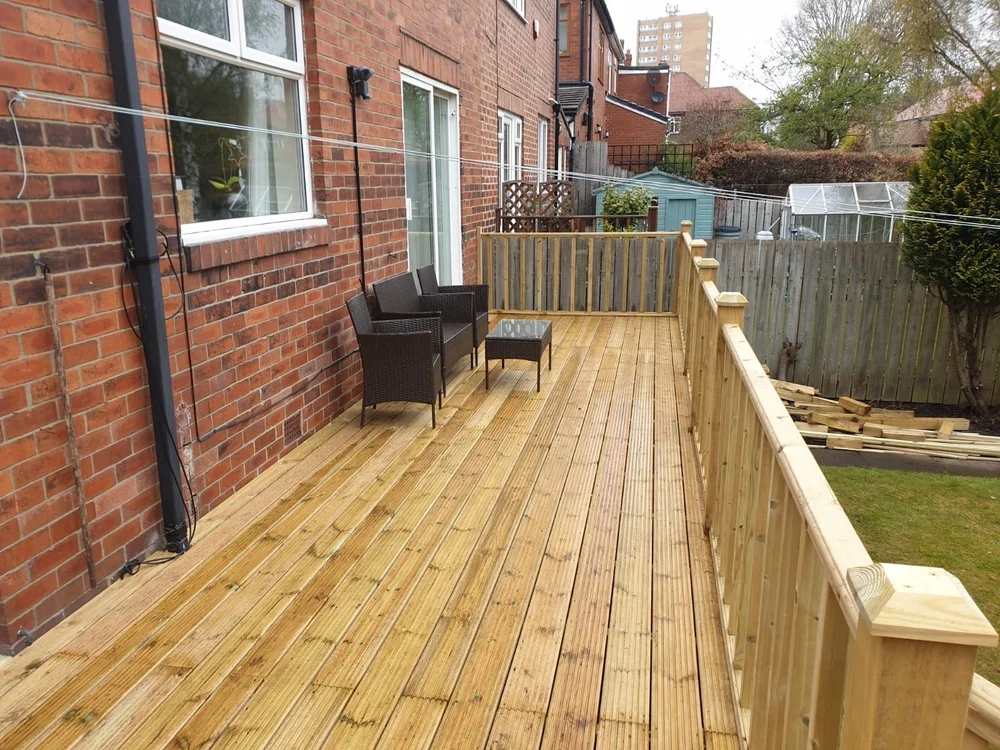
Ground-level decks
Simple · Versatile
A low deck just off the house or at the end of the garden. Ideal for a dining area or for covering an uneven or tired patch of garden.
- Usually no planning needed
- Quick to build
- Pairs with lawns and patios
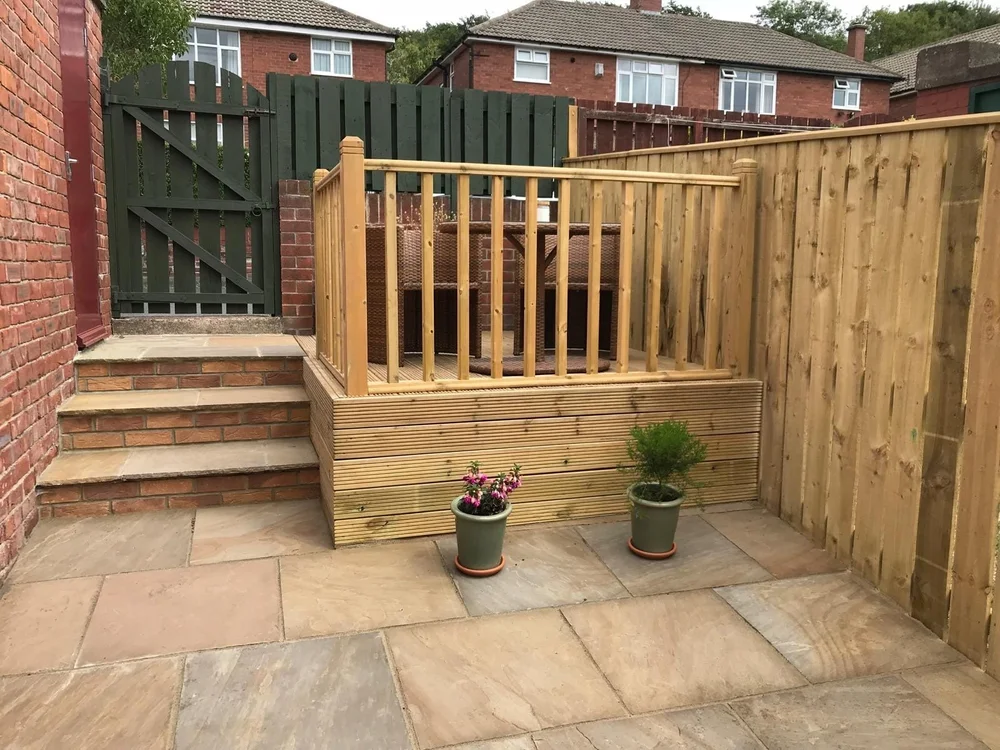
Raised decks
Slopes · Views · Level space
Built up on posts to create a level area on a sloping garden, or to step straight out from patio doors without a drop.
- Steps and handrails
- Balustrades for safety
- Storage space underneath
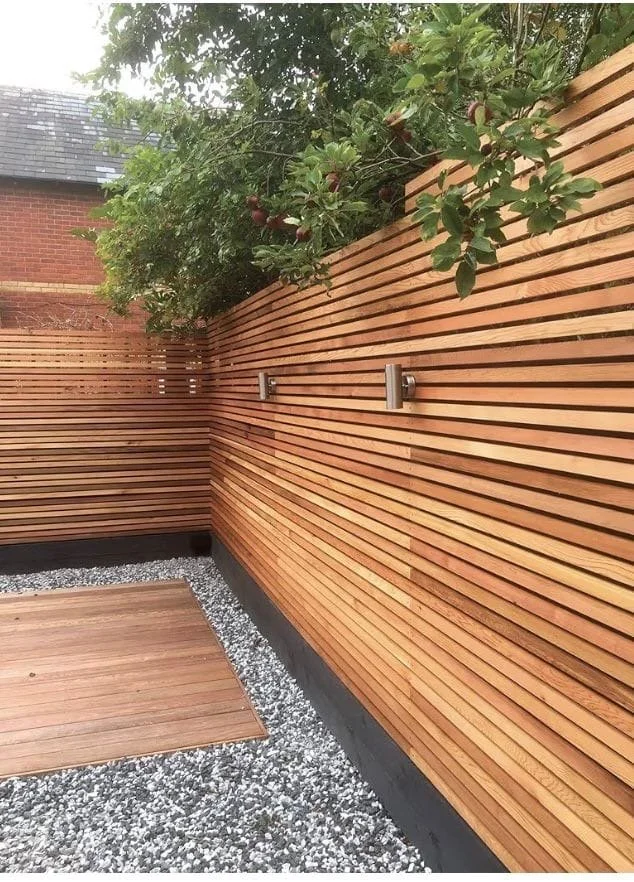
Decks with screening
Privacy · Shelter
Decking finished with slatted screens, planters or matching fencing, to make a sheltered, private seating area.
- Matching slatted screens
- Built-in planters
- Lighting built in
Timber or composite decking?
Both can look great. The right choice depends on your budget, how much upkeep you want and where the deck will go.
| Board type | Look | Upkeep | Typical lifespan | Best for |
|---|---|---|---|---|
| Pressure-treated softwood | Natural timber look; can be stained any colour | Clean, and re-treat or stain every 1–2 years | Around 10–15 years with care | Budget-friendly decks and traditional gardens |
| Hardwood | Rich, natural grain that weathers to silver-grey | Oil yearly to keep the colour | 20 years or more | Premium natural finish |
| Composite | Consistent colour; wood-grain or modern finishes | Wash down; no staining or sanding | Often 20 years or more | Low maintenance, busy and shady gardens |
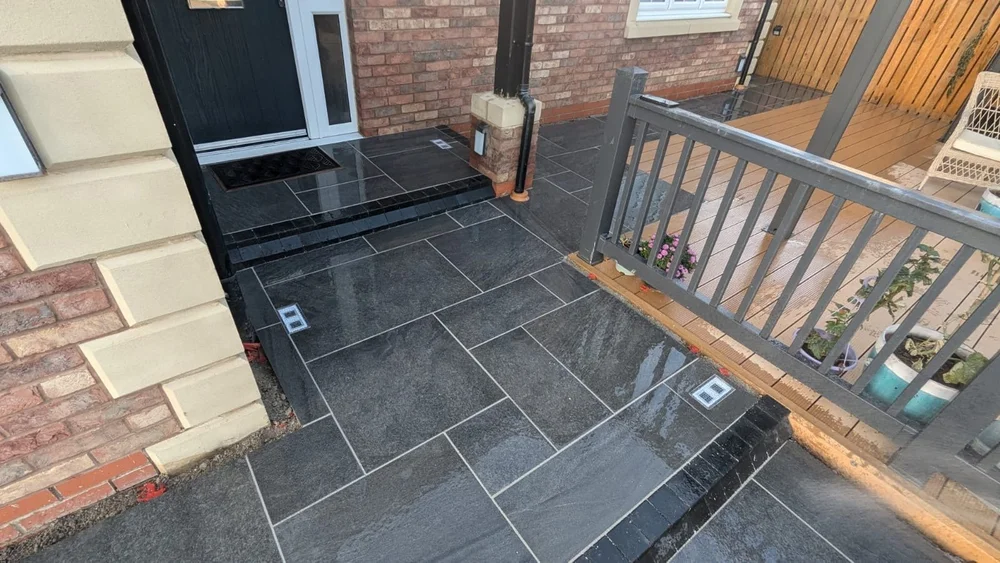
What goes under a deck that lasts
Most decks that go soft, bounce or rot do so because of the frame. Joists set too far apart, posts that aren’t concreted in and no airflow underneath all shorten a deck’s life, especially in shady, damp North East gardens.
We build every frame from pressure-treated timber, set on solid footings and spaced to suit the boards you choose, with a weed membrane underneath and room for air to circulate. It costs a little more than a quick job, but it’s why our decks stay solid.
- Pressure-treated joists at the right spacing
- Concreted posts or adjustable supports
- Weed membrane and ventilation
How we build your deck
The same careful steps on every deck, whatever its size.
-
01
Ground prepared
Vegetation cleared, ground levelled and a weed membrane laid so nothing grows up under the deck.
-
02
Solid footings
Posts set in concrete, or adjustable supports on firm pads, so the deck can’t sink or rock.
-
03
Treated frame
Pressure-treated joists at close centres, with tighter spacing for composite boards.
-
04
Airflow and drainage
Space under the frame and gaps between boards so the deck dries out after rain.
-
05
Fixings that last
Stainless steel or coated screws, or hidden clip systems for composite.
-
06
Safe edges
Steps, handrails and balustrades on raised decks, fitted solidly to the frame.
Do you need planning permission for decking?
In most cases you don’t. Under permitted development rules in England, a deck is usually fine without planning permission if it’s no higher than 30cm above the ground and, together with any extensions and outbuildings, it covers no more than half of your garden.
You’ll normally need permission for decks higher than 30cm, for balconies and raised platforms, and for listed buildings. Conservation areas can have extra rules. We’ll check the height and size with you at the design stage, and design the deck to stay within the rules wherever we can.
- 30cm height limit for most decks
- No more than half the garden covered
- Extra rules for listed buildings
Decks and timber builds
Decks, steps, balustrades and timber structures from gardens we’ve built.
What to expect
A clear process, reliable service and a quality finish, from first call to final result.
-
Step 1: Get in touch
Call, email or send a quote request online and tell us what you have in mind.
-
Step 2: Free quote
We visit, measure up and give you a clear written price, with no obligation.
-
Step 3: Planning & design
We help you choose materials and shape a layout that suits your home.
-
Step 4: The build
Our team carries out the work carefully, keeping you updated and the site tidy.
-
Step 5: Enjoy the result
A smart, durable finish that improves your home, ready to enjoy.
Decking across the North East
We build decking throughout Newcastle, North Tyneside, Northumberland, County Durham, Sunderland and Teesside. If you’re not sure whether we cover your area, just ask.
- Newcastle upon Tyne
- Gosforth
- Jesmond
- Ponteland
- Whitley Bay
- Tynemouth
- Gateshead
- Washington
- Sunderland
- Durham
- Chester-le-Street
- Bishop Auckland
- Consett
- Stockton-on-Tees
- Middlesbrough
- Morpeth
Local pages: Newcastle Durham Sunderland Middlesbrough
Decking questions
Quick answers to the questions we get asked most.
Can’t see your question? Get in touch or call 0191 245 5045.
Do I need planning permission for decking?
Usually not. In England, decking is normally allowed without planning permission as long as it’s no more than 30cm above the ground and, together with any extensions and outbuildings, it doesn’t cover more than half of your garden. Raised decks over 30cm, balconies, listed buildings and some conservation areas need permission. We’ll check this with you when we visit.
Timber or composite decking: which is better?
Timber is cheaper to buy, looks natural and can be stained any colour, but it needs cleaning and treating every year or two. Composite costs more up front but doesn’t rot, splinter or need staining, and it holds its colour. If you want the lowest maintenance, composite is usually the better long-term choice.
How long does decking last?
A well-built pressure-treated softwood deck typically lasts 10 to 15 years with regular care. Hardwood lasts longer. Good quality composite boards often last 20 years or more and usually come with a long manufacturer’s guarantee.
Is decking slippery in winter?
Any outdoor surface can get slippery when it’s wet, shaded or covered in leaves. We recommend grooved or anti-slip boards in shady North East gardens, leave gaps between boards for drainage and airflow, and suggest a regular clean to stop algae building up.
How much does a new deck cost?
It depends on the size, height, board type, the frame, and extras like steps, balustrades and lighting. Raised decks need more structure than ground-level decks. We measure up on a free visit and give you a clear written quote with everything listed.
Can you build decking on a slope?
Yes. Sloping gardens are one of the best places for decking, because a deck creates a level area without major earthworks. We build the frame up on posts set in concrete and add steps and balustrades where they’re needed.
How long does it take to build a deck?
Most decks take between two and five days, depending on the size, height and how much ground preparation is needed. We’ll give you a timescale with your quote.
Can you replace an old, rotten deck?
Yes. We take up the old boards and frame, dispose of them and check the ground. If the existing frame is sound we’ll tell you, but in most cases a new frame is the safer option.
Planning a new deck?
Tell us about your garden and we’ll arrange a free visit to measure up, show you timber and composite samples and give you a clear written price.
Explore more
One team for everything outside your home.