A level garden is easier to mow, safer to play on and far more useful for a patio, a shed or a table and chairs. But “levelling a garden” can mean anything from filling a few dips in the lawn to reshaping a steep slope with walls and steps. This guide explains how to work out which job you’ve got, how to measure it and how to do it properly, based on the gardens we build across Newcastle and the North East.
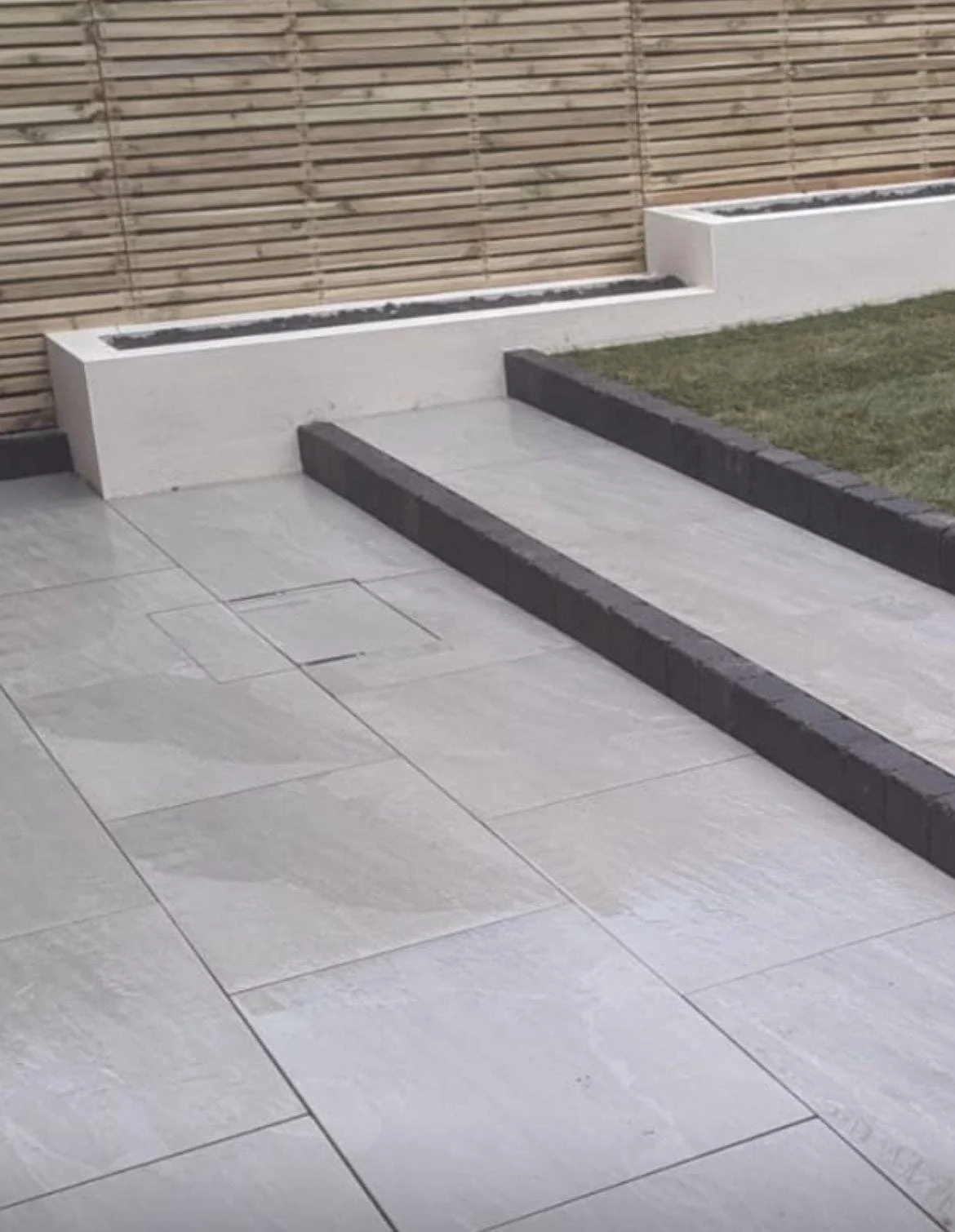
Bumpy lawn or proper re-level?
Before you hire a digger or buy tonnes of soil, work out what the problem really is. Most gardens fall into one of two groups:
- A bumpy or uneven lawn: the garden is roughly flat, but there are dips, hollows, ridges or old flower bed outlines. This can usually be fixed with top-dressing and a bit of patience.
- A sloping garden: the ground falls noticeably from one end to the other, or from side to side. Topping up won’t solve this. The soil needs moving, and often holding back with walls or sleepers.
A gentle slope isn’t a bad thing. A slight fall helps rain run off, and the aim is usually one or two flat, usable areas, not a dead-level garden.
Levelling a bumpy lawn
For shallow dips of a couple of centimetres, top-dressing is the gentlest fix:
- Mow the lawn short and rake out any thatch and moss.
- Mix a top dressing of sieved topsoil and sharp sand, or buy a ready-made lawn dressing.
- Spread a thin layer over the low spots, no more than about 1–2cm at a time, and work it into the grass with the back of a rake or a lute.
- Make sure the grass blades are still showing through, water it in and overseed any thin patches.
- Repeat every few weeks during the growing season until the dips are filled.
Deeper hollows need a different approach. Cut an H shape in the turf with a half-moon edger, peel the two flaps back, fill underneath with topsoil, firm it down with your heel and lay the turf back over the top. Bumps can be fixed the same way by scraping soil out from underneath. Spring and early autumn are the best times, when the grass is growing and the ground is moist.
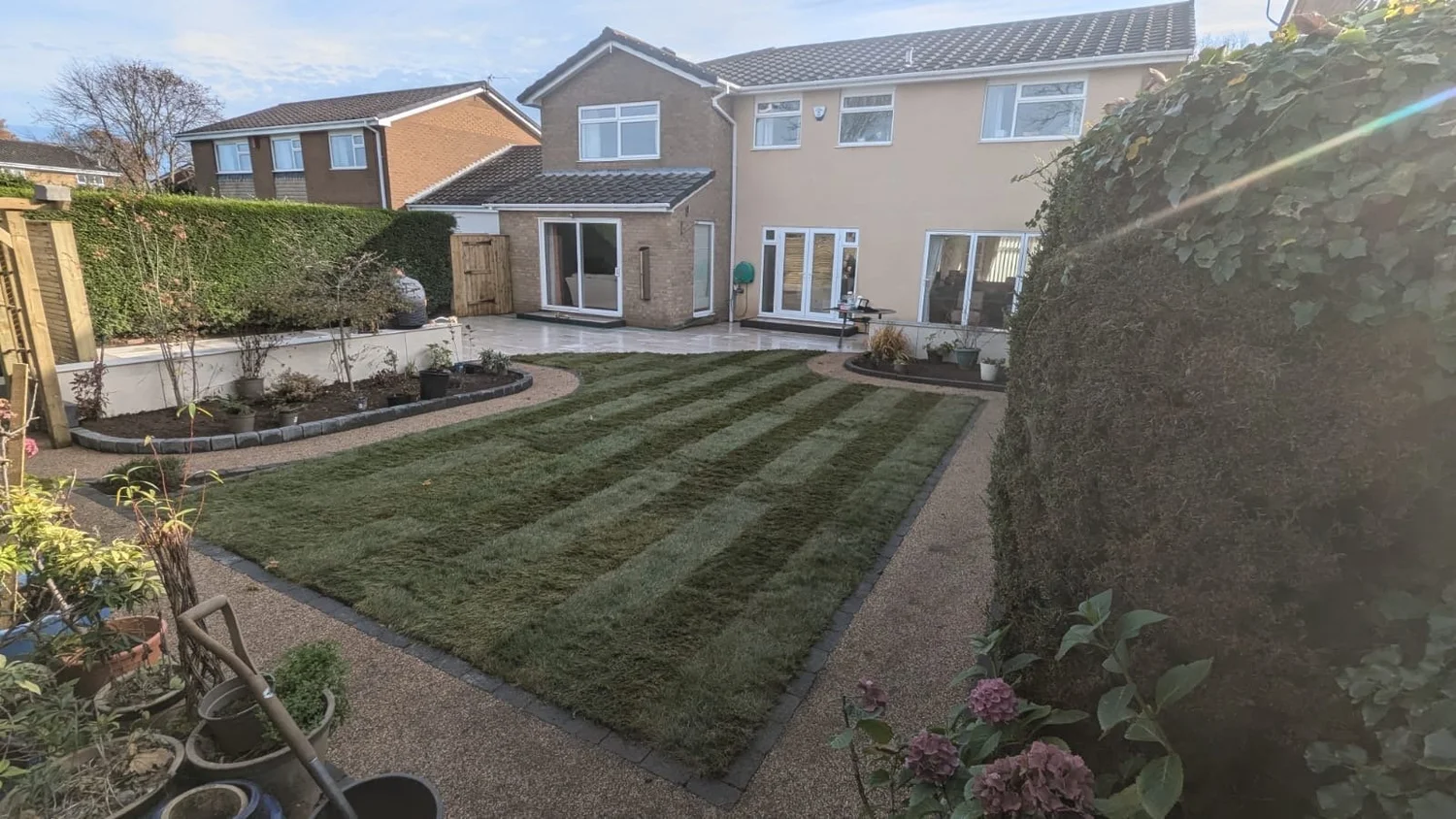
Measuring the slope
You can’t level a garden by eye. A few pegs and a string line will tell you exactly what you’re dealing with.
- Knock a wooden peg into the ground at the highest point of the area you want to level.
- Knock a second peg in at the lowest point, or every couple of metres along a long garden.
- Tie a string line tight between the pegs and use a line level or a spirit level on a straight timber to get the string perfectly level.
- Measure from the string down to the ground at each peg. The difference between the readings is the drop across the area.
- Write the readings and distances down on a rough sketch of the garden.
Once you know the drop, you can decide whether to level it in one go or split it into terraces. On larger areas, a laser level makes the job much quicker.
Cut and fill, and keeping your topsoil
The most efficient way to level ground is cut and fill. Instead of bringing in loads of new soil, you dig soil out of the high side and use it to build up the low side, meeting somewhere in the middle.
The key rule is to keep your topsoil separate. Topsoil is the dark, crumbly top layer where grass and plants grow, and it’s too valuable to bury. Strip it off first and pile it to one side. Cut and fill the subsoil underneath, compact it, then spread the topsoil back over the top. Mix the two and you’ll end up with poor, sticky ground that struggles to grow a decent lawn.
Check for underground pipes and cables before you dig. Drains, water mains and cables to garden lights or outbuildings are often shallower than you’d expect.
Levelling a sloping garden
On a proper slope, cutting and filling leaves a step in the ground that has to be held back. That’s where terraces, walls and steps come in.
- Terraces: splitting a slope into two or three flat levels means less soil moving and lower walls than one big flat area.
- Retaining walls: brick, block, stone or rendered walls hold back the soil at each change of level. They need a proper concrete footing and drainage behind them so water pressure doesn’t push them over.
- Sleepers: timber sleepers are a good choice for low raised beds and small level changes.
- Steps: every change of level needs a safe way up and down. Steps should have consistent risers and treads so nobody trips, and low-level lighting makes them safer after dark.
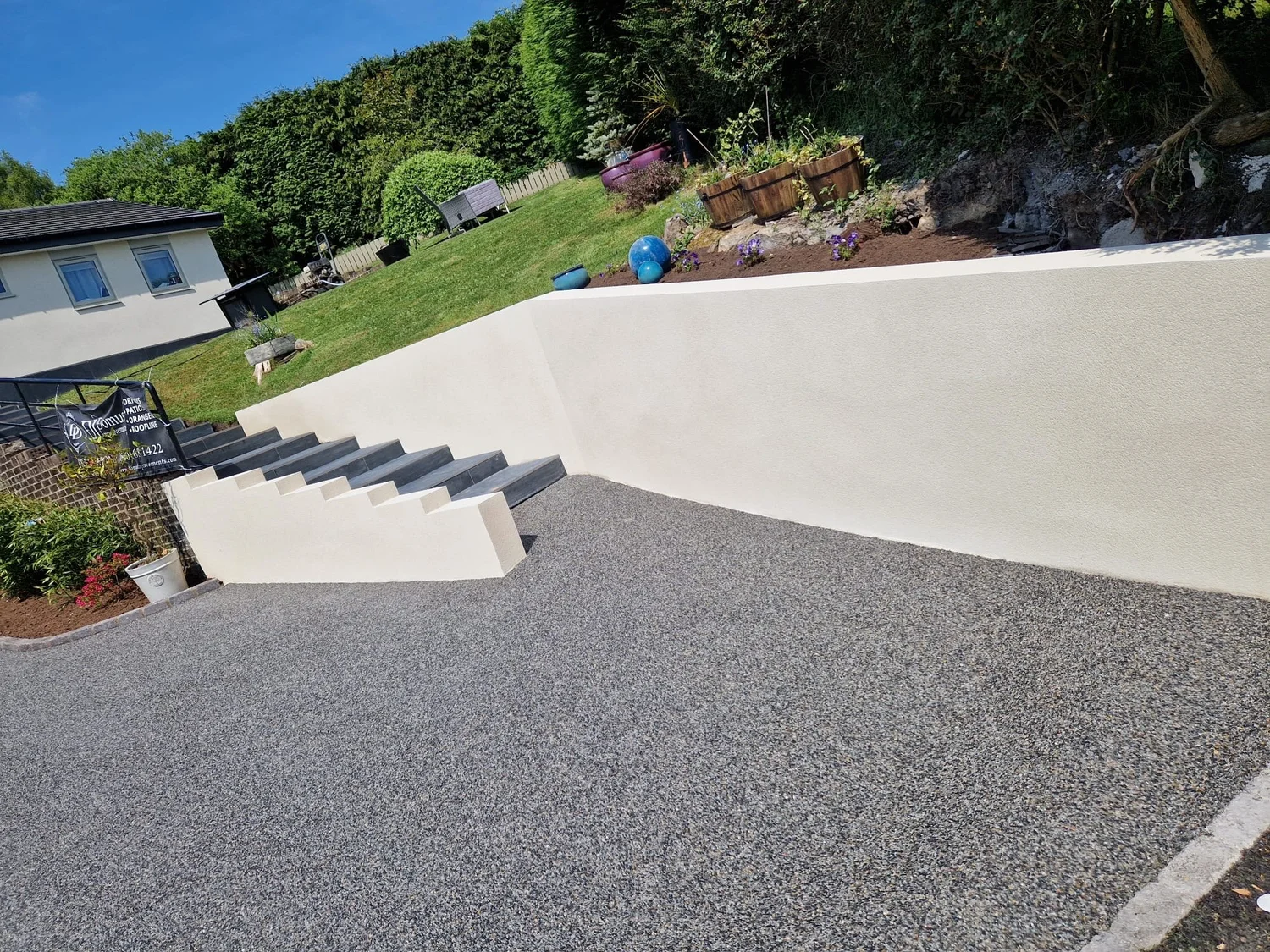

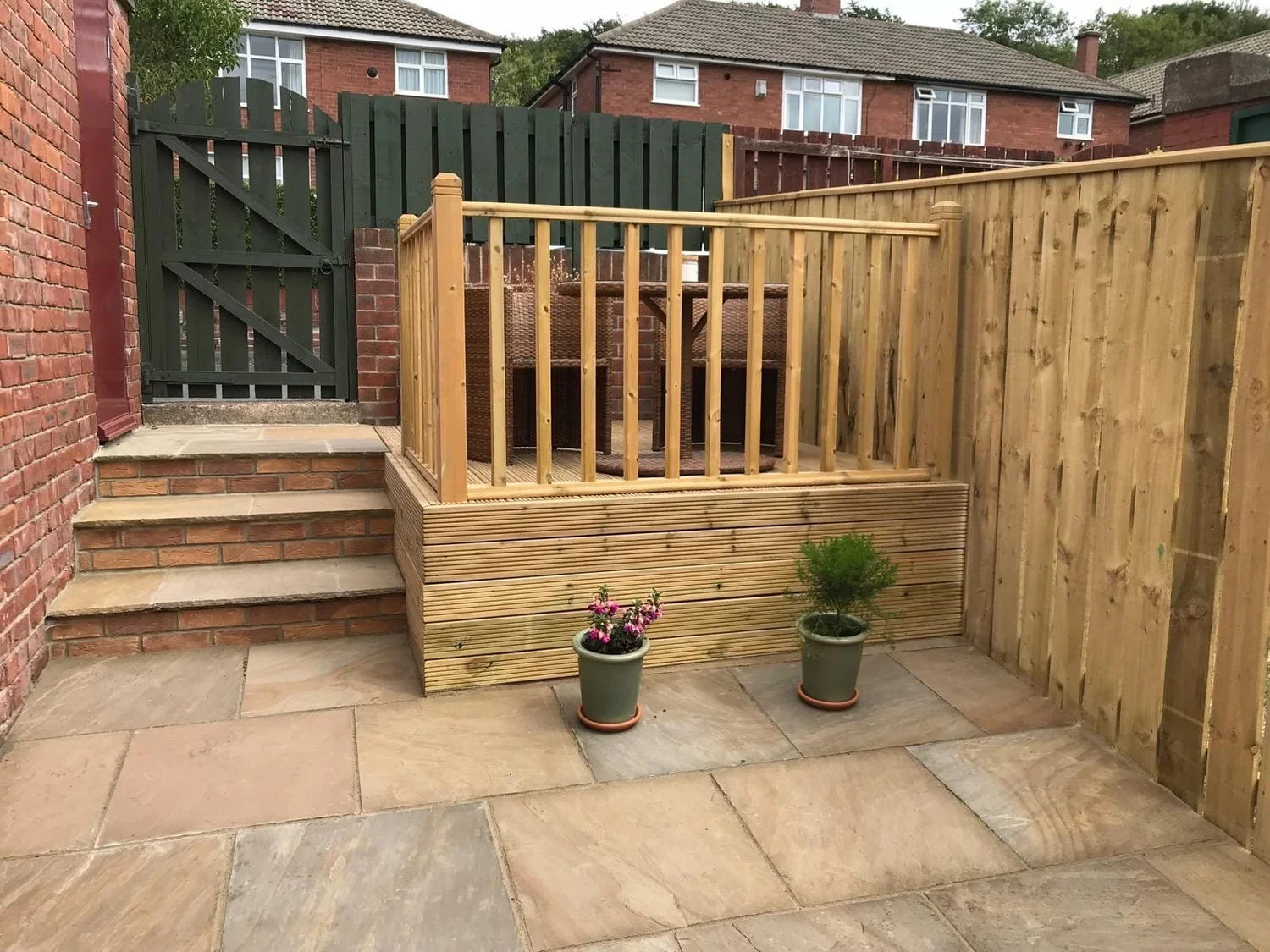
If you’d rather not move much soil at all, raised decking can create a flat, usable area over a slope, with the frame doing the work instead of walls. And a full garden design lets you plan the levels, steps, walls and planting together so the whole space works as one.
Drainage and the 150mm rule
Whenever you change the levels in a garden, think about where the rain will go. Two rules matter most:
- Fall away from the house. Lawns, patios and paths next to the house should slope gently away from it, so water runs off towards the garden or a drain, not towards your walls.
- Keep below the damp-proof course. The finished ground or patio next to the house should be at least 150mm below the damp-proof course (DPC). Raising soil or paving above it lets moisture bypass the DPC and can cause damp inside. It’s usually a line in the brickwork two or three courses above the ground.
Levelling can also move water somewhere it wasn’t going before, such as the bottom of a new retaining wall or a neighbour’s garden. If your garden already stays wet after rain, sort the drainage before or while you level. Our guide to waterlogged gardens and clay soil drainage covers the fixes in more detail.
Compacting the ground
Loose soil settles. Fill a hollow and turf straight over it, and it will likely sink again within a season. Build filled areas up in layers of around 100–150mm, firming each layer before adding the next.
For lawns, heeling the soil down and raking it level is usually enough. Anything that carries weight, like a patio, shed or path, needs a hired plate compactor (a wacker plate). Avoid working heavy clay when it’s wet, as it smears and turns into a solid, airless layer that water can’t pass through.
Levelling for a patio, artificial grass or shed
A lawn can live with a few bumps. Hard surfaces can’t, so each one needs its own kind of base:
- Patios: dig out to the right depth, lay and compact a sub-base of crushed stone, and bed the slabs on a mortar bed. The surface should never be dead flat. A slight fall, set with pegs and a string line, lets rain run off. See our patios page for how we build them.
- Artificial grass: remove the old turf and soil, then lay a compacted stone sub-base with a finer laying course on top, screeded smooth. Any bumps in the base will show through the grass, so this is where the levelling really matters. Our artificial grass page explains the build-up we use.
- Sheds and summerhouses: a shed needs a firm, level base so the doors open and close properly and the floor doesn’t rot. A concrete slab, slabs on a compacted base or a gravel-filled grid system all work.
Tools you’ll need
- Pegs, a mallet, a string line and a tape measure
- A spirit level, line level or laser level, plus a long straight edge
- A spade, shovel and wheelbarrow
- A landscape rake, lawn lute and half-moon edger
- A plate compactor for patio, shed and artificial grass bases
When to call a professional
Top-dressing a bumpy lawn is an easy weekend job. Re-shaping a whole garden is a different matter. It’s worth getting professional help if:
- The slope is big and means moving tonnes of soil, often through a narrow side path.
- You need retaining walls over about 1 metre high, or walls near a boundary, a driveway or a building. Taller walls hold back a lot of weight and usually need to be designed properly, sometimes by a structural engineer.
- You’re on heavy clay, which is hard to dig, holds water and moves as it wets and dries.
- The work is close to the house, the damp-proof course, drains or a neighbour’s boundary.
- You’re laying a patio, artificial grass or driveway on top, where any mistakes in the base will show for years.
Raising ground levels significantly, especially near a boundary, can sometimes need planning permission, so check with your local council if you’re planning a big change.
Common questions
What is the cheapest way to level a garden?
For a bumpy lawn, top-dressing with a soil and sand mix is the cheapest option. For a slope, cut and fill is usually the most economical, because you reuse the soil you already have.
Can I level a garden without removing the grass?
Yes, if the dips are shallow. Top-dressing in thin layers lets the grass grow up through it. For deeper hollows, lift the turf, fill underneath and lay it back down.
What is the best time of year to level a garden?
Spring and early autumn are best for lawns, when the grass is growing and the ground isn’t too wet or too dry. Bigger groundworks can be done most of the year, but avoid working heavy clay when it’s waterlogged.
How do I level a sloping garden?
Measure the drop with pegs and a string line, then decide how many flat levels you want. Strip the topsoil, cut and fill the subsoil, hold each change of level with a wall or sleepers, add steps and replace the topsoil.
Do I need planning permission to level my garden?
Most levelling work doesn’t need permission, but significant changes to ground levels, particularly near a boundary or a road, sometimes can. If you’re unsure, check with your local council before you start.
Can you level my garden as part of a makeover?
Yes. Levels are the first thing we plan on any garden makeover, so the patio, lawn, paths and steps all sit at the right height and drain properly.
Got a sloping or uneven garden?
We will measure your levels, talk through the options and design a layout that makes the most of your space.
Get a free quoteSee garden makeovers