- Home
- Artificial Grass Durham
Artificial grass in Durham.
Artificial lawns built for County Durham ground, from heavy clay and shaded terraces to new-build gardens laid over rubble. Fitted by a local team across Durham City, Chester-le-Street, Bishop Auckland and the surrounding towns and villages.
Free site visits across County Durham · Groundwork, base and waste removal in every quote
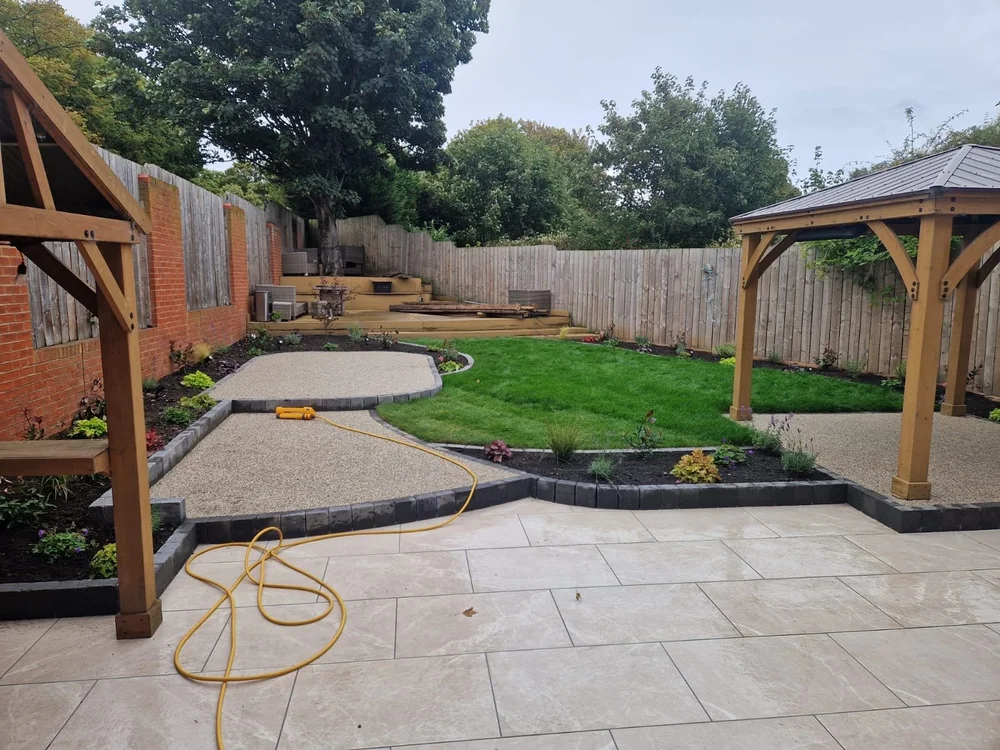
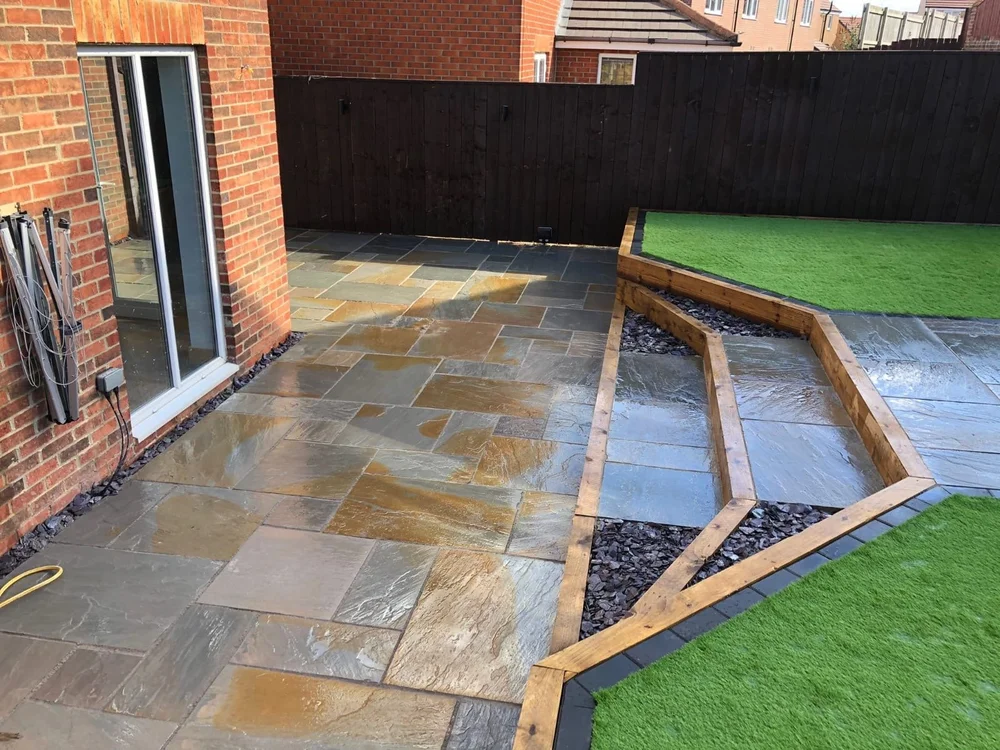
Pictured: artificial lawn beside a sandstone patio with angled beds
Artificial lawns for County Durham homes
We install artificial grass for homeowners in Durham City, Belmont, Framwellgate Moor, Chester-le-Street, Spennymoor, Newton Aycliffe, Bishop Auckland and across the county, from small terrace yards to full family gardens.
A lot of Durham gardens are hard work for real grass. Heavy clay keeps them wet through the winter, older houses are often hemmed in by walls and trees, and many newer estates have little more than a skin of topsoil over builder’s rubble. Artificial grass can solve all of that, but only if what goes underneath suits the ground. We look at the soil, the slope and where the water goes before we price anything, then build a base to match.
- Clay-ready bases
- Deeper dig-out and drainage where the ground holds water.
- Slopes and levels
- Retaining edges and steps for terraced gardens.
- Small yards too
- Shock pad systems over sound concrete in terrace yards.
- Local and tidy
- All waste taken away and the site left clean.
What lies under a Durham garden
Across much of the county the ground is boulder clay: dense, sticky and slow to drain. In winter it holds water close to the surface, and in a dry summer it shrinks and cracks. Around the former colliery areas you can also find old fill, ash and stone a short way down, and on many new-build estates the topsoil sits over compacted rubble left from construction. None of this suits a real lawn, and it will ruin an artificial one laid on a thin bed of sand.
So every Durham job starts with a look at what’s actually there. We dig down, check how wet the ground is and where it falls, then decide how deep the base needs to be and whether the water needs help getting away. If you’re dealing with a soggy garden now, our guide to waterlogged gardens and clay soil drainage explains what’s going on beneath the surface.
- Test dig before we price
- Base depth set by the ground, not a standard figure
- Drainage added where the clay needs it
Artificial grass, real turf or paving?
There’s a place for all three. This is how they compare in a typical County Durham garden.
| Compared | Artificial grass | Real turf | Paving or gravel |
|---|---|---|---|
| Wet winters on clay | Drains through to a stone base, so it stays usable after rain | Often waterlogged and muddy from autumn to spring | Paving stays usable; gravel can sink into soft ground over time |
| Shade from trees and walls | Stays green whatever the light | Thins out and turns to moss in heavy shade | Not affected, but shaded slabs can turn green and slippery |
| Regular upkeep | A brush, a leaf clear and an occasional rinse | Mowing, feeding, scarifying and reseeding bare patches | Weeding joints, jet-washing slabs, raking gravel back into place |
| Children and dogs | Soft, clean underfoot and can’t be dug up | Soft, but wears into bare patches and mud | Hard underfoot; gravel gets kicked about and carried indoors |
| Look and feel | Green, soft and lawn-like all year | The real thing, at its best in summer | Hard landscaping rather than a lawn |
| Best for | Shady, wet or heavily used gardens where turf struggles | Sunny gardens on free-draining ground | Seating areas, paths and parking |
The Durham gardens we work on most
Three types of garden come up again and again across the county, and each needs a slightly different approach.
Terrace yards in former pit villages
Stanley · Crook · Brandon · Sherburn
Small, walled back yards that are usually concrete or old flags. We either lay over sound concrete with a shock pad or lift the old surface and build a new base, making sure water drains away from the house.
- Shock pad over sound concrete
- Old flags lifted where needed
- Falls checked away from walls
New-build estate gardens
Newton Aycliffe · Spennymoor · Durham
Gardens with thin topsoil over rubble and clay, where turf goes mossy and soft. We dig out the poor ground and replace it with a compacted stone base that drains.
- Rubble and poor soil removed
- Compacted layers broken up
- Deeper, free-draining base
Sloping and terraced gardens
Durham City · Consett · Lanchester
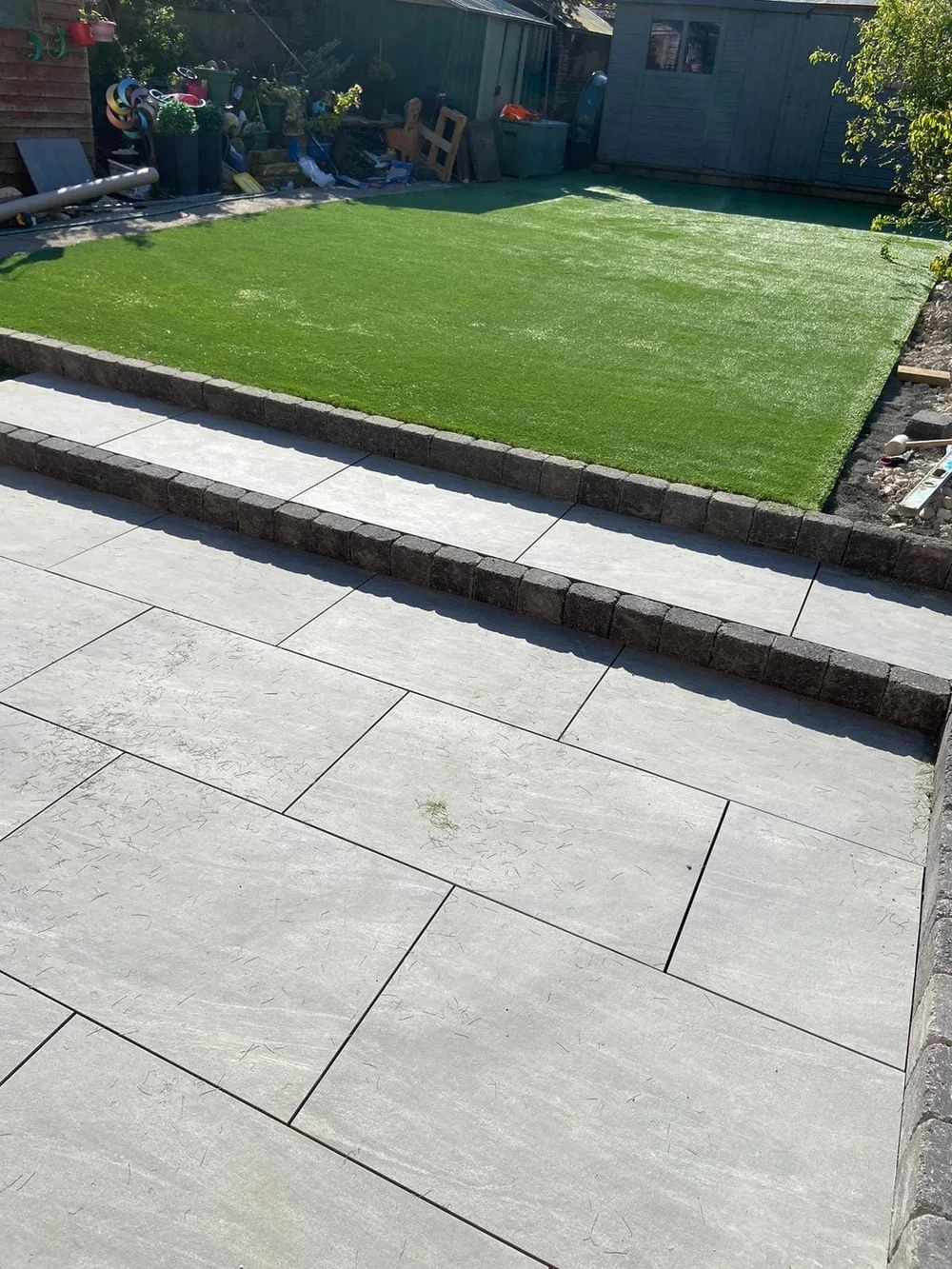
Older houses on hillsides often have gardens that rise or fall in steps. We build level lawn areas with firm retaining edges, and link them with steps or paths.
- Sleeper or block retaining edges
- Level lawn on each tier
- Water directed off each level
How we lay artificial grass on Durham ground
The same six stages on every lawn, with the depth and drainage adjusted to suit your soil.
-
01
Survey the ground
We dig a test hole, see how far down the clay or rubble starts, and check where water currently runs and collects.
-
02
Strip and dig out
Old turf, poor topsoil and loose rubble come out, taken deeper where the ground is soft or wet.
-
03
Sort the drainage
On sites that hold water, we add a soakaway, land drain or a fall towards an existing drain before building up.
-
04
Fix the edges
Timber, sleeper or block edging is set firmly round the lawn, with retaining edges on sloping or stepped gardens.
-
05
Build and compact the base
MOT Type 1 stone compacted in layers, then a granite dust laying course screeded smooth and a weed membrane on top.
-
06
Lay, join and brush up
The grass is rolled out, cut in, joined with tape and adhesive, fixed at the edges and brushed so the seams disappear.
Built for Durham weather
County Durham gets long, wet winters, and gardens tucked behind terraces, walls and mature trees can go most of the year without much direct sun. That’s when real lawns suffer: the ground stays soft, moss takes over and the grass by the back door turns to mud.
A well-built artificial lawn keeps its colour in shade and drains after a downpour, so it’s ready to use on a dry afternoon in February as well as in July. Shaded spots stay damp for longer, so we take extra care with the falls and the base there. Looking after it is simple: brush it now and then, keep leaves off it through the autumn and rinse it down when it needs freshening up.
- Usable after heavy rain
- Green in full shade
- No mowing or reseeding
Artificial lawns and finished gardens
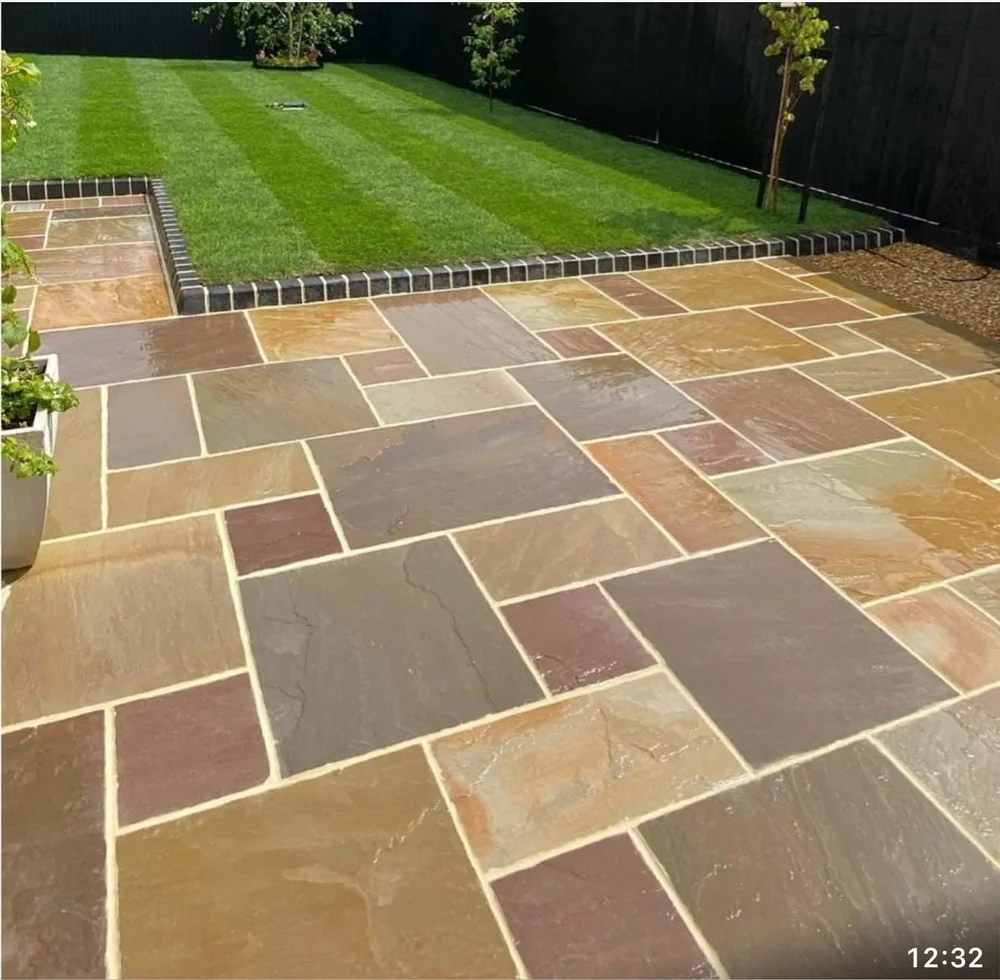
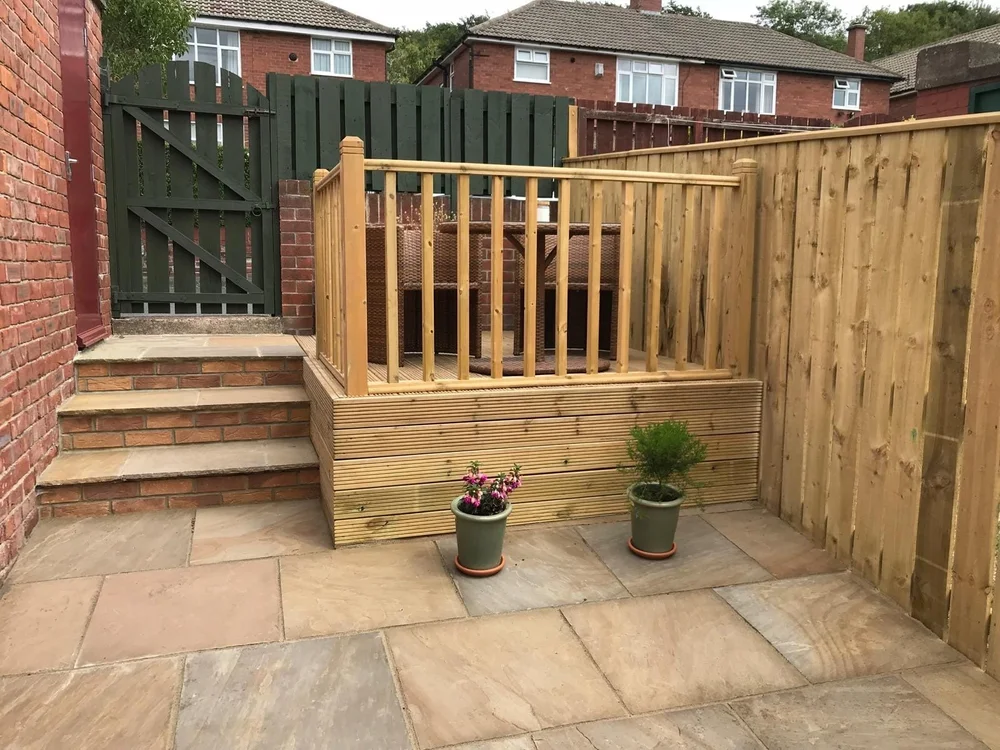
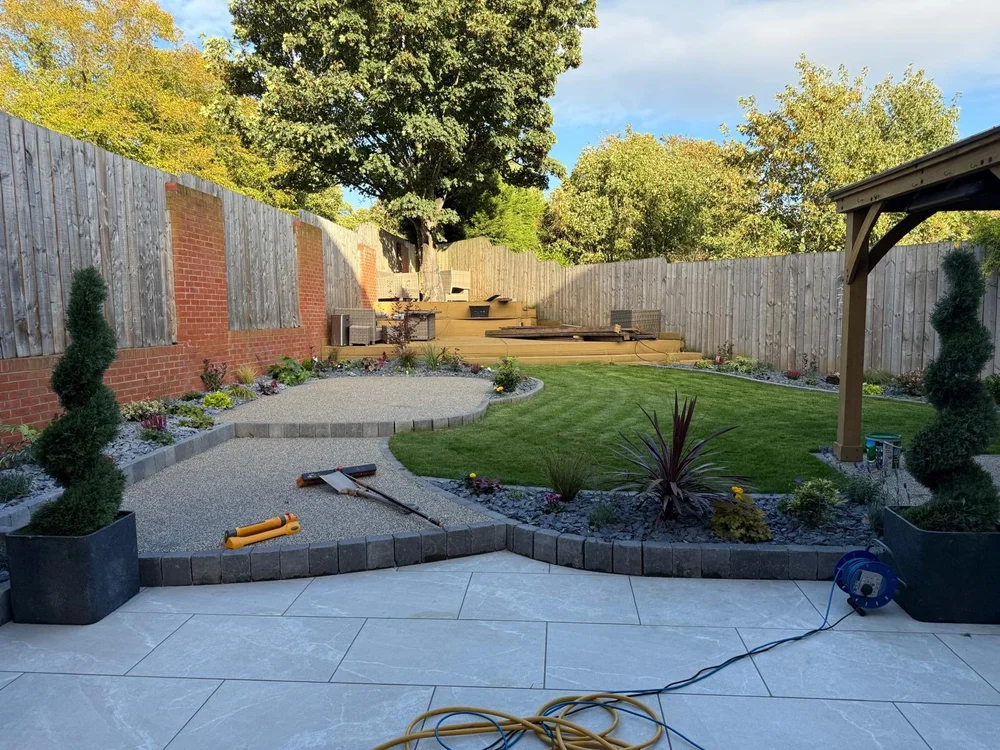
Lawns, patios and paths from gardens we’ve built across the North East.
More than just a lawn
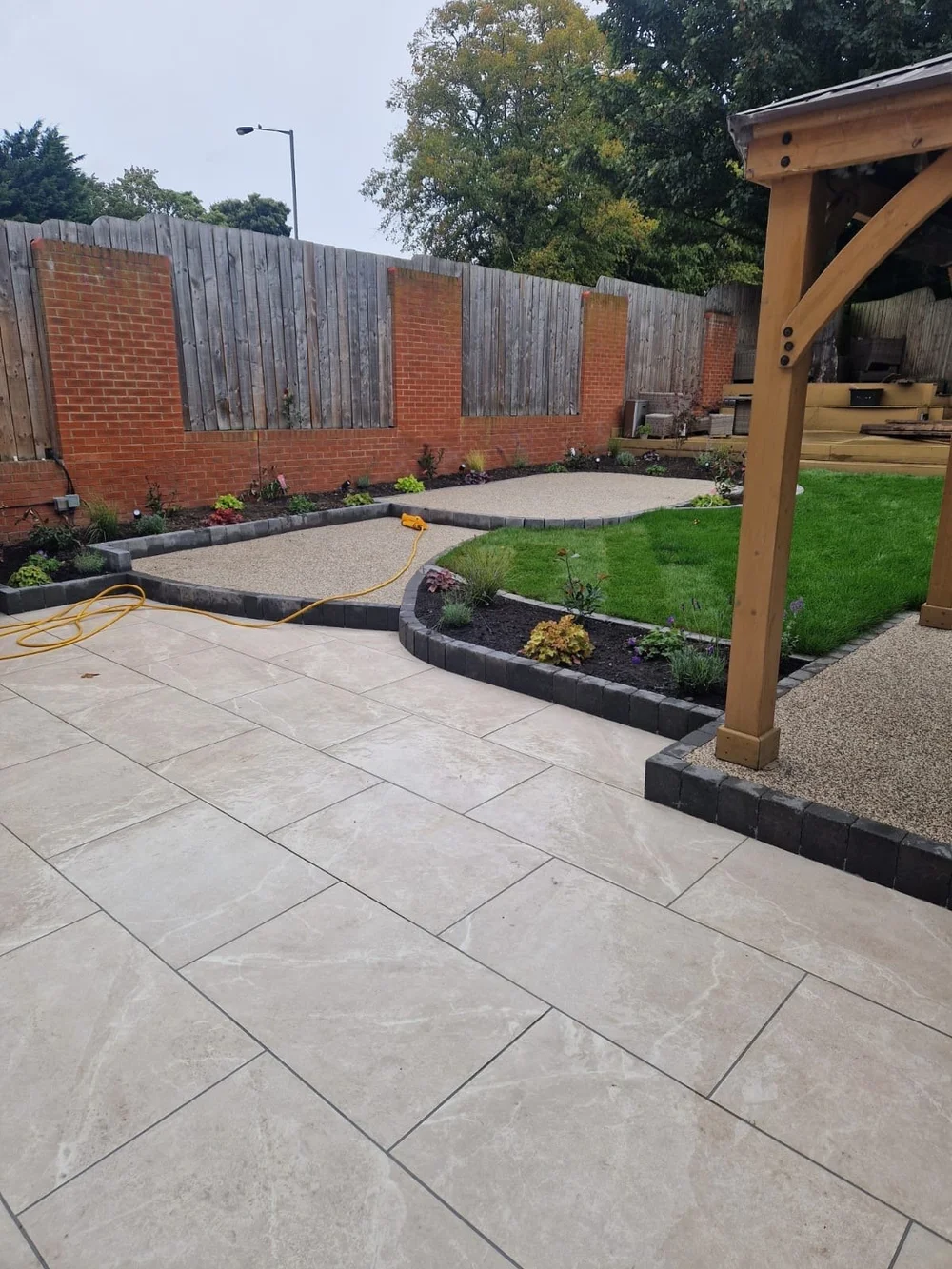
An artificial lawn usually looks best when it’s framed by a crisp patio edge, a path or a planted border. Because we build hard landscaping as well, we plan the levels together, so the grass sits flush against the paving with no awkward strips to fill.
Many of our Durham lawns go in alongside a new sandstone or porcelain patio, a deck on a sloping plot, or as part of a full garden design. If you’d like to see what else we do locally, have a look at our landscaping in Durham page, or our main artificial grass page for the rest of the North East.
- Grass and paving levels planned together
- One team from groundwork to finish
- Patios, decking and paths built alongside
Artificial grass across County Durham
We lay artificial lawns in towns and villages right across County Durham. If your area isn’t listed, ask us, as we probably cover it.
- Durham City
- Chester-le-Street
- Bishop Auckland
- Newton Aycliffe
- Spennymoor
- Consett
- Stanley
- Seaham
- Peterlee
- Crook
- Brandon
- Sherburn
- Belmont
- Framwellgate Moor
- Lanchester
- Barnard Castle
Local pages: Durham Artificial grass across the North East Sunderland Newcastle Middlesbrough
Artificial grass in Durham: your questions
Quick answers to the questions we get asked most.
Can’t see your question? Get in touch or call 0191 245 5045.
Can artificial grass go down on the heavy clay we have in County Durham?
Yes, as long as the base is built with the clay in mind. Much of County Durham sits on boulder clay that holds water for months, so we dig out further than we would on lighter ground, lay a deeper bed of compacted MOT Type 1 and check the levels so rain runs off rather than pooling underneath. Where the ground stays wet, we add a soakaway or land drain before any grass goes down.
Our new-build garden in Durham is full of rubble under the topsoil. Is that a problem?
It’s very common on newer estates around Durham, Newton Aycliffe and Spennymoor, where a thin layer of topsoil is spread over compacted builder’s rubble and clay. That ground drains badly, which is why real lawns on these estates often turn to moss. We dig out the poor material, break up any compacted layers where needed and build a proper stone base, so the artificial lawn drains and stays flat.
We live in an old pit village terrace with a small back yard. Is it worth doing?
Small yards are often where artificial grass makes the biggest difference. Terraced houses in places like Stanley, Crook, Brandon and Sherburn tend to have concrete or flagged yards with nowhere for a real lawn to grow. On sound concrete we lay a foam shock pad and the grass on top, and on old flags or broken concrete we lift what’s there and build a new base. We’ll check drainage first so water doesn’t sit against the house.
Our garden slopes and is stepped in levels. Can you still lay artificial grass?
Yes. Sloping and terraced gardens are common around Durham City, Consett and Lanchester. On a gentle slope the grass can follow the ground, as long as the base is compacted well and the edges are fixed firmly. On steeper gardens we often build in level areas with sleeper or block retaining edges and steps between them, so each lawn sits flat and the water is directed where it should go.
Will an artificial lawn cope with Durham winters?
A properly built lawn handles wet winters well, because the rain drains through the grass and into the stone base rather than turning the garden into mud. Frost and light snow do it no harm. Once the snow has gone, give it a brush to lift the pile. The main thing in winter is clearing leaves so they don’t sit and rot on the surface.
Our garden is shaded by trees and the house. Will artificial grass look right?
Shade is one of the main reasons people in Durham ask us about artificial grass, because real turf thins out and turns to moss without enough light. Artificial grass stays green in full shade. Shaded areas stay damp for longer, so we make sure the base drains well, and we suggest brushing off leaves and needles regularly to keep the surface clean.
Do you cover the whole of County Durham?
We work across County Durham, from Durham City, Chester-le-Street and Framwellgate Moor to Bishop Auckland, Barnard Castle, Peterlee, Seaham and the villages in between. If you’re unsure whether we cover your street, give us a ring on 0191 245 5045 and we’ll let you know.
Is artificial grass a good idea if we have dogs?
For many dog owners it’s the main reason to switch. There are no muddy paws after a wet walk and no holes dug in the lawn. A fully permeable grass on a free-draining base lets urine wash through, and a regular rinse with a hose and a pet-safe cleaner keeps it fresh. On clay, getting the drainage right matters even more, so we take extra care with the base in dog gardens.
What happens to the old turf and soil you dig out?
We take it away. Removing the old lawn, the soil and any rubble we find is part of the job, and the cost of disposal is included in your written quote. We leave the site swept and tidy when we finish.
How do I get a price for my garden?
Call us or send an enquiry and we’ll arrange a free visit. We measure the area, look at the ground, check access and drainage, and bring grass samples so you can see them in your own garden light. You then get a clear written quote covering the groundwork, base, grass, edging and waste removal.
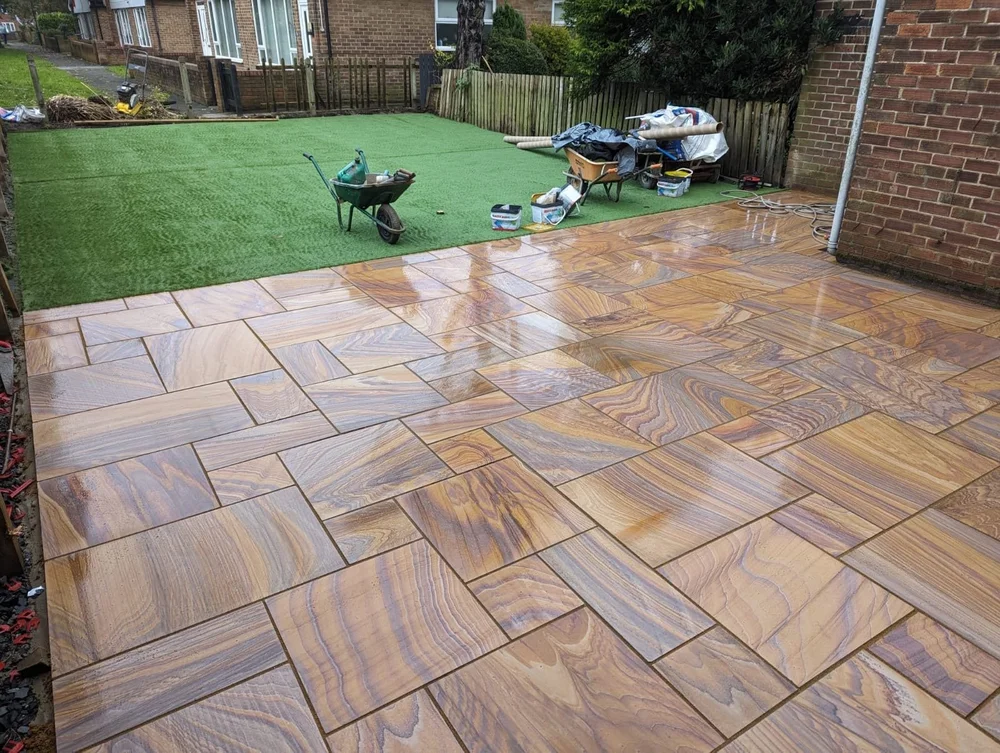
A lawn that copes with Durham weather.
Tell us about your garden and we’ll come out to measure up, check the ground and drainage, and bring samples to look at in your own light. Then you get a clear written price.
Explore more
One team for everything outside your home.