Block paving is still one of the most popular driveway finishes in the North East, and the first question most homeowners ask is what it costs per square metre. The honest answer is that the block itself is only part of the price. The dig-out, the sub-base, the edging and the drainage decide most of the cost and almost all of how long the drive lasts. This guide gives typical UK guide prices for 2026, explains what should be included in a quote and shows you how to compare prices properly.
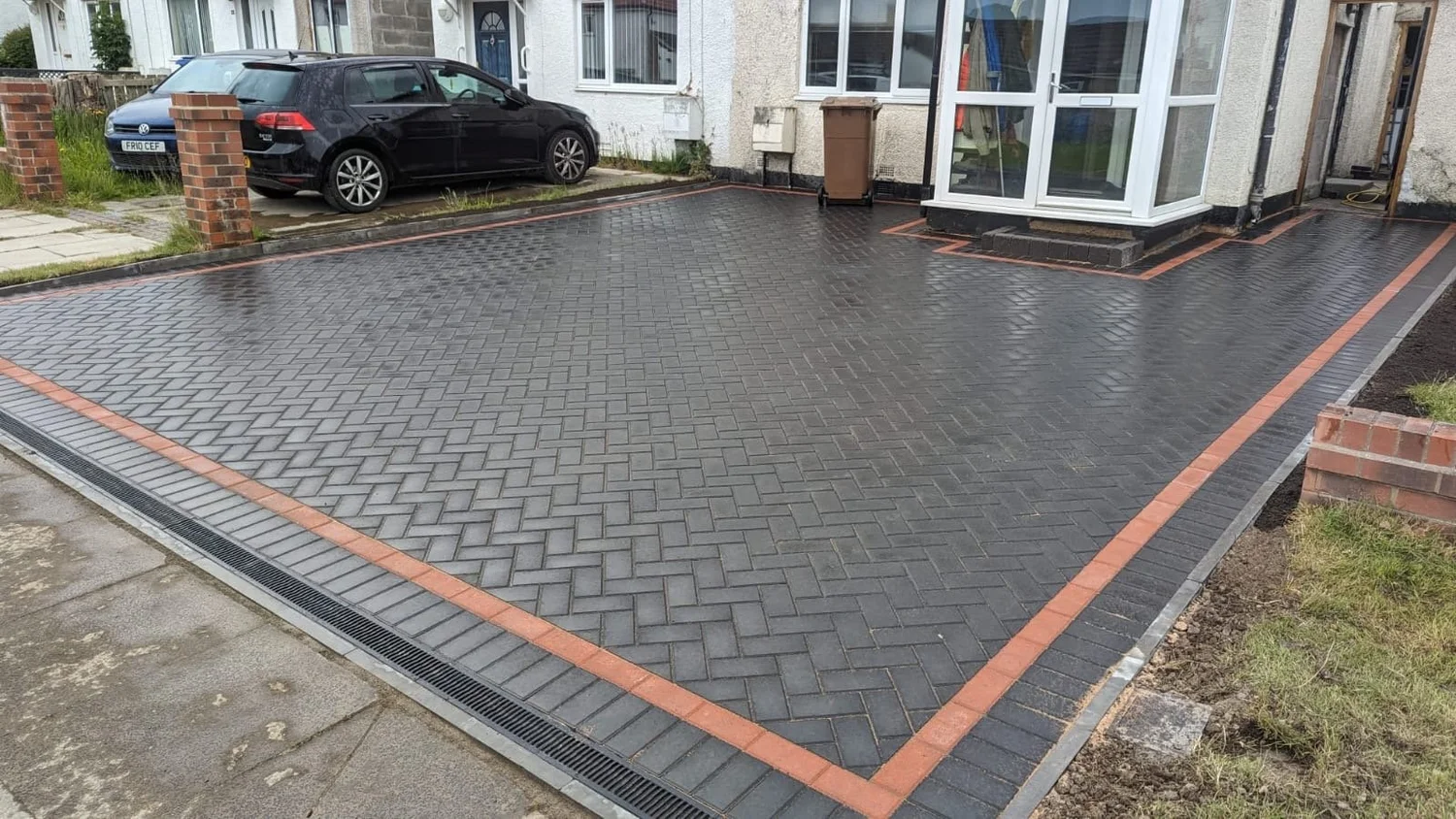
Block paving cost per m2 in 2026
The figures below are typical guide ranges for a fully installed driveway in the UK, including excavation, sub-base, laying and jointing. They are not fixed prices. Access, ground conditions, the shape of the drive and how much old surface has to come out all move the number, which is why a site visit is the only way to get a firm price.
- Standard concrete block paving: typically £60 to £100 per m2. Everyday rectangular blocks in brindle, charcoal or buff, and the best value per square metre.
- Premium or tumbled concrete block: typically £85 to £130 per m2. Tumbled blocks have softened, aged edges and a more traditional look.
- Clay pavers: typically £100 to £160 per m2. Clay holds its colour for decades rather than fading like some concrete blocks, but the pavers cost more to buy and are harder to cut.
- Permeable block paving: typically £80 to £130 per m2. Permeable blocks have wider joints filled with fine grit so rainwater drains straight through into a specially graded open sub-base. They cost more mainly because of the deeper, different build-up underneath.
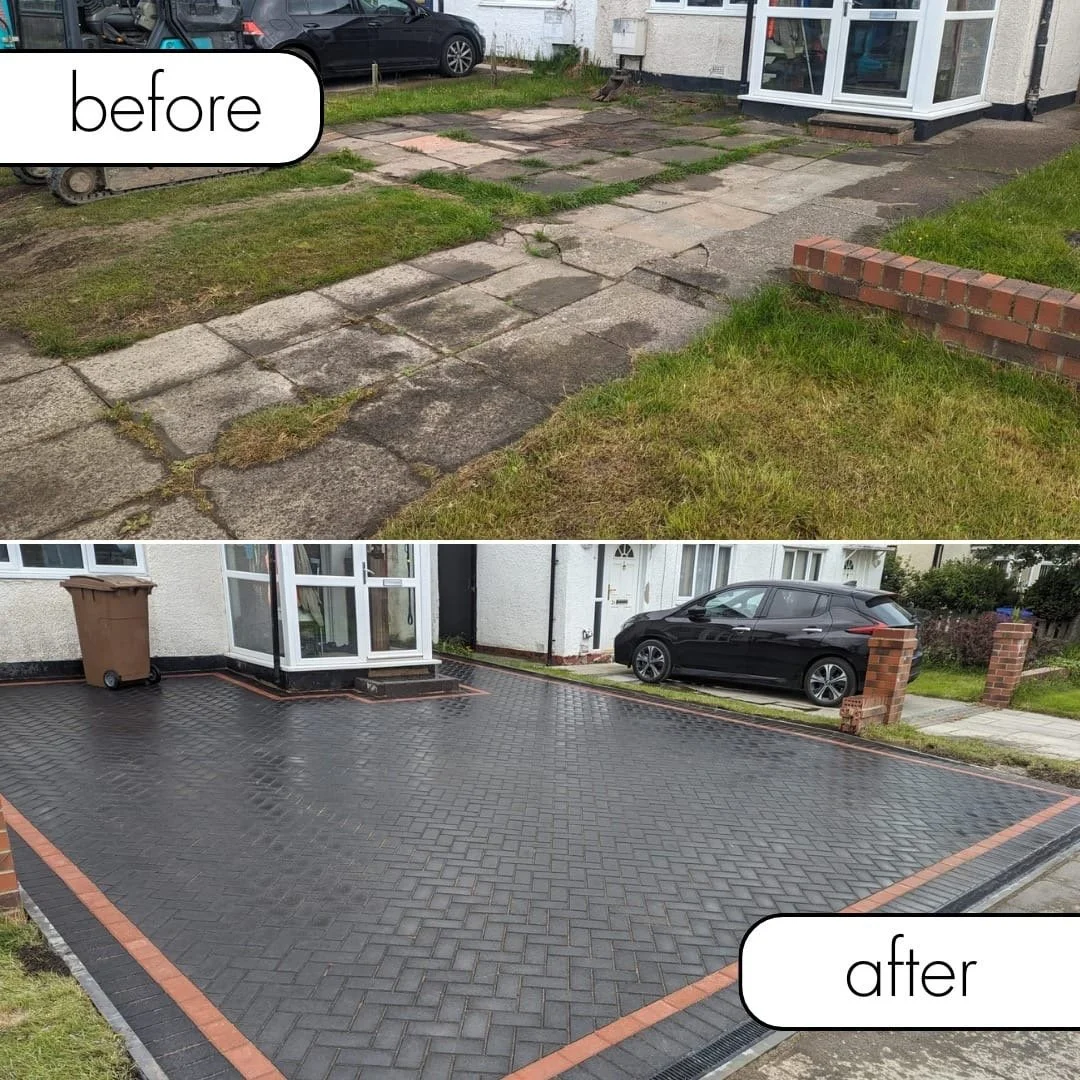
Laying pattern matters as well. Herringbone is the strongest pattern for driveways because the blocks lock together under turning tyres, but it needs more cuts than stretcher bond, so it can add a little to the labour. Borders, bands and feature circles add further cutting time.
A low price per m2 is usually saved underground, not on the blocks. Thin sub-base and missing edge restraints are the most common reasons a block paved drive sinks, rocks or spreads within a few years.
How much does a block paving driveway cost in total?
Using the standard concrete block range above, these are rough guide totals for a straightforward job. Treat them as a starting point for your budget, not a quote.
- Small drive, around 30m2 (one car): typically £2,000 to £3,500. Smaller jobs often cost a little more per m2, because the set-up, skip hire and edging costs are spread over less area.
- Medium drive, around 50m2 (two cars): typically £3,500 to £6,000.
- Large drive, around 80m2 or more: typically £5,500 to £10,000 or more, depending heavily on the block chosen and the amount of drainage and edging needed.
Premium, clay or permeable blocks push each of those totals up in line with the per m2 ranges. Our driveways page shows the block paving, resin and tarmac finishes we install.
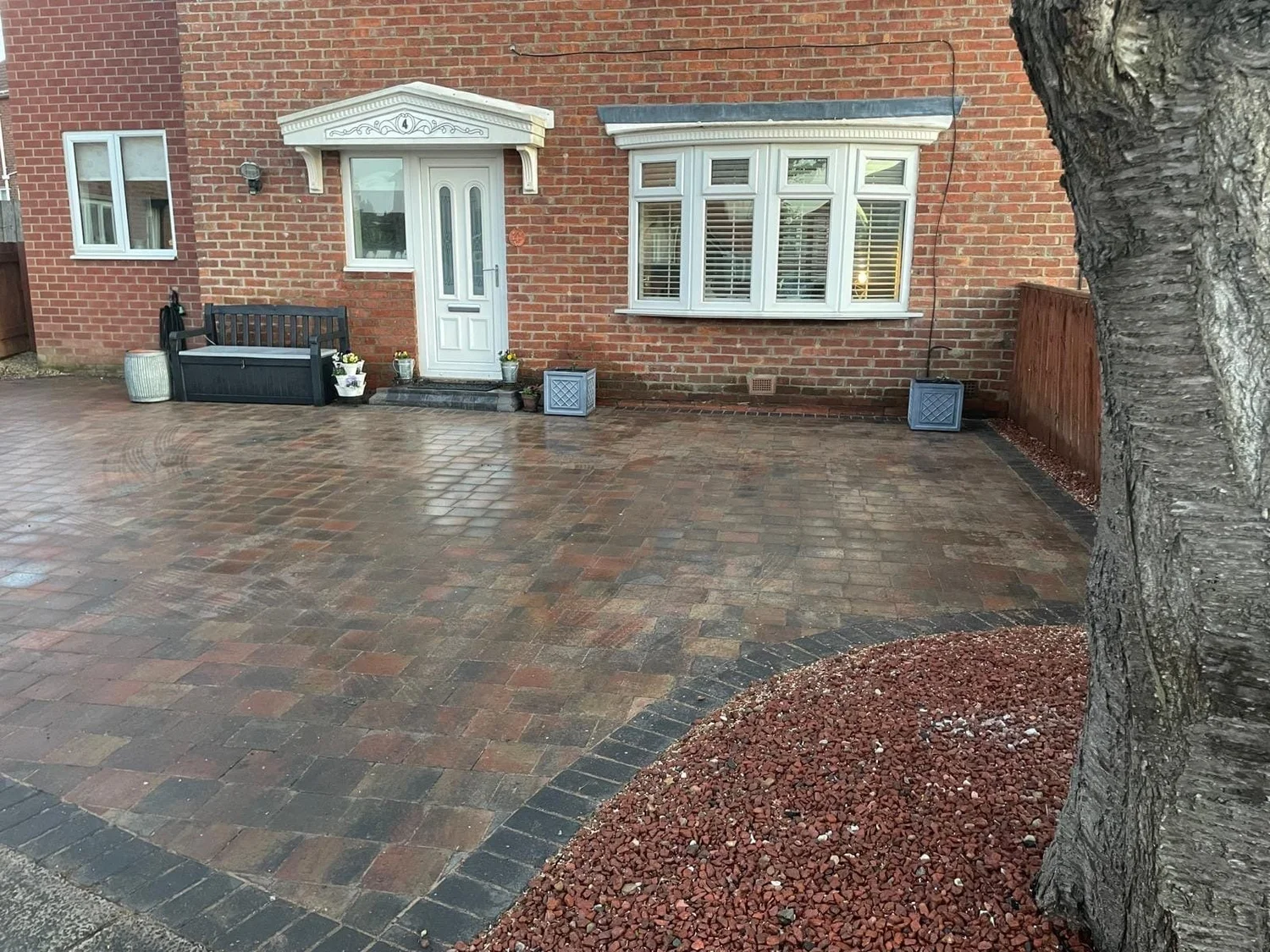
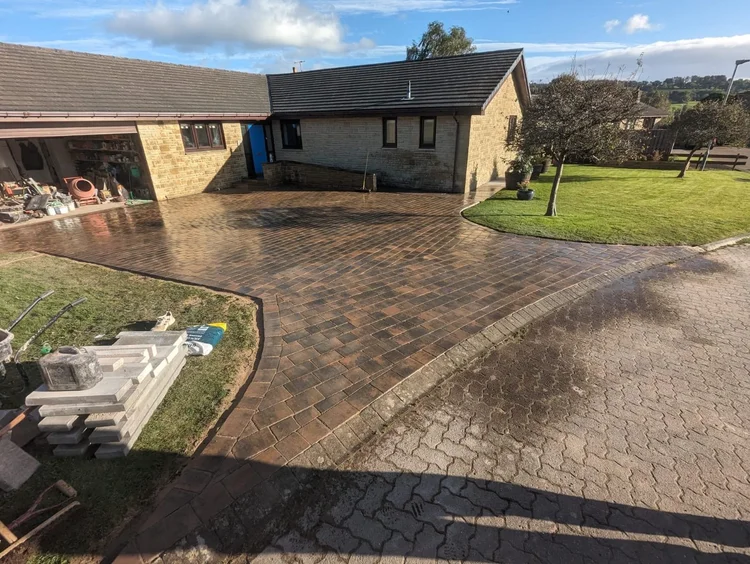
What’s included in the price
A proper block paving quote should cover every stage of the build, not just the visible surface. When you read a quote, check it mentions each of these:
- Dig-out and waste removal: the old surface and soil are excavated, usually to around 200mm to 250mm below finished level, and taken away in skips or grab lorries.
- Sub-base: a compacted layer of MOT Type 1 crushed stone, typically around 150mm deep for a domestic driveway and deeper on soft or clay ground. Compacted in layers.
- Membrane: a geotextile layer under the sub-base helps stop it mixing with the soil below and keeps the base stable.
- Sand laying course: a screeded bed of sharp sand, usually around 30mm to 50mm, which the blocks are bedded into.
- Edging and kerbs: concrete-bedded edge restraints or kerbs around every open edge. Without them, the blocks slowly spread outwards and the joints open up.
- Drainage: the drive must fall away from the house, and water has to go somewhere. That often means channel drains (linear drains) across the front of a garage or at the bottom of a slope, connected to a soakaway or suitable drain.
- Cutting: every block that meets an edge, manhole cover or border is cut to fit. Neat, tight cuts are one of the clearest signs of a good installer.
- Jointing and compaction: kiln-dried sand is brushed into the joints and the whole surface is compacted with a plate and rubber mat to lock the blocks together.
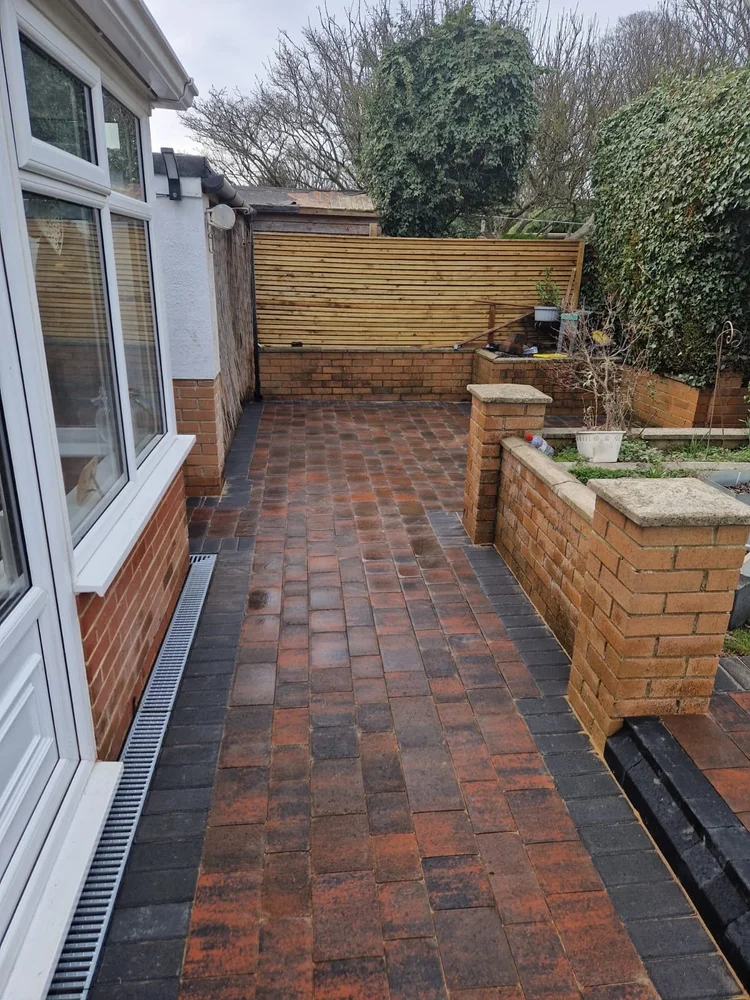
Extras that add to the cost
These are commonly priced separately. The figures are typical guide ranges only.
- Dropped kerb: often £1,000 to £2,500 or more, including council application fees. Many councils require their own approved contractor for work on the pavement, so this may be quoted separately.
- Extra channel drains or a soakaway: channel drains often add around £50 to £120 per metre, and a new soakaway several hundred pounds more.
- Steps: block or slab steps to the front door are usually priced per step, depending on width and finish.
- Walls, pillars and retaining walls: priced by length, height and material, and can be a significant part of the bill on a sloping plot.
- Lighting: low-level driveway lights or lit bollards need cabling laid before the blocks go down, plus an electrician for the connection.
- Difficult access: if materials have to be barrowed a long way, or a mini digger can’t get in, labour time goes up.
Re-laying or extending existing block paving
Not every tired drive needs replacing from scratch. If the blocks are sound but the surface has sunk in places, the blocks can be lifted, the base repaired and the original blocks re-laid. As a guide, re-laying typically costs around £35 to £60 per m2, because you aren’t buying new blocks. Where the whole base has failed, full replacement is usually the better long-term spend.
Extending an existing drive is possible, but matching colours can be tricky. Older blocks fade and ranges get discontinued. A border or band between old and new areas can make the join look intentional.
How long it lasts and what upkeep costs
A block paving driveway built on a properly compacted sub-base, with solid edge restraints, can typically last 20 to 30 years or more. Damaged or stained blocks can be lifted and replaced individually.
Upkeep is mostly about the joints. Weeds and moss take hold when jointing sand washes out, so expect to:
- Sweep and weed regularly: the cheapest maintenance there is. Our guide on how to stop weeds in block paving covers this in detail.
- Top up the jointing sand: after heavy rain or pressure washing, re-sand any joints that have emptied.
- Clean and reseal every few years: a professional clean, re-sand and seal typically costs around £8 to £15 per m2. Sealing helps lock in the jointing sand and resist oil stains.
Block paving vs resin vs tarmac on price
As a rough guide, tarmac is usually the cheapest of the three per m2, block paving sits in the middle and resin-bound tends to be similar to or above good quality block paving.
For the detail, read our resin vs block paving comparison, our guide to resin driveway costs and our guide to tarmac driveway costs.
How to compare quotes and spot red flags
Two quotes for the same drive can be thousands of pounds apart, and the cheaper one is rarely doing the same job. Ask every installer the same questions so you can compare like for like:
- How deep is the dig-out and the sub-base? Ask for the depth of MOT Type 1 in writing.
- Which block, from which range and in what thickness? A named product lets you compare fairly.
- How are the edges restrained, and where will the water drain?
- Is waste removal included? And who handles any dropped kerb or council paperwork?
- What are the payment terms?
Be wary of these warning signs:
- Laying straight over the old surface or skimping on the dig-out to save time.
- A large cash deposit up front, or pressure to agree the same day.
- Cold callers offering a discount because they have “leftover materials” from a nearby job.
- A one-line quote with a single total and no description of the build-up.
- No mention of drainage on a drive that slopes towards the house.
If you’re in Tyneside or Wearside, our block paving in Newcastle and block paving in Sunderland pages explain how we plan and build drives in those areas.
Common questions
How much does block paving cost per m2?
As a typical guide for 2026, standard concrete block paving costs around £60 to £100 per m2 fully installed. Premium and tumbled block is typically £85 to £130, clay pavers £100 to £160 and permeable block £80 to £130. Your site can sit outside these ranges.
How much does it cost to block pave a two-car driveway?
A two-car drive of around 50m2 in standard concrete block typically costs £3,500 to £6,000. Premium blocks, extra drainage, steps or a dropped kerb add to that.
Why are some block paving quotes so cheap?
Usually because less is going in underneath: a shallow dig-out, a thin sub-base, no membrane or no proper edge restraints. These drives often look fine at first and then sink or spread within a few years.
Is block paving cheaper than resin?
Standard block paving is often similar to or a little cheaper than resin-bound per m2, while premium and clay blocks can cost more. Tarmac is usually the cheapest of the three.
How do I get an exact price?
Book a free site visit. We measure the drive, check the levels, ground and drainage, and give you a fixed written quote.
Want a fixed price for your block paving?
We will measure your drive, talk you through block options and give you a clear written quote after a free site visit.
Get a free quoteSee our driveways