- Home
- Block Paving Sunderland
Block paving in Sunderland.
Block paved driveways, paths and repairs across Sunderland, Washington, Houghton-le-Spring and Seaham, built on a sub-base designed for Wearside clay and the salt air along the coast.
Free site visits and written quotes · Concrete, clay and permeable pavers
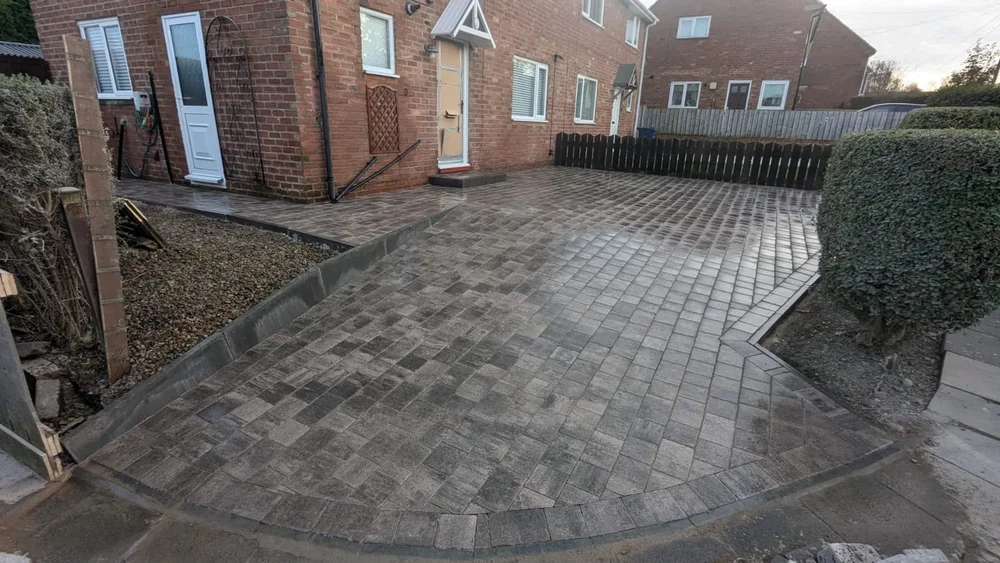
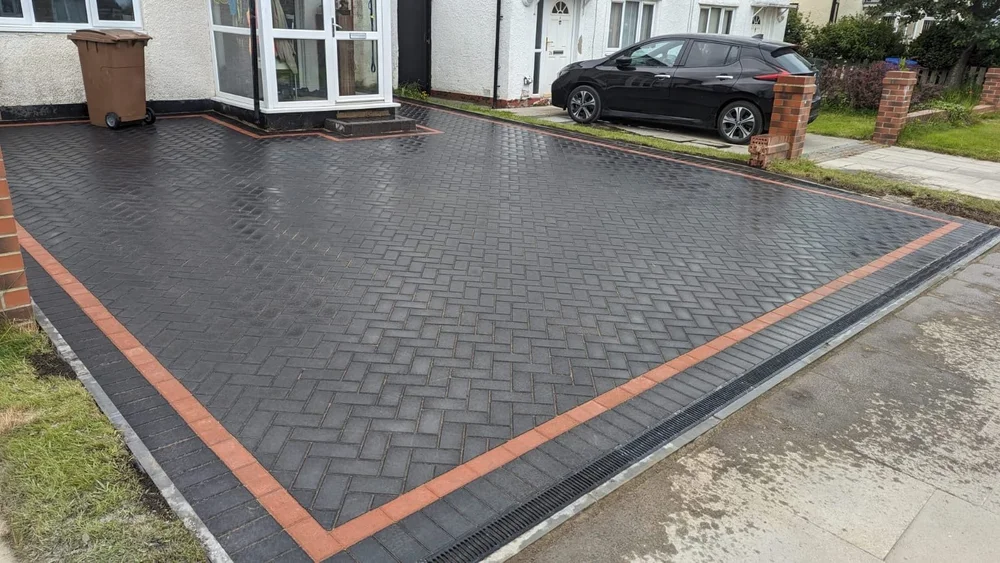
Pictured: charcoal herringbone block paving with a red soldier-course border
Block paving driveways in Sunderland and along the Wear
We lay block paved driveways for homes on both sides of the river, from bay-fronted terraces in Roker and Fulwell to estate semis in Silksworth, Washington and Houghton-le-Spring, and bungalows out towards Penshaw and Seaham.
Block paving earns its place on Sunderland driveways because it takes a heavy car, can be lifted and relaid if something shifts, and comes in more colours and patterns than any other drive surface. What decides whether it stays flat is the ground underneath. Much of the city sits on stiff boulder clay over magnesian limestone, and near the sea front you get sandier, more exposed ground, so we plan the dig-out, sub-base and drainage around what we find on your plot. For our wider work in the city, see our Sunderland page, or compare surfaces on our main driveways page.
- Concrete, clay or permeable
- We’ll show you samples of each so you can see them against your brick or render.
- Ground-first approach
- Dig-out depth and sub-base set by the soil, not a standard figure.
- Proper edge restraint
- Kerbs bedded and haunched in concrete so the edges don’t creep.
- Repairs as well as new drives
- We lift and relay sunken or rutted areas and fix the cause.
Block paving jobs we take on around Sunderland
Most of the block paving work we’re asked about in the city falls into one of three types.
Front gardens into drives
Terraces · Bay-fronted semis · Permeable builds
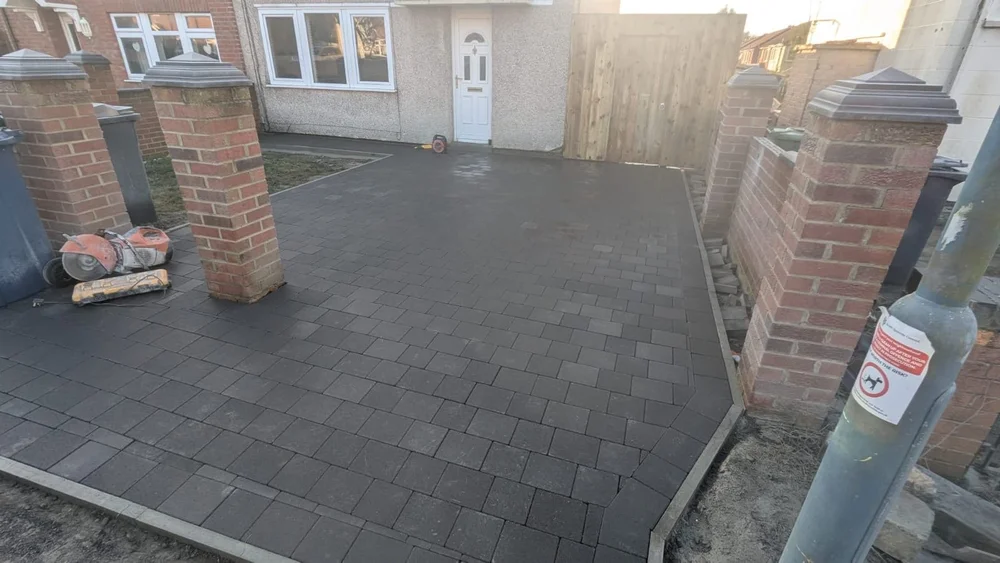
In Roker, Fulwell, Barnes and Ashbrooke, a lot of houses have a walled front garden with no off-street parking. We take out the old garden or slabs, plan the crossing with you and lay a permeable block drive so the front-garden planning rules are met without piping water to the road.
- Garden-to-driveway conversions
- Permeable blocks on an open-graded base
- Neat cuts against walls and gate pillars
Replacing tired estate drives
Semis · New-builds · Double drives
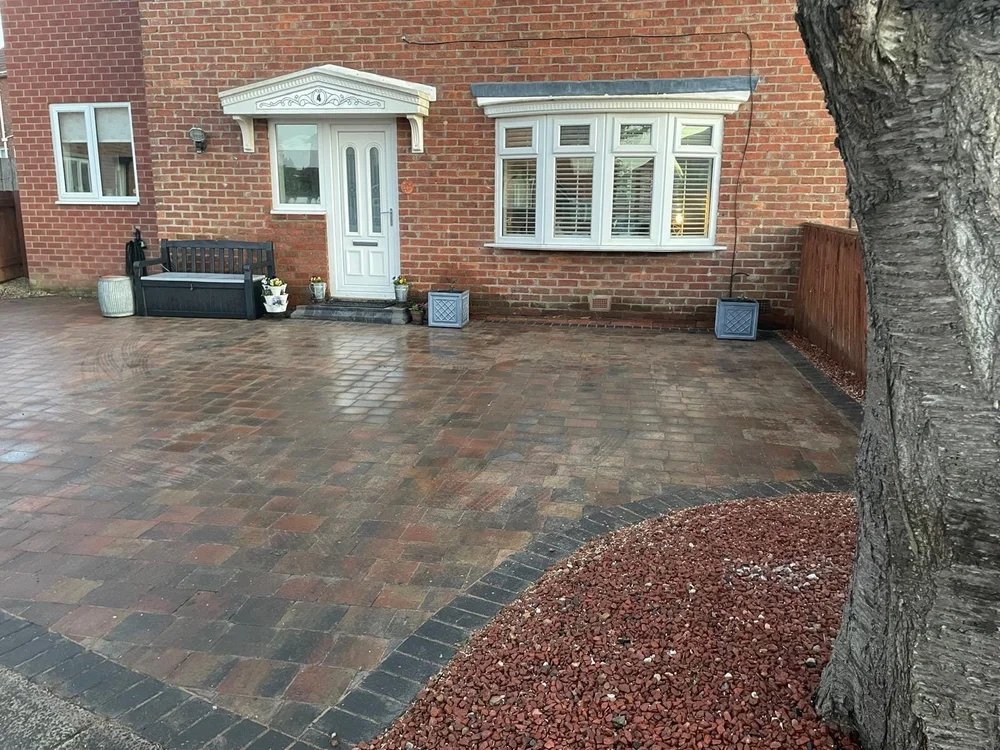
On estates in Silksworth, Doxford Park, Washington and Shiney Row, the original builder’s drive is often thin concrete or narrow paving that has cracked or settled. We dig it out, widen it if there’s room and lay a new block drive with a contrasting border and proper kerbs.
- Widening for a second car
- Old concrete and slabs removed
- Matching paths to the side and back
Repairs and re-lays
Sunken blocks · Ruts · Loose edges
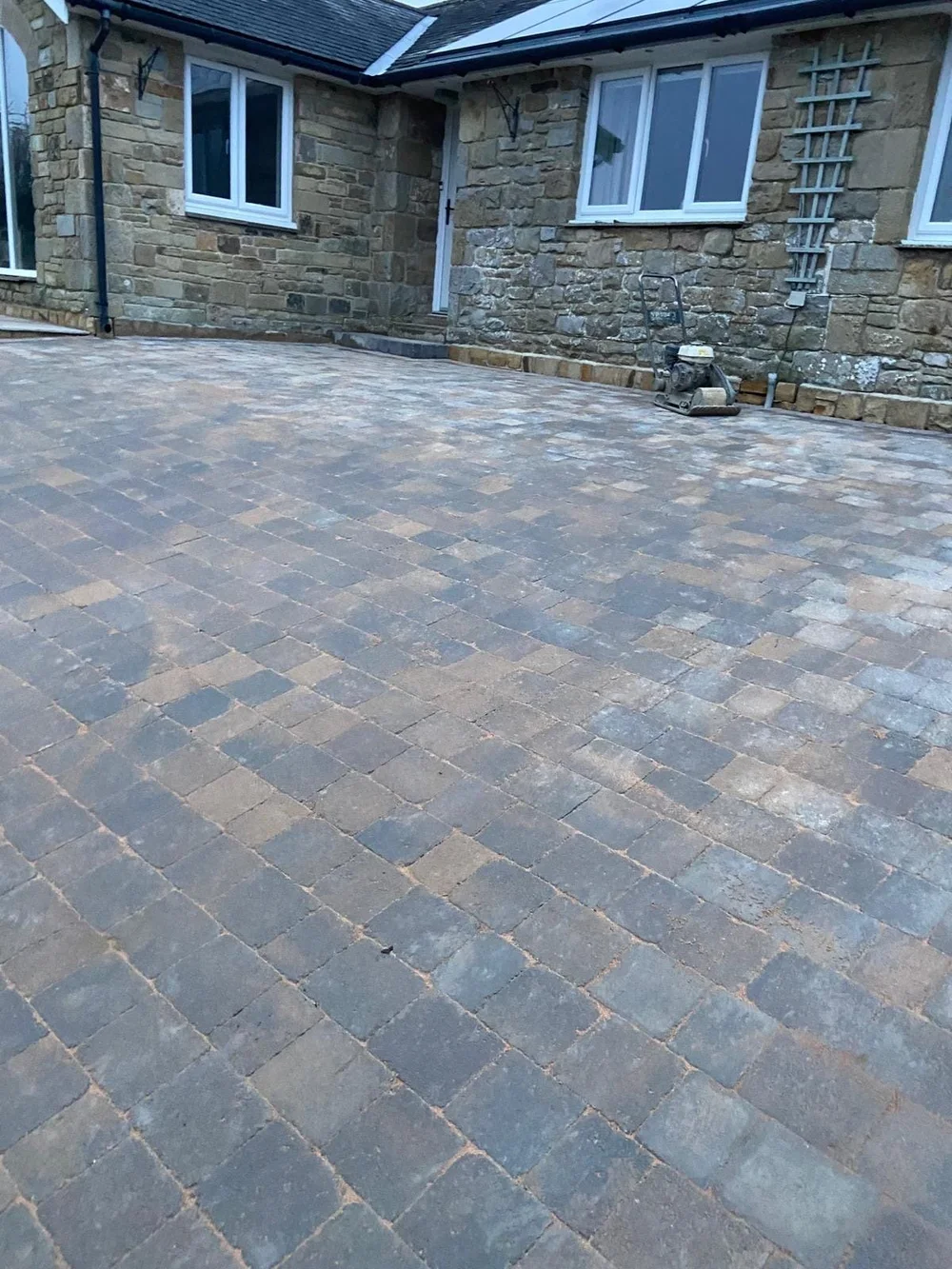
Where an existing drive has dipped by the gate, rutted under the car or lost its edge, it can often be saved. We lift the blocks, find out why it moved, rebuild the base and relay the same pavers, adding new ones only where they’re broken.
- Sunken and rutted areas lifted and relaid
- Edge kerbs reset in concrete
- Joints refilled and the surface re-compacted
Groundwork for Wearside clay and coastal ground
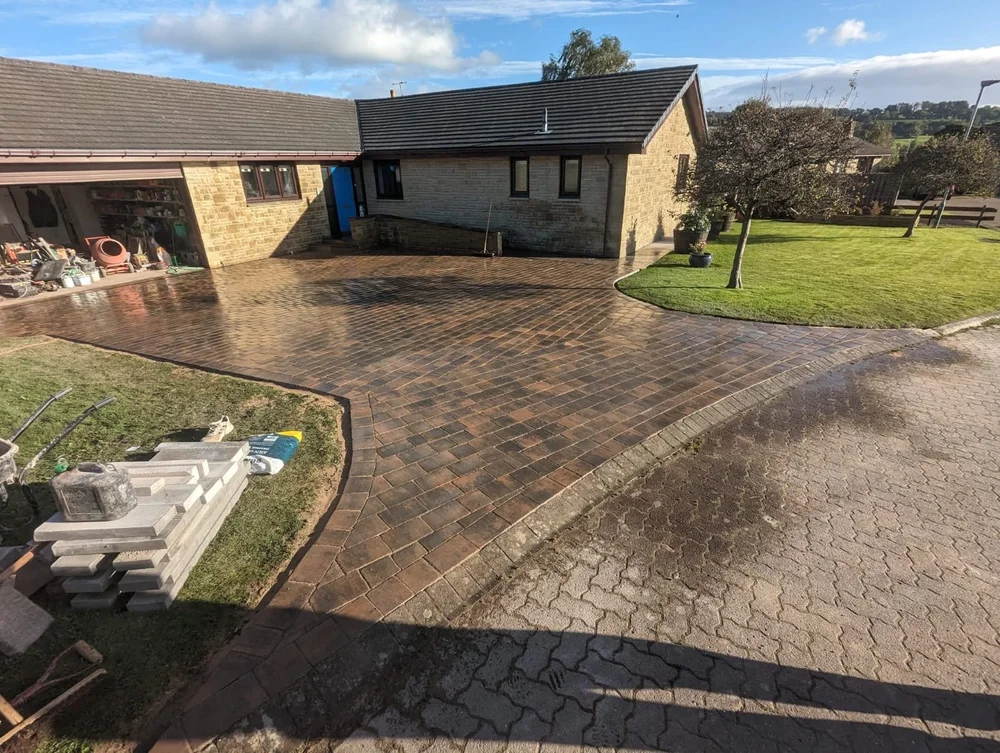
Block paving is a flexible surface. The blocks themselves are strong, but they only stay level if the layers underneath don’t move. Inland, around Silksworth, Farringdon, Houghton and Hetton, the ground is mostly heavy boulder clay that holds water all winter and shrinks back in a dry summer. Lay blocks on a thin base over that and you get dips and ruts where the car stands within a couple of years.
We strip out topsoil and soft ground, lay a geotextile membrane where the clay is wet, and build up compacted MOT Type 1 in layers, going deeper on soft spots and where vans or heavier vehicles will park. On some estates on former colliery or works land there’s made ground and old fill under the garden, which we dig through until we reach something firm.
Closer to the sea, at Seaburn, Roker, Whitburn and Seaham, the problem is often the opposite: sandier ground that drains well but can wash out at the edges, plus salt spray and wind-blown sand that get into the joints. Firmly bedded kerbs and a well-compacted, fully jointed surface matter more here than anywhere.
- Dig-out depth matched to clay, fill or sandy ground
- Geotextile membrane on wet or soft subsoil
- MOT Type 1 compacted in layers, deeper for vans
- Falls set so water runs away from the house and onto your own drainage
Concrete vs clay vs permeable block paving
How the main types of block compare for a Sunderland driveway. Prices are typical 2026 guide figures per square metre, including dig-out, sub-base, kerbs and laying, and they vary with the site, access and pattern. A free site visit gets you a fixed written quote. For a fuller breakdown, read our guide to block paving cost per m².
| Paver | Permeable? | Look and colour | Upkeep | Typical guide price, laid |
|---|---|---|---|---|
| Standard concrete blocks | No, water runs off the surface | Widest choice of colours and sizes; colour can soften over the years | Joint sand top-up and occasional weed treatment | £65–£110 per m² |
| Permeable concrete blocks | Yes, through wider joints into an open-graded base | Similar look with slightly wider gaps between blocks | Keep joints clear of silt and moss so water still drains | £80–£130 per m² |
| Clay pavers | Only when laid as a permeable system | Fired colour that won’t fade; traditional, warm brick look | Very hard-wearing; the same jointing care as concrete | £100–£160 per m² |
| Tumbled and cobble-effect blocks | Available in permeable versions | Aged, rounded edges that suit older terraces and cottages | Rougher joints can hold more sand and debris | £75–£125 per m² |
Patterns, borders and kerbs
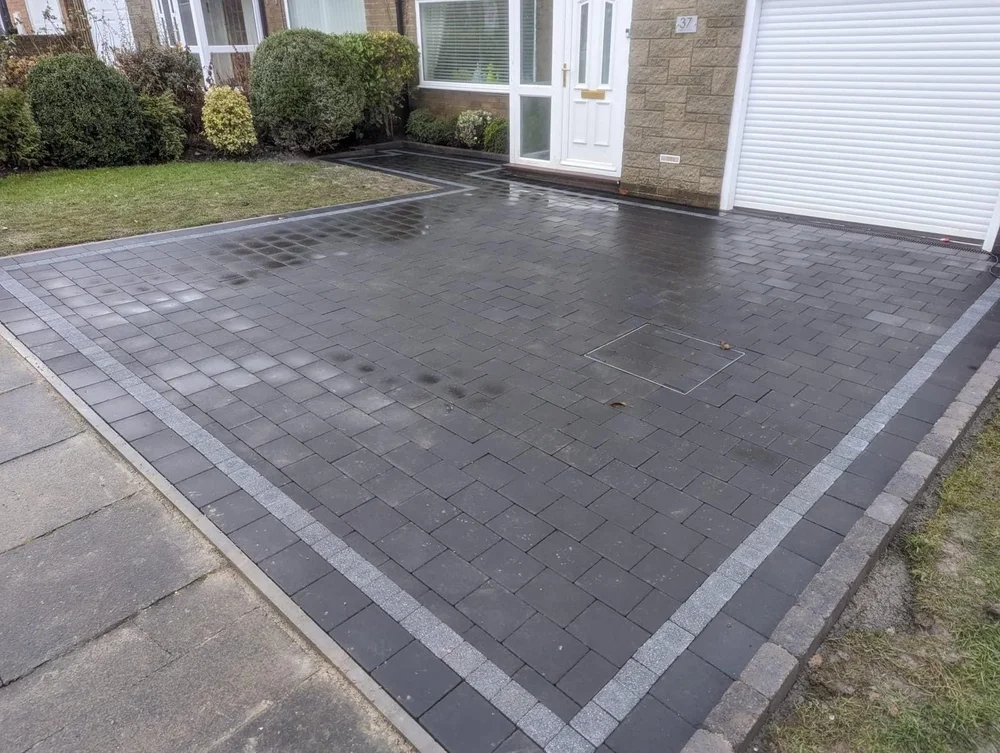
The laying pattern isn’t only about looks. Herringbone, laid at 45 or 90 degrees, locks the blocks together best, so it’s our usual choice where cars turn and brake. Stretcher bond and basketweave suit paths, side returns and areas that only take foot traffic, and mixed-size random patterns give a softer, more natural look on bigger drives.
A border frames the drive and gives the pattern a straight edge to finish against. A single or double soldier course in a contrasting colour, charcoal round brindle or red round charcoal, is the most popular option, and it’s a neat way to pick out the path to the front door or the line of the dropped kerb.
Behind the border sit the kerbs. Every edge that isn’t against a wall gets a kerb or edging block bedded on concrete and haunched behind, because an unrestrained edge is where block paving starts to spread. We can also add bullnose kerbs to step up to a lawn, raised beds, and matching steps or a path round to a new patio.
- Herringbone for driving areas
- Soldier-course borders in a contrasting colour
- Kerbs bedded and haunched in concrete
- Matching paths, steps and edging
How we lay a block paved driveway
A new drive usually takes between a few days and a couple of weeks, depending on size and how much ground has to come out.
-
01
Survey and levels
We measure the drive, check the falls, dig a trial hole if the ground is in doubt and agree the pattern, border and kerb line with you.
-
02
Dig-out and spoil
The old surface and soft ground are taken out and removed from site, going deeper on wet clay or old fill.
-
03
Kerbs and drainage
Edge kerbs are set on concrete and haunched, and any channel drain, gully or soakaway connection goes in.
-
04
Sub-base
MOT Type 1, or an open-graded stone for permeable paving, is laid and compacted in layers to the finished falls.
-
05
Bedding and blocks
A screeded bed of sharp sand or grit takes the blocks, which are laid to pattern and cut neatly round edges and covers.
-
06
Joint, compact and seal
Kiln-dried sand is brushed in and vibrated down, then topped up. Sealing is optional once the joints have settled.
Permeable paving, drainage and the front-garden rules
In England, covering more than 5 square metres of a front garden with a hard surface needs planning permission unless the surface is permeable, or the rainwater is directed to a lawn, border or soakaway within your own boundary. Standard block paving on a sand bed is not classed as permeable, so on a front drive it needs drainage designing in.
There are two ways we deal with that. The first is permeable block paving: blocks with wider joints laid on a fine grit bed and an open-graded stone sub-base, which lets rain soak down through the drive instead of running into the road. The second is standard blocks laid to a fall into a channel drain or towards a planted border, with the water taken to a soakaway on your property.
Sunderland’s clay changes the design. A permeable drive on heavy clay can fill up faster than the ground can take the water away, so on clay we usually build a partial-infiltration system with a perforated pipe and an overflow to a soakaway or approved outlet. Near the coast, where the ground drains more freely, full infiltration often works. We’ll tell you which suits your plot after we’ve looked at the soil.
Driving over the pavement also needs a dropped kerb. For most of the city that’s an application to Sunderland City Council, and in Seaham and other parts of County Durham it goes to Durham County Council. It runs separately from the driveway work, so it’s worth starting early. Our guide to planning permission for a driveway or dropped kerb covers the details.
- Permeable blocks on an open-graded base where the ground allows
- Channel drains and soakaways for standard blocks
- Overflow designed in on heavy clay
- Dropped kerb process explained before work starts
Block paved driveways and paths
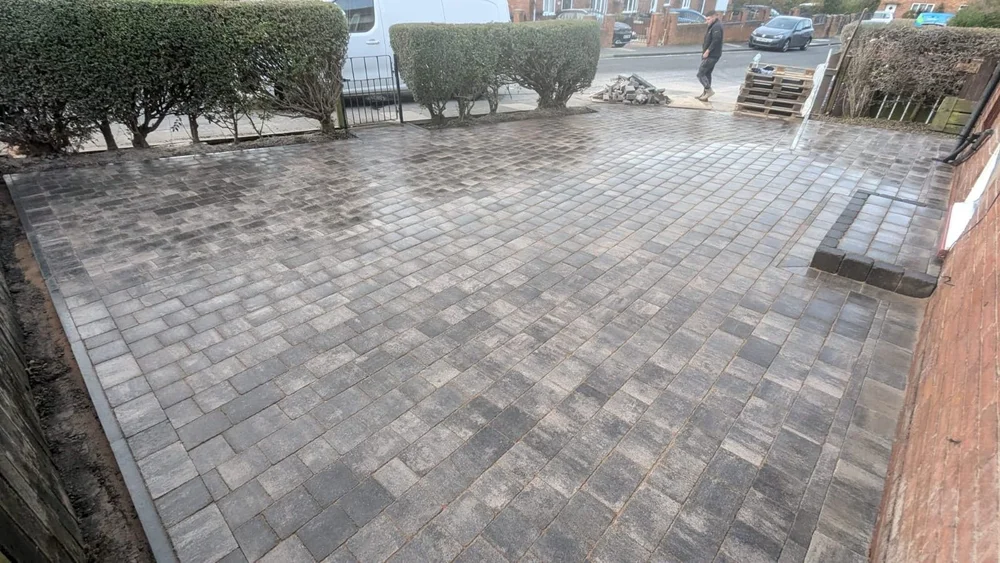
Driveways, borders, paths and steps in concrete and clay block from homes we’ve worked on.
What to expect
From the first call to the last joint brushed in, here’s how a block paving job runs.
-
Step 1: Get in touch
Call, email or send a quote request and tell us roughly what size of drive or repair you have in mind.
-
Step 2: Free quote
We visit, measure up, look at the ground and give you a fixed written price, with no obligation.
-
Step 3: Planning & design
We bring block samples, agree the pattern, border and drainage, and talk you through the dropped kerb if you need one.
-
Step 4: The build
Our own team digs out, builds the base and lays the blocks, keeping the site tidy and access clear where we can.
-
Step 5: Enjoy the result
You can usually drive on it as soon as the joints are compacted, with simple aftercare advice to keep it looking right.
Block paving across Sunderland and nearby
We lay and repair block paving north and south of the Wear, out to Washington and the Coalfield towns, and down the coast to Seaham. Looking for a different finish? We also lay resin driveways in Sunderland, and if you’re north of the Tyne, see block paving in Newcastle.
- Roker
- Seaburn
- Fulwell
- Monkwearmouth
- Southwick
- Castletown
- Barnes
- Ashbrooke
- Hendon
- Grangetown
- Ryhope
- Silksworth
- Doxford Park
- Tunstall
- Farringdon
- Washington
- Penshaw
- Fatfield
- Shiney Row
- Houghton-le-Spring
- Hetton-le-Hole
- Whitburn
- Seaham
Local pages: Sunderland Durham Newcastle Middlesbrough
Block paving questions from Sunderland homeowners
Straight answers on planning, repairs, upkeep and price.
Can’t see your question? Get in touch or call 0191 245 5045.
Do I need planning permission for a block paved front drive in Sunderland?
Only in some cases. If the new hard surface in your front garden is over 5 square metres, it needs planning permission unless it’s permeable or drains to a lawn, border or soakaway on your own property. Permeable block paving, or standard blocks laid to a channel drain and soakaway, both meet the rule, so most front drives in Sunderland go ahead without an application. Flats, listed buildings and homes in conservation areas such as parts of Ashbrooke and Roker can have extra restrictions, and we’ll check before you commit.
Who do I apply to for a dropped kerb?
For homes in the city, including Washington and Houghton-le-Spring, the vehicle crossing is applied for through Sunderland City Council. In Seaham it’s Durham County Council. The council either builds the crossing or approves a contractor to do it, and it’s a separate process from your driveway, so it’s worth applying early. We’ll set the drive out around where the kerb will be lowered.
Will block paving cope with the sea air at Roker and Seaburn?
Yes. Good-quality concrete and clay pavers are made to handle frost and de-icing salt, so salt spray isn’t a structural problem. What the coast does bring is wind-blown sand, salt staining and algae in shaded corners. A fully jointed surface on firmly bedded kerbs stands up best, and a sealer can make a coastal drive easier to keep clean.
Concrete or clay pavers: which is better for my drive?
Concrete blocks cost less and come in the widest range of colours, sizes and finishes, but their colour can soften over time. Clay pavers are fired, so their colour won’t fade, and they suit older brick terraces and Victorian semis, though they cost more and the range of sizes is smaller. Both are strong enough for a family car when they’re laid on a proper base.
Why has my block paving sunk, and can it be repaired?
Dips usually come from a weak or wet sub-base, a broken drain or soakaway underneath, or edges that have spread because there was no kerb holding them in. Most of the time it can be repaired: we lift the blocks in the affected area, fix the cause, rebuild and compact the base, then relay the same blocks so the repair blends in. If a whole drive is moving, relaying it on a new base is usually better value than patching it again and again.
Should I have my block paving sealed?
It’s optional. A sealer binds the jointing sand, which helps stop it washing or blowing out, makes weeds and moss harder to take hold and makes oil and salt stains easier to clean off. It’s best applied once the joints have settled and been topped up, and it needs redoing every few years. Many people are happy without it, especially on a well-jointed drive in a sheltered spot.
How do I stop weeds coming through the joints?
Keep the joints full. Most weeds grow from seeds that land in gaps where the sand has washed out, rather than coming up from below. Brush off debris regularly, top up with kiln-dried sand when the joints drop, and avoid pointing a pressure washer straight into them. Our guide on how to stop weeds in block paving goes through it step by step.
How much does block paving cost in Sunderland?
As a typical guide, a new concrete block drive including dig-out, sub-base and kerbs often works out at around £65–£110 per square metre, with permeable and clay pavers costing more. A standard 40 to 50 square metre drive for two cars commonly comes in somewhere between £3,500 and £6,500, and relaying an existing drive on a rebuilt base is usually cheaper than starting fresh. Every site is different, so we give a fixed written price after a free visit. See our block paving cost per m² guide for more.
Ready for block paving in Sunderland?
Tell us about your drive or repair and we’ll arrange a free visit to measure up, check the ground, bring block samples and give you a fixed written price.
Explore more
Other surfaces and services for homes in and around Sunderland.