- Home
- Resin Driveways Sunderland
Resin driveways for Sunderland and the coast.
Resin-bound drives and paths with UV-stable resin and a free-draining base, laid for homes from Seaburn and Roker to Washington, Houghton-le-Spring and Seaham.
Fixed written quotes after a free visit · Aggregate samples brought to your door
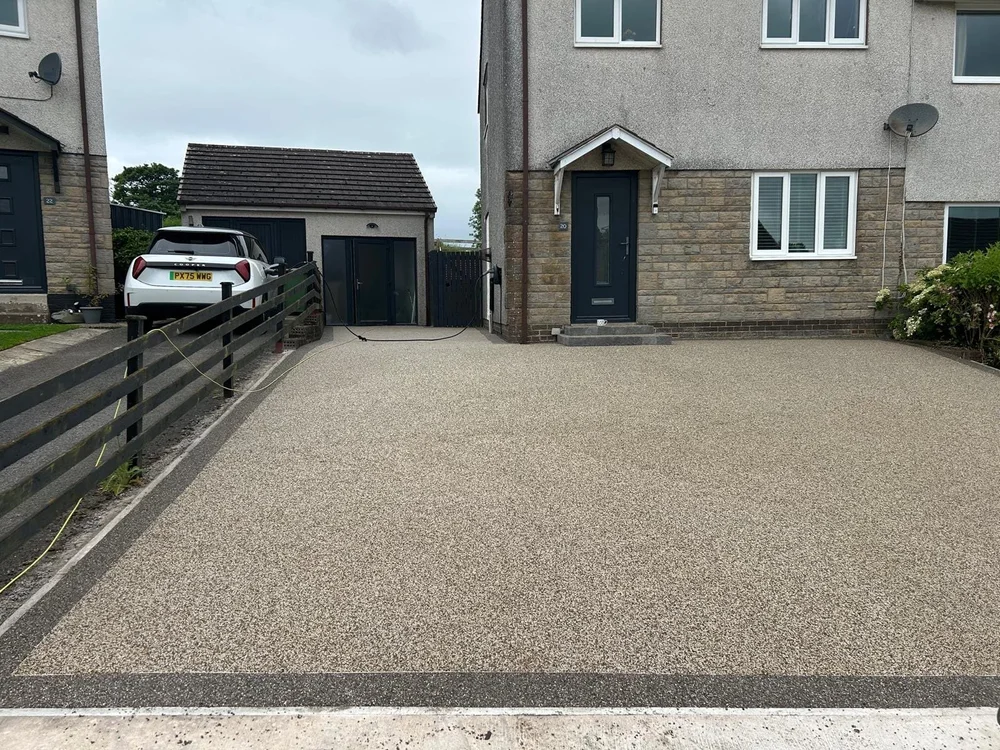
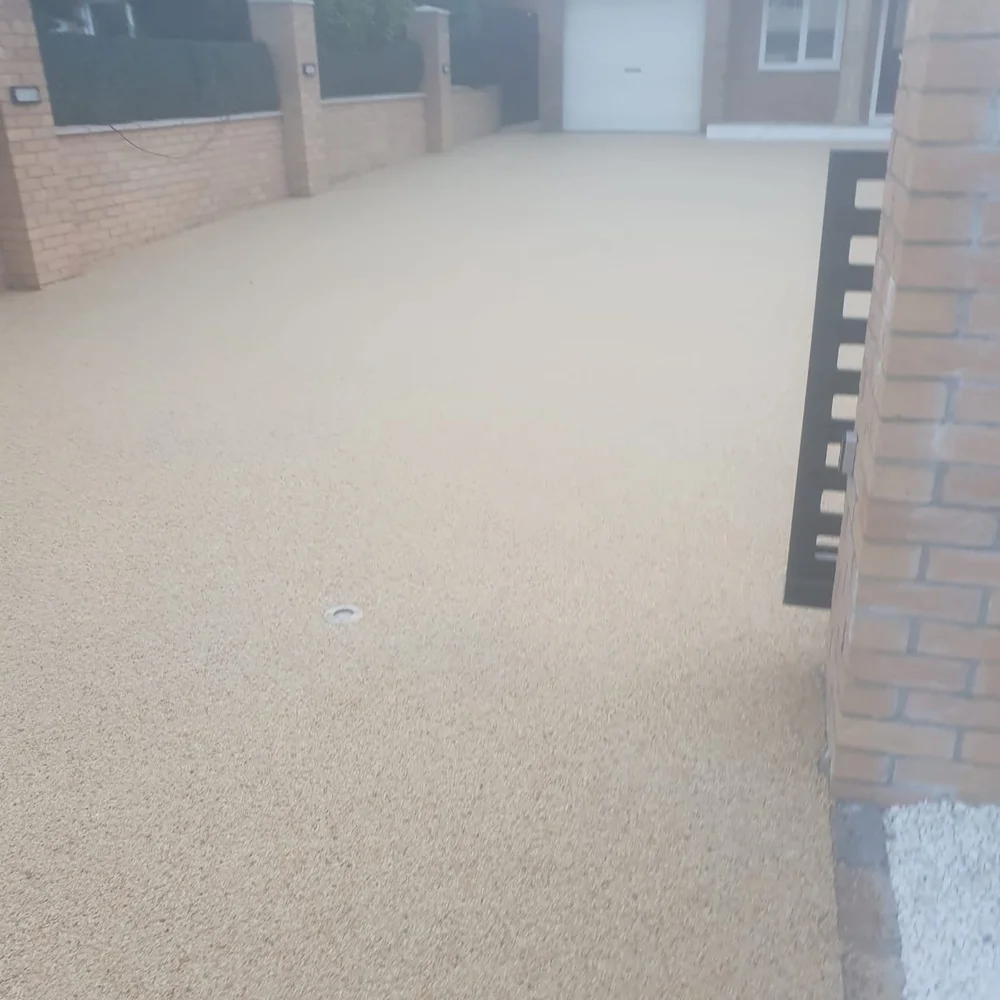
Pictured: resin-bound driveway up to the garage
Resin driveway installers covering Sunderland
Sunderland drives take a bit more than most. Salt on the wind, bright open skies off the North Sea and damp sea fret all affect how resin is chosen and when it can be laid.
We lay resin-bound driveways, paths and front gardens across the city and out to Washington, Houghton-le-Spring and the coast at Seaham. Every job starts with the question of what’s underneath: whether your existing drive is sound enough to overlay, or whether it needs digging out and a new open-grade base. From there we pick a UV-stable resin and a stone blend that suit your house, set firm edging and lay a smooth, permeable finish. For more on our work in the area, see our Sunderland page, or compare surfaces on our main driveways page.
- Coastal spec
- UV-stable aliphatic resin that won’t yellow in strong light.
- Honest base advice
- Overlay only where the old surface is genuinely sound.
- Permeable by design
- Built to meet the front garden drainage rules.
- Weather-led dates
- No laying in rain, frost or sea fret.
From the seafront to Washington
Where you live in and around Sunderland changes what a resin drive needs, from exposure and access to which council handles your dropped kerb.
Seaburn, Roker and Fulwell
Coastal · Exposed · Bright light
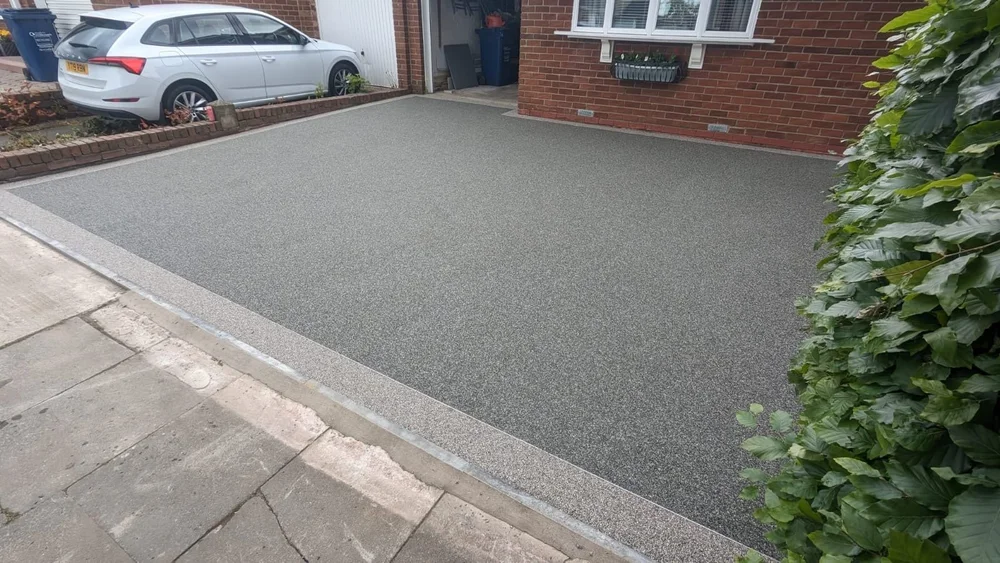
Homes near the seafront catch the full force of the weather off the North Sea. We use UV-stable resin as standard, choose blends that hide wind-blown sand and plan around the damp mornings that can hold up a job on the coast.
- UV-stable aliphatic resin
- Flecked blends that hide sand and salt marks
- Laying dates set around sea fret
Ashbrooke, Silksworth and High Barnes
Semis · Terraces · Front gardens
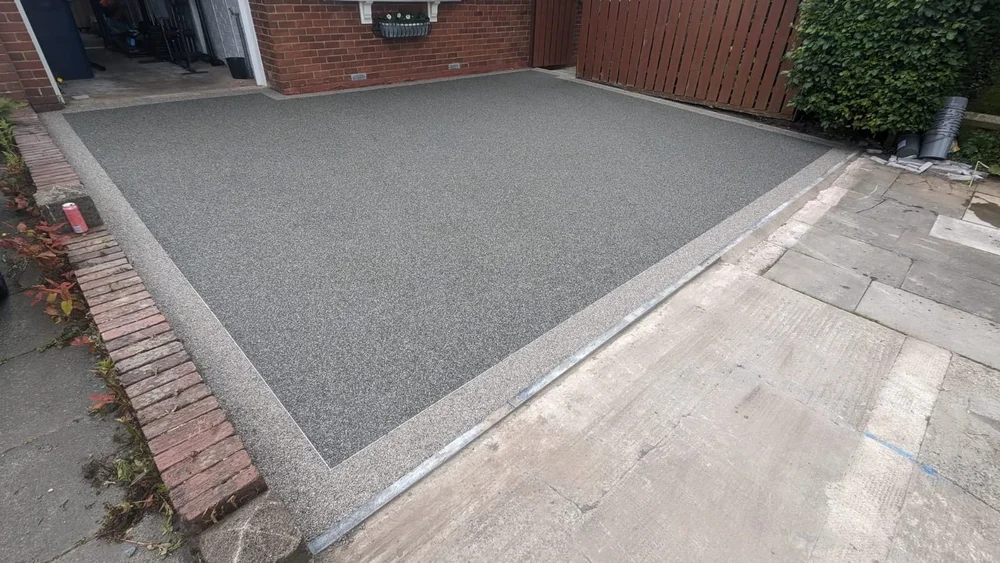
In the established streets south and west of the city centre, many front gardens are being turned into parking. We work the drive around bay windows, boundary walls and the path to the door, with brick or block borders that suit red-brick and rendered houses.
- Front garden to drive conversions
- Borders to match the brickwork
- Neat finishes against walls and steps
Washington, Houghton and Penshaw
Newer estates · Sloping plots · Upgrades
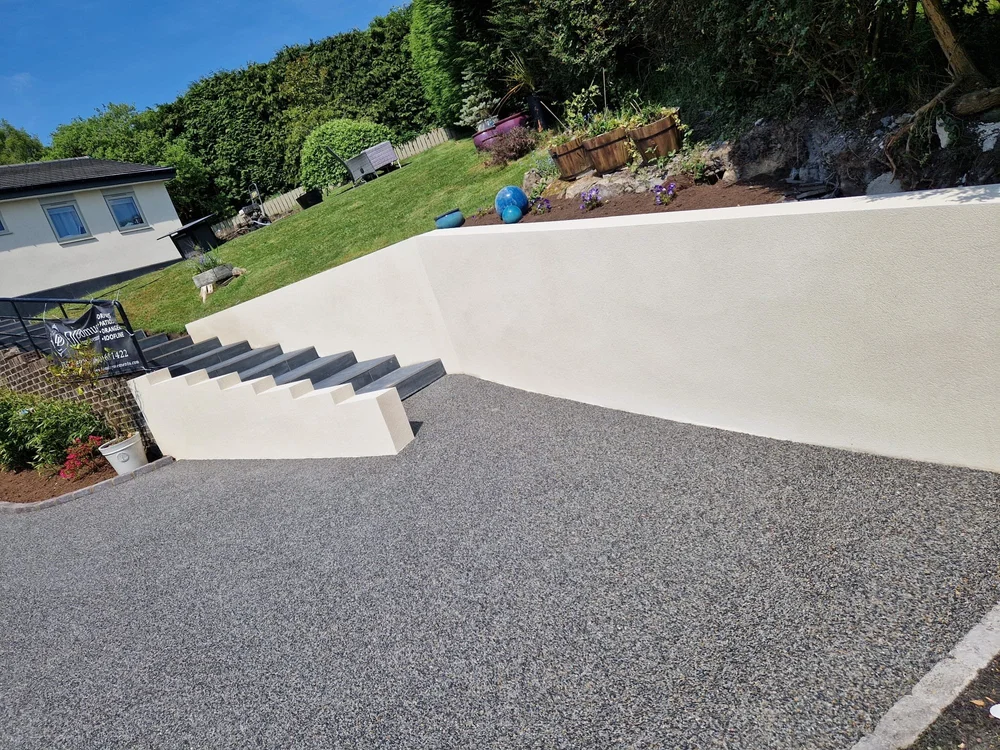
On the newer estates around Washington and the hillier ground towards Houghton-le-Spring and Penshaw, we often replace tired builder’s tarmac or block, deal with falls on sloping drives and add anti-slip glass where the gradient calls for it.
- Replacing builder’s tarmac and block
- Falls and gradients checked on site
- Anti-slip finish for sloping drives
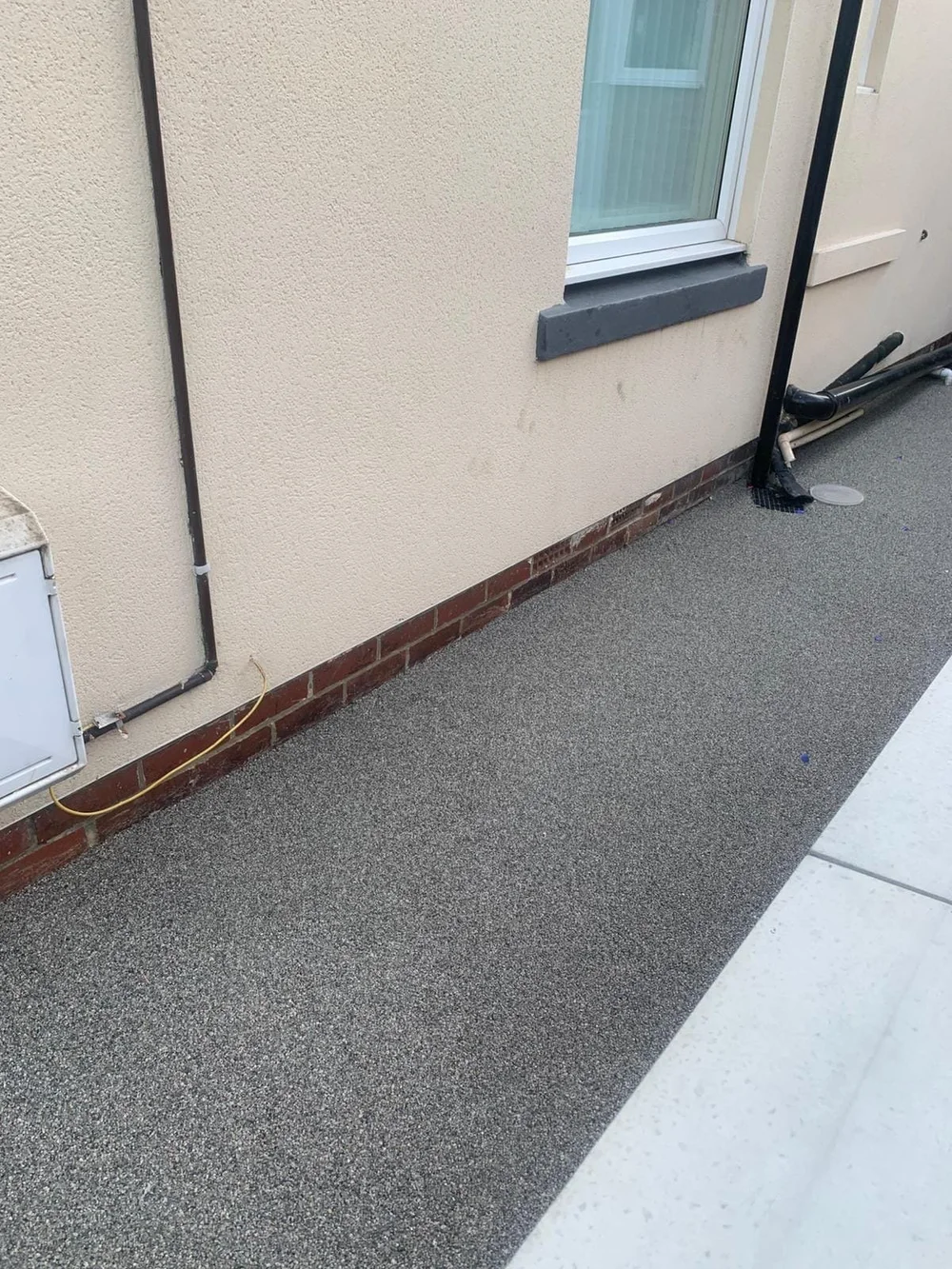
New base or overlay: what’s under the resin
Resin-bound is a thin wearing layer, normally around 15 mm on paths and 18 mm on driveways, so it relies entirely on what it sits on. There are two ways to go, and we’ll tell you honestly which one your drive needs.
A new base. We dig out, lay and compact MOT Type 1 crushed stone, then finish with open-grade tarmac or porous concrete. Both let water pass straight through, so the whole drive is permeable from top to bottom. This is the right choice for front garden conversions and for any drive that’s cracked, sunken or patched.
An overlay. Where existing tarmac or concrete is level, firmly bonded and free from moving cracks, resin can go straight over it after cleaning and priming. It saves on dig-out, but solid tarmac and concrete don’t drain, so we plan falls towards a lawn, border or drainage channel. Joints and cracks in old concrete can show through, which is why we won’t overlay a surface that’s still moving.
- Every drive assessed before we price an overlay
- Open-grade tarmac or porous concrete for new bases
- Compacted MOT Type 1 sub-base
- Water routed away from your house
Resin-bound, resin-bonded and the alternatives
The two resin systems are often confused, but they are very different surfaces. Here is how they compare with block paving and tarmac, with typical UK guide prices per square metre. Our guide to resin vs block paving goes further.
| Surface | How it’s made | Drains through? | Look and feel | Typical guide price |
|---|---|---|---|---|
| Resin-bound | Dried stone mixed with resin and trowelled level | Yes, when laid on a porous base | Smooth, even and no loose stones | £60–£100/m² with a new base; £45–£70/m² as an overlay |
| Resin-bonded | Resin spread on a solid surface with gravel scattered on top | No | Rough gravel texture; some stones work loose | £35–£60/m² |
| Block paving | Concrete blocks on a sand bed, jointed with sand | Only with permeable blocks | Patterned, with borders and joints | £70–£120/m² |
| Tarmac | Hot-laid asphalt rolled on a stone base | Only porous grades | Plain, dark and hard-wearing | £45–£80/m² |
Guide prices are typical UK figures for 2026 and vary with size, dig-out, access and finish. As a rough picture for resin-bound, a front path often runs from £1,200 to £2,500, a single drive from £2,500 to £5,000 and a double drive from £4,500 to £8,000. A free site visit gives you a fixed written quote, and our guide to resin driveway costs explains what pushes the figure up or down.
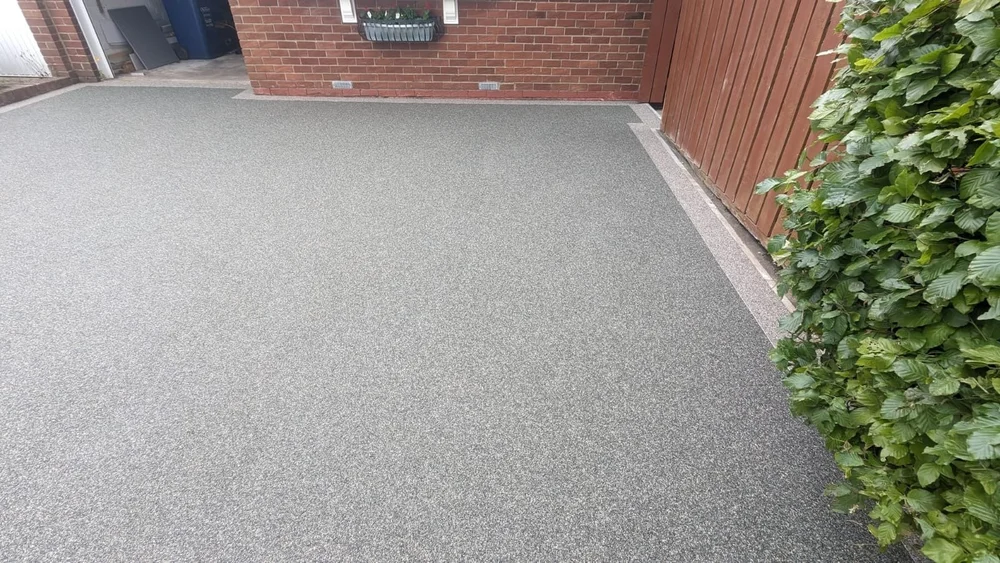
Resin, stone and edging for a coastal city
Not all resins behave the same in strong light. Aromatic resins are cheaper but darken and yellow with UV exposure, which shows quickly on pale stone. We only use UV-stable aliphatic resin, so the colour you choose is the colour you keep, even on south-facing drives near the sea.
The stone is kiln-dried natural aggregate, usually in sizes from 1–3 mm up to 6 mm. Golden and buff blends warm up Sunderland’s red-brick semis and terraces, silver and granite greys sit well with render and newer brick, and mixed, flecked blends are forgiving close to the beach, where sand and salt marks would show on a single pale colour. We bring samples to your visit so you can judge them against your own walls.
Edging holds the resin and frames the drive. Choose from block or granite setts, concrete kerbs, or slim aluminium edging for a clean modern line, with the threshold at the front door kept below the damp-proof course. We can also continue the finish into side paths or tie it into a new patio.
- UV-stable aliphatic resin only
- Kiln-dried stone in single colours or blends
- Setts, kerbs or aluminium edging
- Anti-slip glass for slopes and steps
How we lay a resin-bound drive
The order of work from survey to handover. Most drives take a few days, plus curing time.
-
01
Site check and base decision
We look at the existing surface, levels and drainage, and decide with you between an overlay and a new base.
-
02
Preparation
Either the old surface is cleaned, repaired and primed, or it’s dug out and taken away to the depth the ground needs.
-
03
Edging and base
Edging is set in concrete, then the sub-base and open-grade tarmac or porous concrete are laid and compacted.
-
04
Weather check
On the day, we check the surface is dry and the temperature is right. Rain, frost or heavy fret means we wait.
-
05
Mixing and trowelling
Resin and dried stone are mixed in measured batches and hand-trowelled to an even depth across the drive.
-
06
Curing and handover
The drive is taped off to cure. Foot traffic usually after six to eight hours; cars after 24 to 48 hours.
Drainage, permitted development and laying season
Since 2008, homes in England have needed planning permission to lay more than 5 square metres of hard surface in a front garden unless the surface is permeable or the rainwater runs onto a lawn or border inside the property. Resin-bound on an open-grade tarmac or porous concrete base drains through, so it usually falls within permitted development. A resin overlay on solid tarmac or concrete does not drain on its own, so we design the falls to discharge onto soft ground or into a suitable drain to keep it compliant.
A dropped kerb is a separate matter. In the city, Washington and Houghton-le-Spring you apply to Sunderland City Council; Seaham is covered by Durham County Council and Boldon by South Tyneside Council. Flats, listed buildings and conservation areas, such as parts of Ashbrooke, can carry extra rules, and we check these during the site visit.
Timing matters too. Resin needs a dry surface and air temperatures above about 5°C, and it cures more slowly in the cold. Late spring through early autumn is the most dependable window here, though we lay through winter on settled days. Frost can lift a poorly drained base, which is one more reason we build permeable sub-bases rather than skimping on depth. Our resin driveway pros and cons guide covers how weather and wear affect lifespan.
- Permeable build that meets the front garden rules
- Overlays designed to drain onto soft ground
- Dropped kerb council confirmed for your address
- Laying dates planned around frost and fret
Resin drives, paths and garden areas
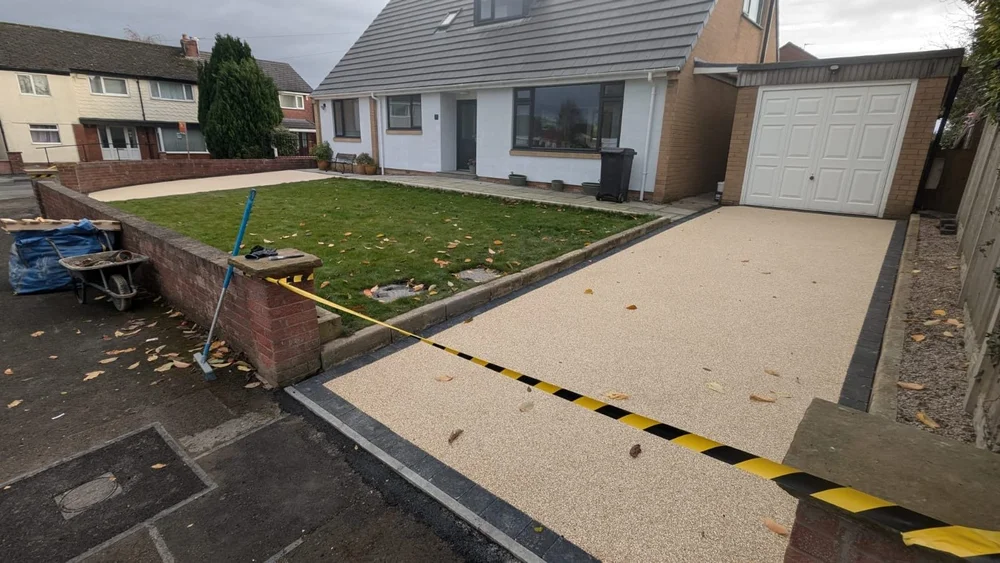
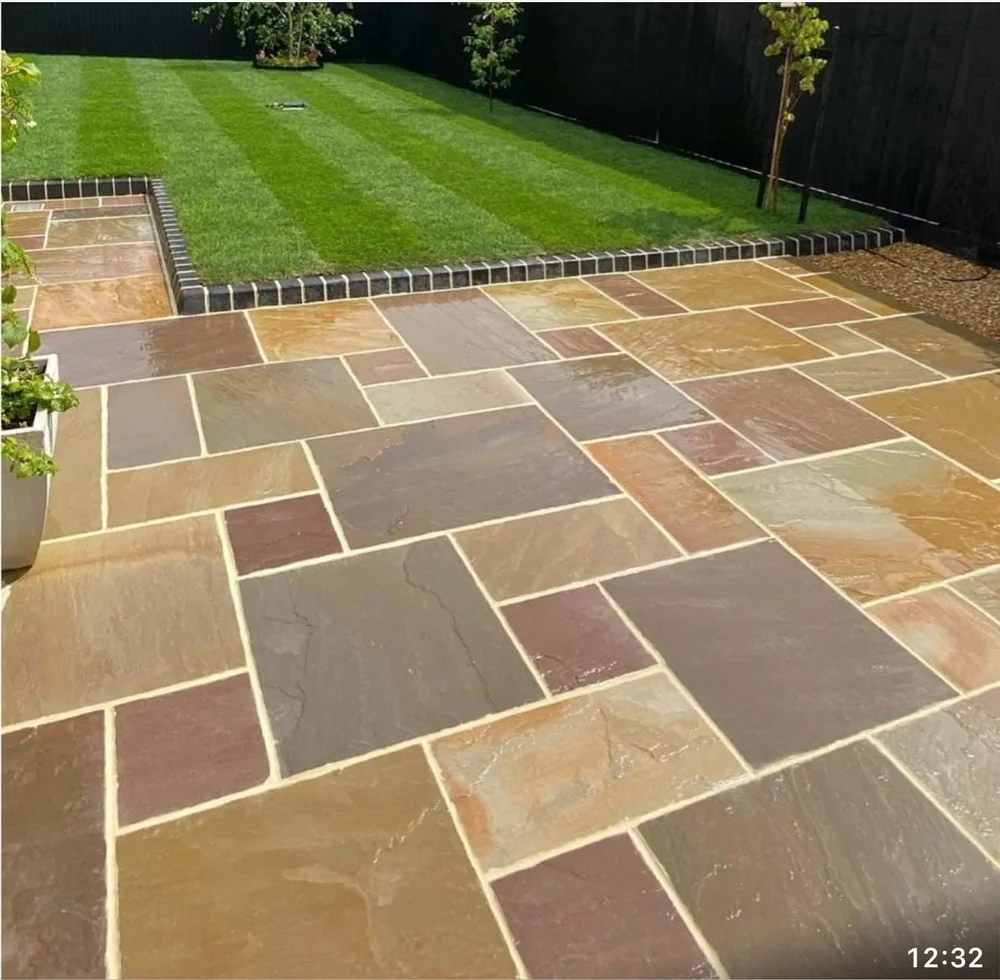
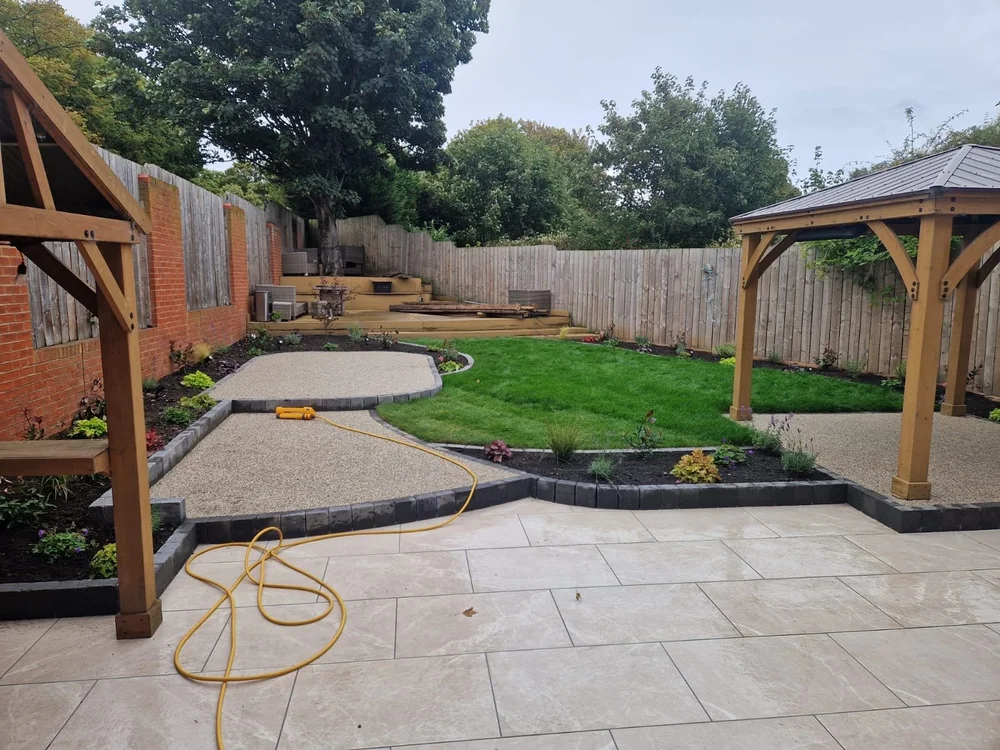
A selection of resin-bound surfaces our team has laid, from driveways to garden paths.
Working with us
From your first message to sweeping up on the last day, here’s how a Sunderland resin job runs.
-
Step 1: Tell us about your drive
Send a few photos and rough measurements, or call and describe what you have now.
-
Step 2: Free site visit
We assess the base, measure up, bring stone samples and follow up with a fixed written quote.
-
Step 3: Agree the spec
Base or overlay, stone blend, edging and drainage are confirmed in writing before we book a date.
-
Step 4: Install
Our own team lays the drive, keeps the site tidy and only mixes resin when the weather is right.
-
Step 5: Aftercare
We talk you through curing times and simple upkeep so the surface keeps draining and looking its best.
Where we lay resin in and around Sunderland
We cover the whole of the City of Sunderland, the coast up to Whitburn and down to Seaham, and the villages around Washington and Houghton-le-Spring. If your street isn’t listed, ask anyway. Further north, our resin driveways Newcastle page covers Tyneside.
- Seaburn
- Roker
- Fulwell
- Whitburn
- Ashbrooke
- High Barnes
- Millfield
- Thornhill
- Silksworth
- Doxford Park
- Tunstall
- Ryhope
- Grindon
- Southwick
- Castletown
- Washington
- Penshaw
- Shiney Row
- Houghton-le-Spring
- Hetton-le-Hole
- Seaham
- East Boldon
- West Boldon
- Cleadon
Local pages: Sunderland Durham Newcastle Middlesbrough
Resin driveways Sunderland: your questions
What Sunderland homeowners ask us most before booking a resin-bound drive.
Got a different question? Send us a message or call 0191 245 5045.
How much does a resin driveway cost in Sunderland?
As a guide, most resin-bound driveways in the UK come in at around £60 to £100 per square metre where a new base is needed, and roughly £45 to £70 per square metre where resin can go over a sound existing surface. A typical single drive often lands somewhere between £2,500 and £5,000, and a larger double drive between £4,500 and £8,000. These are typical figures only; dig-out depth, access, edging and the stone blend all move the price, and a free site visit gets you a fixed written quote. Our guide on what affects the price of a resin driveway goes into more detail.
Will sea air and salt spoil a resin drive in Seaburn or Roker?
Not if it’s specified for the coast. We use UV-stable aliphatic resin, which holds its colour under the bright, open light you get along the seafront, and the cured surface isn’t harmed by salt in the air. What does build up near the beach is wind-blown sand and salt film, which can clog the pores over time. A sweep and a low-pressure rinse a couple of times a year keeps the surface draining as it should.
Do I need a whole new base, or can you lay over my existing drive?
It depends on what’s there now. If your tarmac or concrete is level, well bonded and free from moving cracks, an overlay at the right depth can work and saves on dig-out. If it’s breaking up, sinking or patched, we dig it out and build a new base of compacted stone with open-grade tarmac or porous concrete on top. Bear in mind that an overlay on solid tarmac or concrete won’t drain through, so we plan where the water goes before we agree on that option.
Who do I apply to for a dropped kerb in Washington, Seaham or Boldon?
It depends which council looks after your road. Sunderland City Council covers the city along with Washington, Houghton-le-Spring and Penshaw. Seaham comes under Durham County Council, and Boldon under South Tyneside Council. A dropped kerb is a separate application from the driveway itself, so it’s worth starting early, and we’ll set out the drive around where the crossing is going.
When is the best time of year to lay resin in Sunderland?
Late spring to early autumn gives the most reliable conditions, but resin can be laid at any time of year on dry days when the surface and air are above about 5°C. Rain, frost and the damp sea fret that rolls in off the North Sea all stop work, because moisture affects how the resin cures. If the forecast turns, we move the date rather than risk the finish.
How long until I can walk and park on it?
On a mild day you can usually walk on new resin after six to eight hours and park on it after 24 to 48 hours. In cooler months curing slows down, so we may ask you to give it longer. For the first few weeks, avoid turning the steering wheel while the car is stationary, as that can scuff the fresh surface.
Is a resin-bound drive slippery in wet or icy weather?
A properly laid resin-bound surface has good grip when wet because of its textured stone finish, and on sloping drives we can add a fine anti-slip glass to the top. In icy spells you can use ordinary de-icing salt sparingly and sweep up the residue once the cold has passed. Avoid metal-edged shovels when clearing snow, as they can catch the surface.
How long will a resin driveway last?
Laid on a properly built base with UV-stable resin, a resin-bound drive should give many years of good service, and how long it lasts comes down to the base, the depth of the mix and how it’s looked after. Our resin driveway pros and cons guide covers lifespan in more depth.
Planning a resin drive in Sunderland?
Book a free site visit. We’ll check whether your existing surface can be overlaid, measure up, bring stone samples and send you a fixed written quote.
Related pages
Other surfaces and outdoor work from the same team.