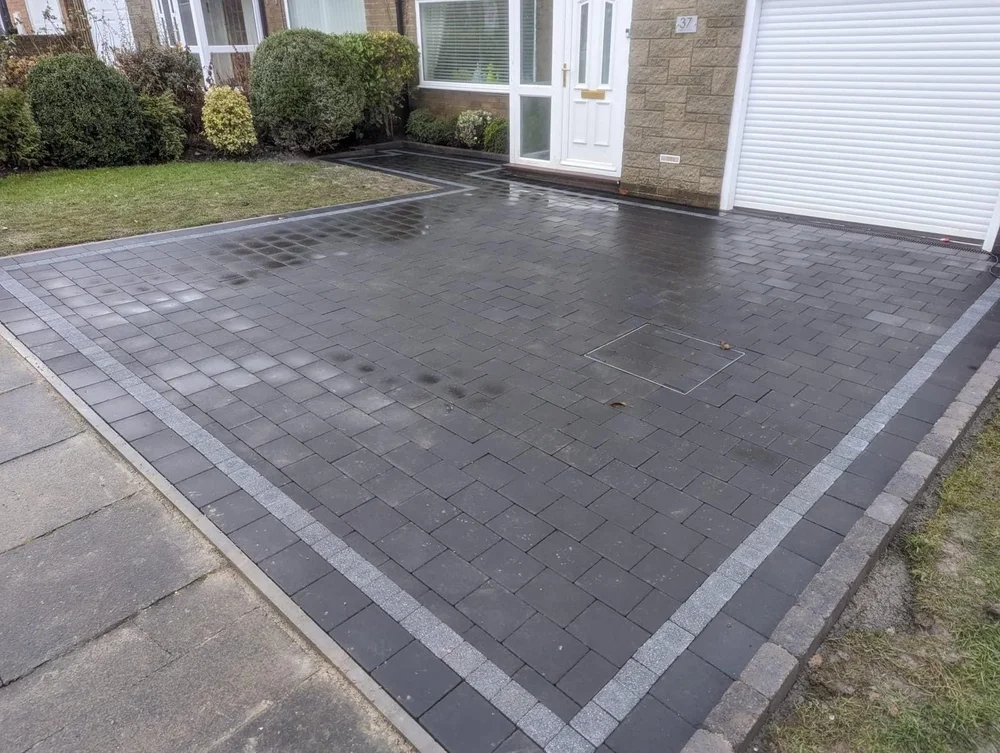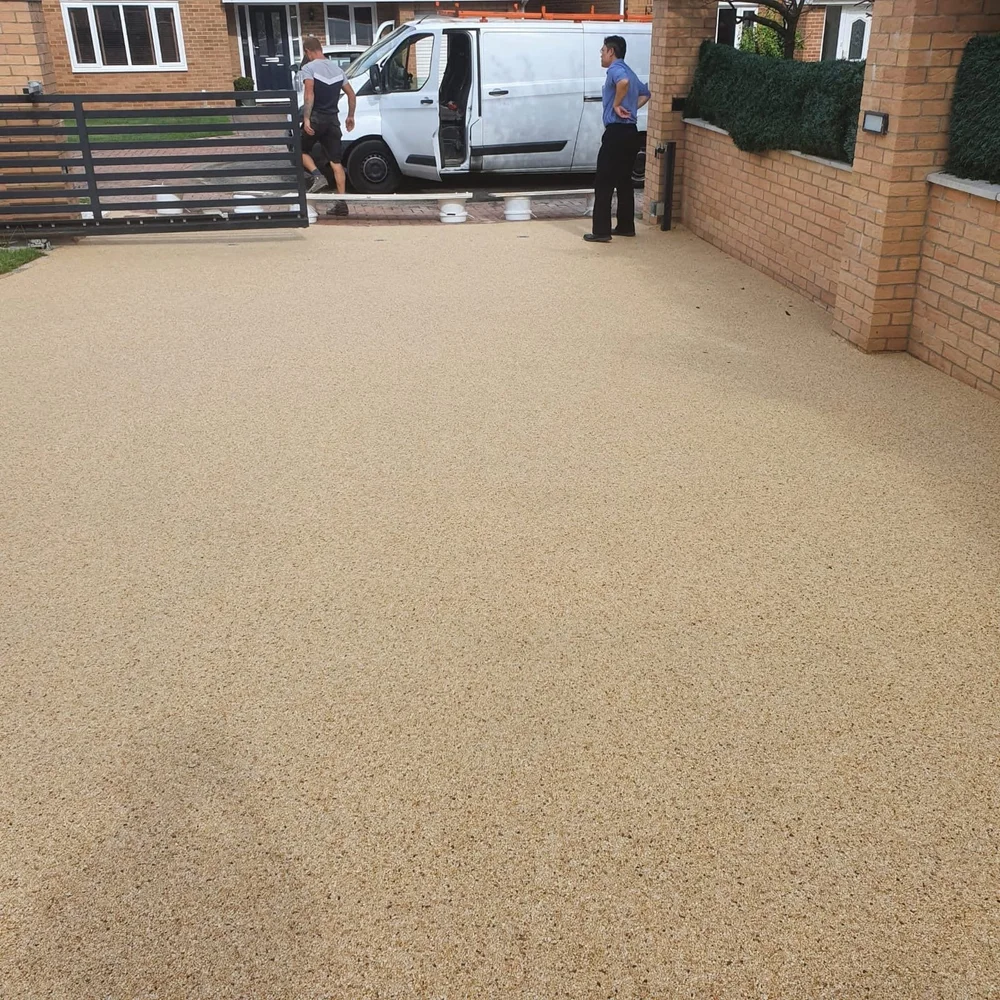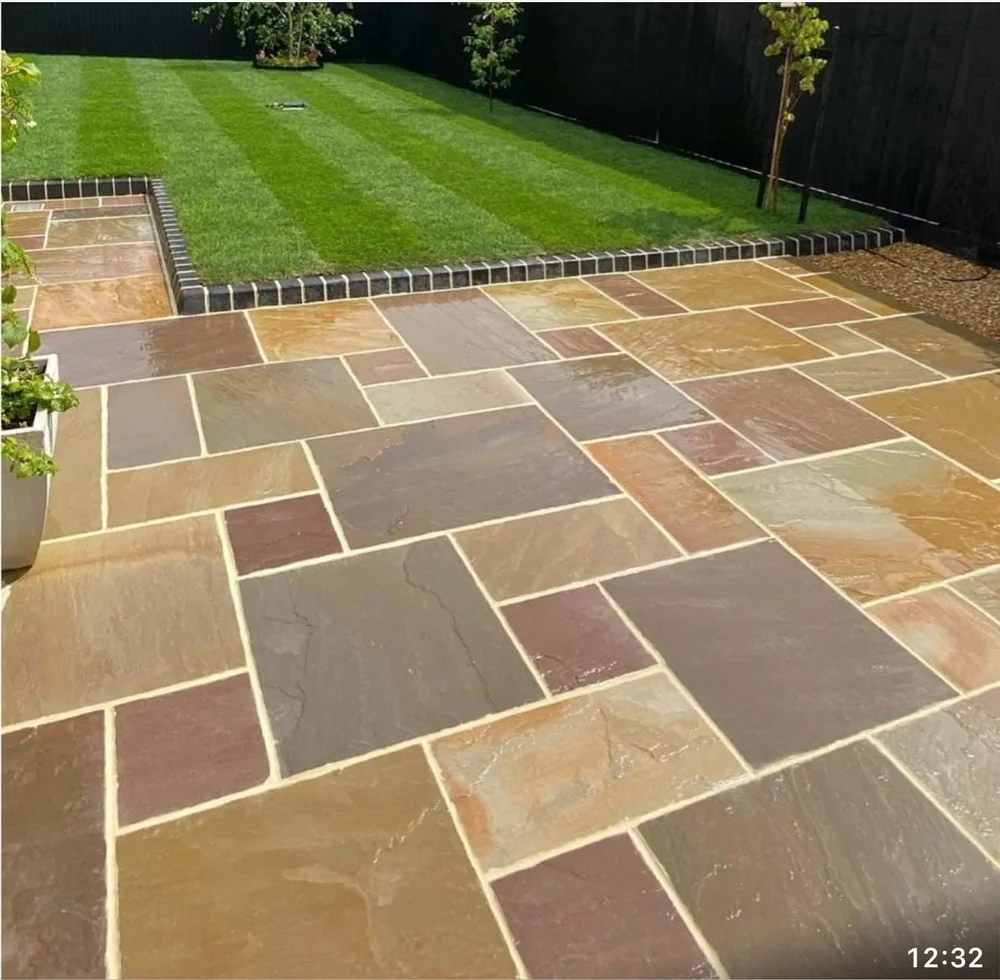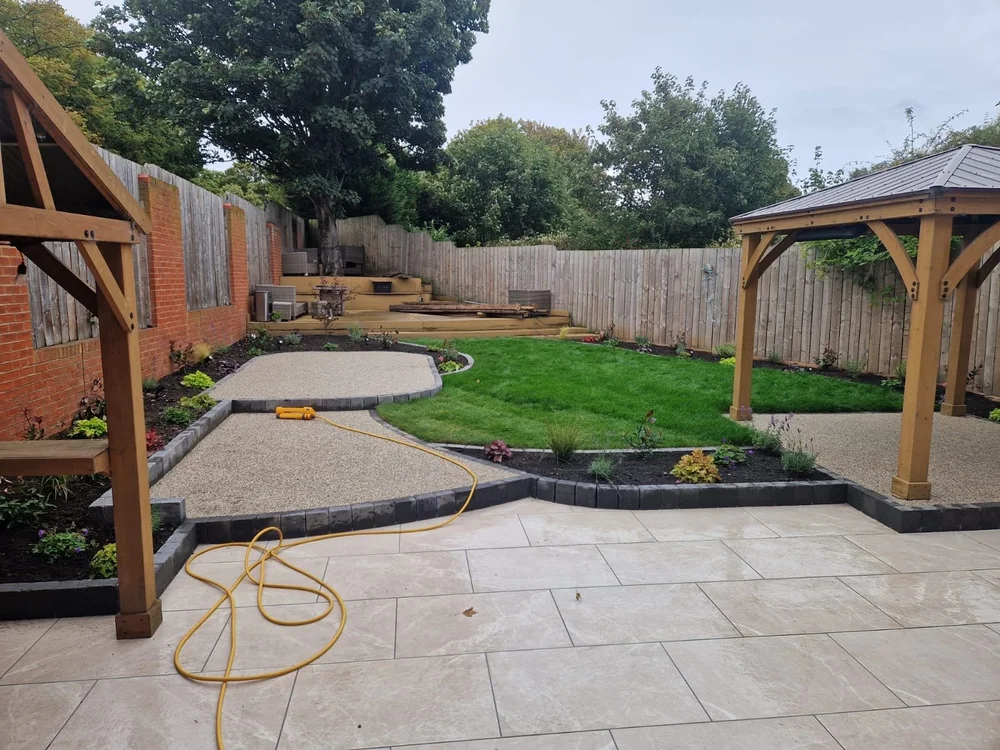
Block paving in Newcastle.
Block paving driveways, paths and borders laid by our own team on a dug-out, compacted base, for homes in Gosforth, Jesmond, Heaton, Kenton, Ponteland and right across Newcastle.
Free site visits and written quotes · Concrete, clay and permeable blocks
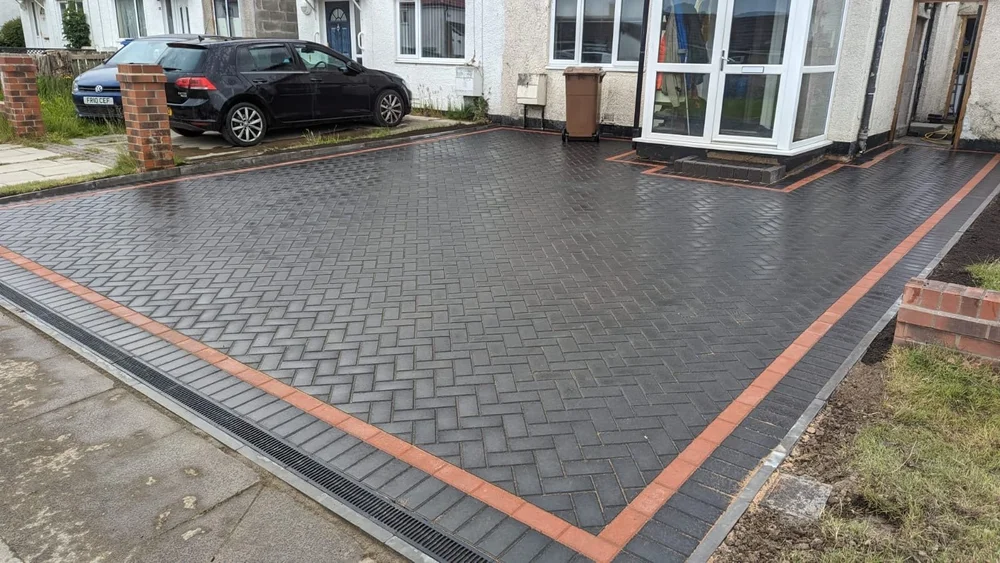
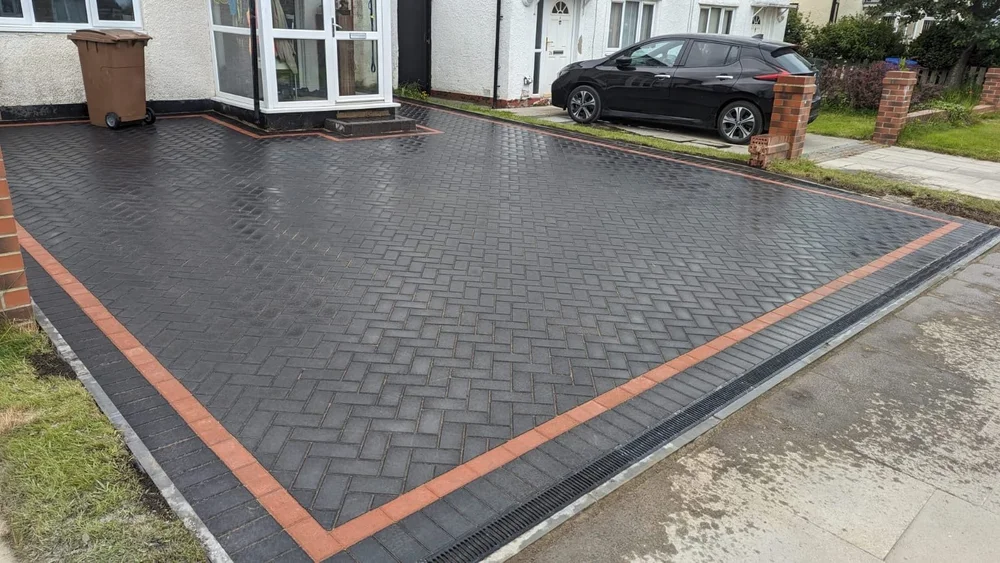
Pictured: charcoal herringbone driveway with a red border
Block paving contractors in Newcastle
We lay block paving driveways, paths and parking areas for homeowners across Newcastle upon Tyne, from terraced front yards in Heaton and Fenham to semis in Kenton and Benton and larger drives out towards Ponteland and Whitley Bay.
Block paving lasts when the groundwork underneath is right. Most failed drives we’re asked to look at have sunk in the wheel tracks or around the edges because the dig-out was too shallow, the sub-base was thin or the edge restraints were never set in concrete. We dig out to a proper depth, build and compact the base in layers, set kerbs and edging on a concrete haunch, then lay, cut and joint the blocks in the pattern you choose. If you’re still deciding between surfaces, our driveways page covers resin and tarmac as well.
- Concrete, clay or permeable
- We’ll talk you through which block suits your drive and budget.
- Groundwork first
- Proper dig-out, MOT Type 1 sub-base and compaction on every job.
- Patterns and borders
- Herringbone, basketweave or stretcher bond with a contrasting edge.
- Drainage planned in
- Falls, channels and SuDS rules sorted before we start.
Types of block paving we lay
Three main types of block, each with its own look, price and drainage rules.
Concrete block paving
Most popular · Wide colour range
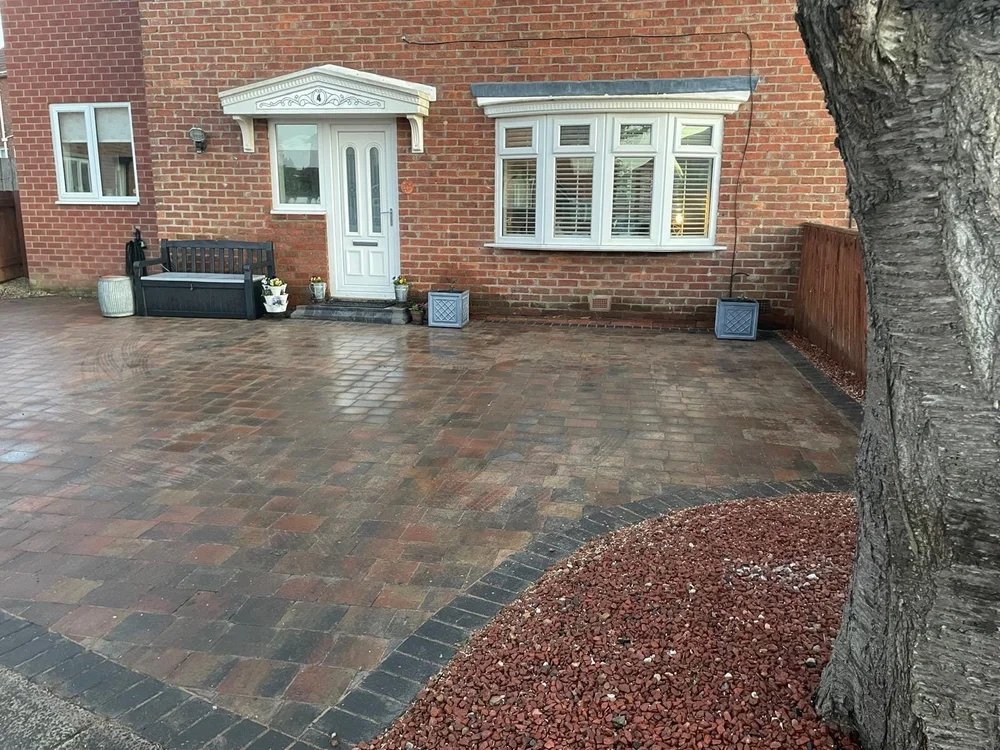
Concrete blocks are the standard choice for most Newcastle block paving driveways. They come in brindle, charcoal, buff, red and multi-tone blends, usually 50mm or 60mm thick for domestic drives, and in smooth or tumbled finishes for an older, softer look.
- Good value per square metre
- Tumbled options for period houses
- Easy to lift and relay if needed
Clay pavers
Natural colour · Long-lasting
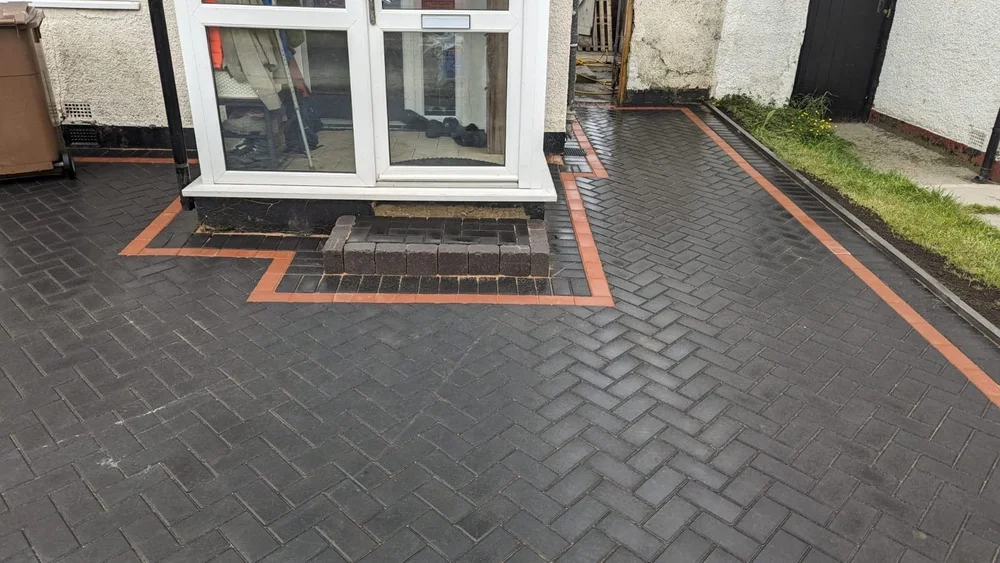
Clay pavers are fired like bricks, so the colour runs right through and doesn’t fade the way some concrete blocks can. They cost more and take longer to cut and lay, but they sit well against the red brick and stone of older houses in Jesmond, Gosforth and High Heaton.
- Colour that holds for decades
- Suits Victorian and Edwardian houses
- Thinner, crisper joints
Permeable block paving
SuDS compliant · Front gardens
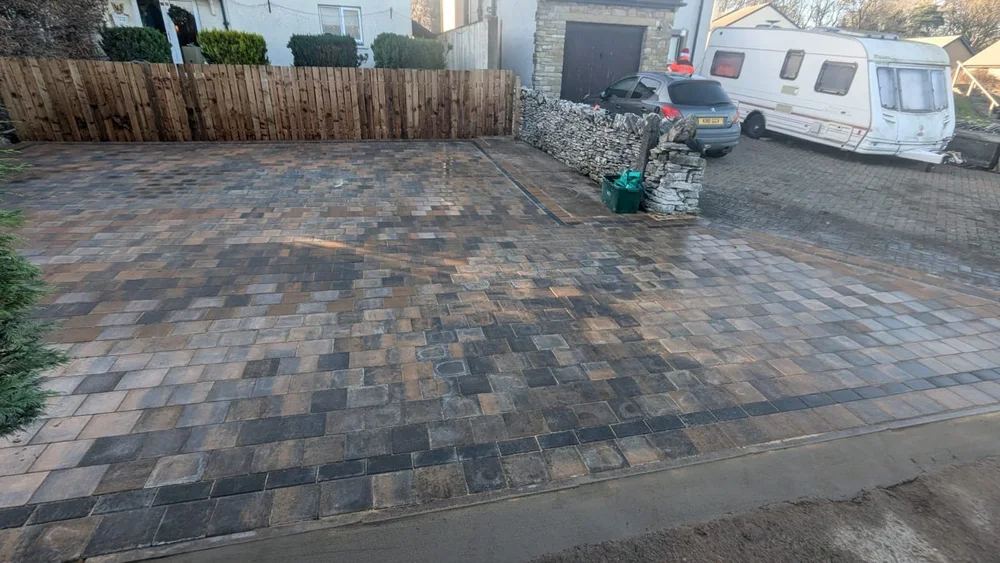
Permeable blocks have wider joints filled with fine grit, so rainwater drains down through the surface into an open-graded stone sub-base instead of running onto the road. It’s the simplest way to pave a large front garden without needing planning permission.
- Meets the front garden SuDS rules
- Cuts puddles and surface run-off
- Built on a free-draining stone base
The groundwork under your block paving
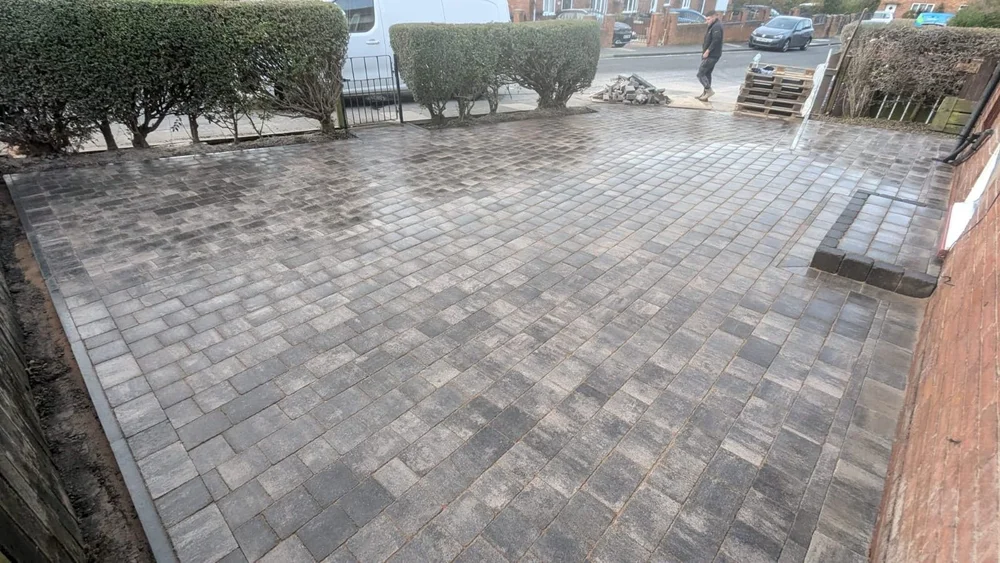
Much of Newcastle sits on heavy boulder clay that stays wet through the winter and shrinks in dry spells. Block paving laid on a thin or soft base will rut where the car sits and sink along the edges, often within a couple of years.
For a driveway we typically dig out around 200 to 250mm below finished level, and deeper on soft or wet clay. We lay a geotextile membrane where the ground needs it, then build at least 100 to 150mm of MOT Type 1 crushed stone in layers, compacting each one with a plate compactor. On top goes a screeded bed of sharp sand, roughly 30 to 40mm deep, for the blocks to sit in.
Once the blocks are laid and cut, we brush kiln-dried jointing sand into the joints and run the plate compactor over the surface to bed everything down, then top up the sand. The tight, sand-filled joints are what lock the blocks together and spread the weight of a car.
- Dig-out depth matched to your ground
- Compacted MOT Type 1 sub-base
- Screeded sharp sand laying course
- Kiln-dried jointing sand, compacted in
Block paving vs resin vs tarmac
A quick comparison for a typical Newcastle driveway. Our guide to resin vs block paving goes into more detail.
| Surface | Permeable? | Look | Repairs | Upkeep |
|---|---|---|---|---|
| Block paving | No, so drainage has to be planned in | Patterns, borders and a wide choice of colours | Individual blocks can be lifted and relaid | Sweep, treat weeds and top up jointing sand |
| Permeable block paving | Yes, through grit-filled joints | Same patterns, slightly wider joints | Blocks can be lifted and relaid | Sweep regularly and top up the joint grit |
| Resin-bound | Yes, on a porous base | Smooth and seamless stone finish | Patches can be hard to colour-match | Sweep and rinse; no joints for weeds |
| Tarmac | Only porous tarmac | Plain, usually black | Patches tend to show | Low, but can fade and crack with age |
Patterns, borders and kerbs
Herringbone, laid at 45 or 90 degrees, is the strongest pattern for block paving driveways. The blocks interlock in two directions, so they resist the twisting of tyres when you turn or reverse, which is why we recommend it for anywhere a car will park.
Basketweave sets blocks in pairs at right angles for a traditional, tiled look. It suits paths, patios and front yards with light traffic. Stretcher bond runs the blocks in staggered rows like brickwork and works well on paths and on drives where it’s laid across the direction of travel.
A border frames the drive and holds the pattern in place. We usually lay a soldier course or double border in a contrasting colour, set on a concrete haunch, with bullnose or flat-top kerbs where the drive meets a lawn, a bed or a change in level. Matching paths through to the back garden or a new patio can be laid at the same time.
- Herringbone for driveways that take cars
- Basketweave and stretcher bond for paths
- Contrasting borders and kerbs set in concrete
How we lay a block paving driveway
The same steps on every job, from a front path to a double drive. Most driveways take between a few days and two weeks, depending on size and access.
-
01
Survey and set-out
We measure up, take levels, check where water will run and mark out the drive, borders, kerbs and any dropped kerb.
-
02
Dig-out and removal
The old drive, slabs or lawn are dug out to the right depth for your ground and taken away in licensed skips or grab lorries.
-
03
Sub-base built
MOT Type 1 crushed stone is laid and compacted in layers, with falls set so water drains away from the house.
-
04
Edging and kerbs set
Border blocks and kerbs are bedded and haunched in concrete to stop the paving spreading at the edges.
-
05
Sand bed and laying
A sharp sand bed is screeded level and the blocks are laid in your pattern, with every cut made cleanly to the edges.
-
06
Jointing and compaction
Kiln-dried sand is brushed in, the surface is compacted and topped up, and the site is cleaned off ready to use.
Drainage, SuDS and planning for block paving
Standard block paving isn’t permeable. Some water finds its way through the sand joints, but most of it runs off the surface, so every drive needs falls that take water away from the house and somewhere for it to go. On a standard block drive we set the levels to shed water onto a lawn or border, or fit a channel drain across the drive connected to a soakaway or a suitable drain.
In England, a new hard surface of more than 5 square metres in a front garden needs planning permission unless it’s permeable or drains to a permeable area within your property. These are the sustainable drainage, or SuDS, rules. Permeable block paving meets them by letting water pass through grit-filled joints into an open-graded stone sub-base, which holds the water and lets it soak away slowly. It’s built differently from a standard drive, so it has to be planned as permeable from the start. Our guide to planning permission and dropped kerbs covers the rules in more detail.
If you’ll be driving over the pavement, you’ll also need a dropped kerb, applied for through Newcastle City Council, or Gateshead or North Tyneside Council if you live there. It runs separately from the paving work, so it’s worth starting early.
- Falls set so water drains away from the house
- Channel drains and soakaways where needed
- Permeable block paving for SuDS-compliant front gardens
- Dropped kerbs applied for through the council
Sealing and maintenance
Sealing isn’t essential, but a good block paving sealer helps hold the jointing sand in place, slows weed and moss growth and makes oil spills easier to clean. It’s best applied a few months after laying, once any natural efflorescence has cleared, and redone every few years. Day to day, sweep the drive regularly, pull or treat weeds in the joints, top up the sand if it washes out and avoid blasting the joints with a pressure washer held too close. Our guide on how to stop weeds in block paving has more tips.
What does block paving cost in Newcastle?
As a guide, typical 2026 prices for supplying and laying block paving in the North East, including dig-out, sub-base and edging, are:
- Concrete block paving: around £75 to £120 per m²
- Permeable block paving: around £90 to £140 per m²
- Clay pavers: around £100 to £160 per m²
- A typical 40 to 50m² front driveway: roughly £3,500 to £6,500
These are typical figures only and vary by site. Deeper dig-outs on soft clay, awkward access, drainage, steps or walls and premium blocks all add to the cost. A free site visit gives you a fixed, written quote. For a fuller breakdown, see our block paving cost per m² guide.
Ask us about your drivewayBlock paving driveways and paths
Block-paved drives, paths and borders from homes we’ve worked on.
What to expect
From your first call to driving on the finished drive, here’s how a block paving job runs.
-
Step 1: Get in touch
Call, email or send a quote request and tell us about your drive or path.
-
Step 2: Free quote
We visit, measure up, check levels and drainage, and give you a fixed written price.
-
Step 3: Planning & design
We help you pick the block, colour, pattern and border to suit your house.
-
Step 4: The build
Our team digs out, builds the base and lays the paving, keeping the site tidy.
-
Step 5: Enjoy the result
A solid, well-drained block paving drive, swept clean and ready to use.
Block paving across Newcastle
We lay block paving driveways and paths throughout Newcastle upon Tyne and the surrounding areas, including North Tyneside, the coast and Gateshead. If you’re not sure whether we cover your street, just ask. You can find out more about our work in the city on our Newcastle page.
- Gosforth
- Jesmond
- Heaton
- Fenham
- Kenton
- Benton
- Westerhope
- Ponteland
- Whitley Bay
- Longbenton
- High Heaton
- South Gosforth
- Fawdon
- Kingston Park
- Denton Burn
- Lemington
- Newburn
- Walker
- Byker
- Wallsend
- North Shields
- Gateshead
- Whickham
- Blakelaw
Local pages: Newcastle Durham Sunderland Middlesbrough Block paving Sunderland
Block paving questions
Straight answers to the questions Newcastle homeowners ask us most.
Can’t see your question? Get in touch or call 0191 245 5045.
How much does block paving cost in Newcastle?
As a rough guide, concrete block paving typically costs around £75 to £120 per square metre fully laid, permeable blocks around £90 to £140 and clay pavers around £100 to £160. A typical 40 to 50m² front drive often lands somewhere between £3,500 and £6,500. These are guide figures that vary by site, and a free visit gives you a fixed written quote. See our block paving cost per m² guide for more.
Do I need planning permission for a block paving driveway?
Not if the drive is permeable or drains onto a lawn or border within your property. In England, a new hard surface over 5 square metres in a front garden needs planning permission if rainwater runs off it onto the road or into the drains. Permeable block paving, or standard blocks with falls to a soakaway or planted area, avoids that. Listed buildings, flats and some conservation areas in Jesmond and Gosforth can have extra rules, and we’ll check this when we visit.
How deep do you dig out for block paving?
For a driveway we usually dig out around 200 to 250mm below the finished level, and deeper on soft or wet clay. That leaves room for at least 100 to 150mm of compacted MOT Type 1 sub-base, a 30 to 40mm sharp sand bed and the blocks themselves, which are normally 50mm or 60mm thick for a domestic drive.
Which pattern is best for a block paving driveway?
Herringbone, at 45 or 90 degrees, is the best choice for driveways because the blocks interlock in both directions and resist the turning of car tyres. Basketweave and stretcher bond look good on paths, patios and areas with lighter use. Most drives also have a contrasting border to frame the pattern.
What is permeable block paving and do I need it?
Permeable block paving has wider joints filled with fine grit, laid over an open-graded stone sub-base, so rainwater soaks through the surface and drains away slowly. You don’t have to use it, but it’s the simplest way to pave a large front garden without planning permission when the water can’t be directed onto a lawn or border.
Should I seal my block paving?
Sealing is optional. A good sealer helps lock in the jointing sand, slows weeds and moss and makes stains easier to clean, and it can enrich the colour of the blocks. We recommend waiting a few months after laying so any natural efflorescence can clear first, then resealing every few years.
How do I stop weeds growing in block paving?
Keep the joints full of sand, sweep regularly so seeds and soil can’t settle, and pull or treat any weeds early. Sealing the paving and avoiding pressure washing straight into the joints both help. Our guide on how to stop weeds in block paving covers this in more detail.
Is block paving better than resin or tarmac?
It depends on what you want. Block paving gives you patterns, borders and easy repairs, as individual blocks can be lifted and relaid. Resin-bound gives a smooth, seamless and permeable finish, and tarmac is a plain, lower-cost option. We lay all three, so you’ll get a fair view on your visit. Our resin vs block paving guide compares the two most popular choices.
Ready for block paving in Newcastle?
Tell us about your drive or path and we’ll arrange a free visit to measure up, check the ground and drainage, talk through blocks and patterns and give you a fixed written price.
Explore more
Other surfaces and outdoor work from the same team.